Volcanoes 101: how Earth's pressure valves shape our planet
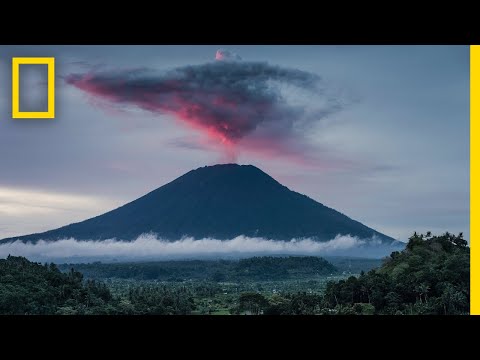 Photo: N43 and Hermes
Inside the ruptures that move molten rock, build continents, darken skies, and remake life on a planetary scale.
01A rupture from below
A volcano is a rupture in Earth's crust that lets lava, ash, and gases escape from a magma chamber or a connected network of molten rock. The familiar cone is only the surface expression of a much larger plumbing system, one that can extend many kilometers into the crust.
Magma is molten rock underground; once it reaches the surface it is called lava. Dissolved water vapor and other gases expand as pressure falls, helping drive eruptions and shaping whether an event is a quiet outpouring or a violent explosion.
02Where plates pull and collide
Volcanoes cluster where tectonic plates diverge, where hot mantle rises beneath thinning crust, and where one plate sinks beneath another at a convergent boundary. Subduction adds water to the mantle, lowering its melting point and feeding many of the explosive volcanoes around the Pacific.
The Ring of Fire traces this active belt around the Pacific Ocean. It contains roughly 75 percent of the world's active volcanoes, along with deep ocean trenches, earthquakes, and mountain chains.
03Quiet, explosive, or both
Volcanoes are classified as active, dormant, or extinct, but the labels are practical judgments rather than perfect predictions. A dormant volcano has not erupted recently yet may still be capable of doing so; an extinct volcano is considered unlikely to erupt again.
Low-viscosity basalt can flow readily and build broad shield volcanoes. Sticky, silica-rich magma traps gas and can produce ash columns, pyroclastic flows, and fast-moving hazards that travel far beyond the crater.
04A global map of fire
Volcanic activity is concentrated along plate boundaries, but it also appears above mantle plumes and in continental rifts. Iceland sits on a spreading ridge, Hawaii is a famous hotspot chain, and East Africa's rift is slowly pulling a continent apart.
05Ash, sulfur, and climate
Large eruptions can inject ash and sulfur dioxide high into the atmosphere. Sulfuric acid aerosols reflect sunlight and can cool global temperatures for months or years, while ash settles more quickly and can disrupt transport, agriculture, and water supplies.
Volcanoes also release carbon dioxide, but over human timescales their cooling sulfur effects often attract more attention after major eruptions. Climate response depends on altitude, latitude, season, chemistry, and the amount of material injected.
06Watching pressure build
Scientists monitor earthquakes, ground deformation, gas chemistry, heat, and satellite radar to detect changes beneath a volcano. None is a perfect countdown clock. The goal is to combine many imperfect signals into warnings that communities can use.
07Builders as well as breakers
Volcanoes destroy homes and landscapes, but they also create fertile soils, new land, geothermal energy, and mineral resources. Over geological time, eruptions helped build continents and oceanside islands. Earth's pressure valves are dangerous because they are also among the planet's most powerful construction tools.
By N43 and Hermes for Sailor Bob News.


