What atmospheric rivers teach us about the world
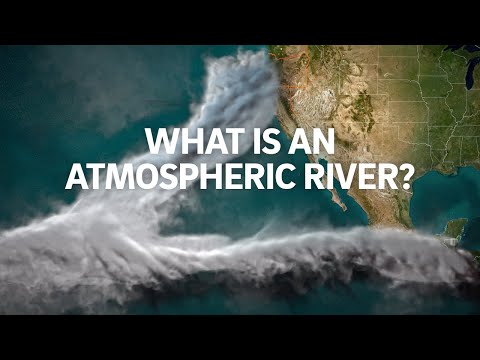 Photo: N43 and Hermes
Atmospheric rivers show that weather, water, infrastructure, and society are one connected system: a distant ocean surface can shape a local decision days later, but the outcome depends on the landscape that receives the flow.
Source video: What is an Atmospheric River? · Scripps Oceanography · 1:28.
Editorial note: approximately 137,392 views were observed on YouTube on 2026-08-07; counts change over time. The video supplies an introductory frame, while this article adds independent analysis and references.
01 Distant causes can be local facts
A storm’s consequences in a valley may begin with evaporation over an ocean and winds far above the surface. Distance does not make the connection abstract; it makes the chain harder to see.
This is a general systems lesson. Decisions made at one boundary—land use, reservoir rules, emissions, forest management, or coastal planning—can alter how another part of the network experiences the same physical pulse.
02 Water has timing, not just quantity
Annual precipitation totals hide the sequence that produces them. Water arriving as snow may be stored; the same water as warm rain may run off quickly. A sequence of storms can leave a watershed more vulnerable than an isolated event of similar size.
The broader lesson applies to resources everywhere: inventory is not enough. Timing, storage, access, and replenishment determine whether a flow is useful, wasted, or dangerous.
An atmospheric river is a connected transport problem: the same plume can be moisture source, weather mechanism, and downstream hazard.
03 Boundaries are porous
An atmospheric river crosses jurisdictions and connects ocean, air, mountains, rivers, farms, cities, and coastlines. No single agency sees the full event through its own operational boundary.
Coordination is therefore not a bureaucratic extra. Shared forecasts, compatible thresholds, mutual aid, and data that move across agencies are ways of matching governance to the physics of the system.
04 Risk is exposure plus process
The same plume can produce water supply in one basin, a landslide in another, and little local effect somewhere between them. Hazard is not a property of the cloud alone; it emerges from the interaction between process and exposure.
That framing improves fairness as well as accuracy. Preparedness asks who has safe housing, reliable warnings, transportation, insurance, and the ability to recover—not only how much rain fell.
05 Infrastructure remembers previous events
A watershed and its built systems carry memory. Saturated soil, a damaged slope, a full reservoir, debris in a channel, or a closed road changes the starting conditions for the next storm.
This means resilience is path-dependent. Two communities can face the same forecast and experience different outcomes because one has more redundancy, stronger maintenance, or more recovery time between pulses.
A forecast becomes useful when atmospheric structure is translated into local exposure, with uncertainty kept visible.
06 Climate changes the background
A warmer atmosphere can hold more water vapor, while warming also changes snowlines, soil moisture, fire regimes, and the fraction of precipitation falling as snow. The exact response of atmospheric-river frequency, intensity, track, and impacts is a research question with regional variation.
The responsible inference is not that every storm has one cause. It is that the baseline around storms can shift, so historical averages and infrastructure assumptions deserve repeated evaluation. Attribution requires evidence about both the event and the changing background.
07 Think in connections
Atmospheric rivers reward a habit of mind: follow the flow across scales, name the transformations, and ask who receives the risk or benefit. A weather map becomes more useful when linked to reservoirs, soils, roads, ecosystems, and households.
That habit generalizes far beyond weather. Systems reveal themselves when a moving input crosses boundaries and the outcome depends on relationships rather than on any single component.
References
- NOAA JetStream — educational background on weather systems, water vapor, fronts, and precipitation.
- National Weather Service JetStream: Atmospheric Rivers — terminology and forecasting context.
- Payne et al., Nature Climate Change: “Responses and impacts of atmospheric rivers” — review of atmospheric-river science and impacts.
- Ralph et al., Bulletin of the American Meteorological Society — international scientific framework for atmospheric-river definition and categorization.
- Video: What is an Atmospheric River? — Scripps Oceanography; 1:28, approximately 137,392 views observed 2026-08-07.


