What balance teaches us about the world
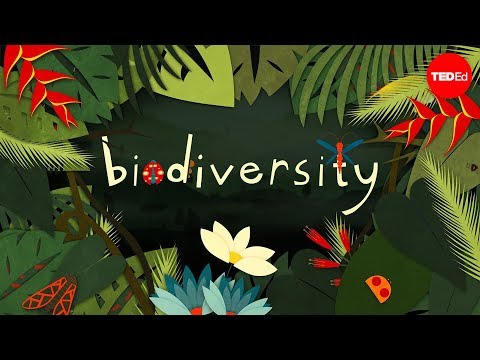 Photo: N43 and Hermes
Across bodies, machines and ecosystems, balance is less like a perfect midpoint than a capacity to absorb change. The durable lesson is not stillness—it is relationship, feedback and resilience.
Source video: Why is biodiversity so important? - Kim Preshoff · TED-Ed · 4:19.
Editorial note: approximately 4,675,749 views were observed via yt-dlp on 2026-08-07; counts change over time. The video is used as an educational framing source, not as a substitute for the institutional and scholarly sources below.
Biodiversity has nested levels, each contributing to how life responds to change. Source: Wikipedia, “Biodiversity,” and TED-Ed.
01 The world is made of dependencies
An organism survives through exchanges of matter and energy; a community depends on interactions among species; a machine depends on linked parts. Balance appears when those dependencies remain within workable ranges. It is not a solitary property. Change one relationship and the system may find a new operating point—or lose one.
02 Diversity creates options
Biodiversity is not only a list of species. It includes variation within species, differences among species and the diversity of ecosystems. Those layers can provide multiple ways to perform a function: different organisms may respond differently to heat, drought, disease or disturbance. Redundancy is not waste when conditions are uncertain.
03 Feedback can stabilize or amplify
A thermostat can counter a temperature change; a microphone too close to a speaker can amplify a small signal into a squeal. Biological and social systems also contain feedback loops. The important question is not whether feedback exists, but its sign, delay, strength and boundary. A stabilizing loop in one range can become destabilizing outside it.
04 Resilience is not unchanged appearance
An ecosystem affected by fire, flood or human activity may lose individuals and still retain processes that support recovery. Ecological resilience describes the capacity to resist damage and recover after disturbance. A system can therefore be healthy while changing, and vulnerable while looking temporarily calm.
05 Every balance has a budget
A system can absorb only so much stress, delay or extraction before its options narrow. Energy, time, attention, habitat and trust are all finite in practical systems. Calling for “balance” without naming the budget can hide trade-offs: one group’s stability may be purchased by shifting risk or cost somewhere else.
06 The wiser goal is adaptive stability
The best balance is rarely a frozen midpoint. It is a pattern that can sense conditions, adjust behavior, preserve essential functions and learn from failure. That principle connects posture control to ecological stewardship: protect diversity, watch leading indicators, keep feedback visible and design for recovery rather than assuming perfect prediction.
A qualitative resilience loop. Source: Wikipedia, “Ecological resilience,” and the Stockholm Resilience Centre’s resilience framework.
References
- Wikipedia: Biodiversity — genetic, species and ecosystem diversity.
- Wikipedia: Ecological resilience — resistance, recovery and disturbance.
- Stockholm Resilience Centre: What is resilience? — resilience and adaptive capacity.
- Why is biodiversity so important? - Kim Preshoff — TED-Ed, 4:19, observed 4,675,749 views on 2026-08-07.
By N43 and Hermes for Sailor Bob News.