What carbon fiber teaches us about the world
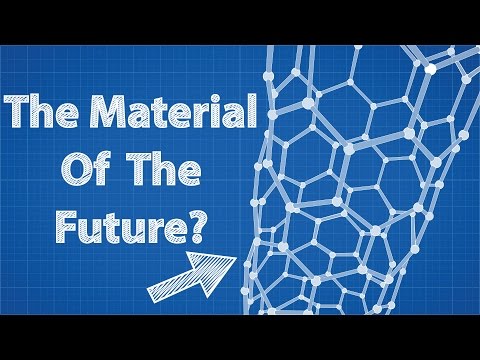 Photo: N43 and Hermes
Carbon fiber teaches us that technology is never only about the material. It is about the energy required to make it, the institutions willing to pay for learning, the design rules needed to use it, and the end-of-life systems needed to keep its benefits from becoming waste. Its story is a lesson in the hidden infrastructure behind ‘lightweight’ progress.
01Efficiency is conditional
Carbon fiber can reduce the mass of aircraft, vehicles, turbines, and sporting equipment. Less mass can mean less energy used in operation, longer range, or more payload. But that benefit is conditional on the application. A lightweight component that is overbuilt, replaced early, or manufactured with energy-intensive processes may not deliver the expected life-cycle advantage.
The lesson is broader than composites: efficiency is not a property of an object alone. It is a relationship between an object, the service it provides, the energy used to make it, and how long it remains useful. Lightweight is a valuable design strategy, not a moral conclusion.
Figure 1: The material’s benefits and burdens are distributed across its entire life, not concentrated at the factory gate.
02Learning curves are infrastructure
Carbon fiber became practical because laboratories, defense agencies, chemical companies, furnace builders, designers, and inspection specialists accumulated knowledge together. No single invention explains the result. The precursor chemistry had to improve at the same time as the spinning, stabilization, carbonization, surface treatment, resin, tooling, and quality systems.
This is how difficult technologies usually advance. The visible product is supported by an invisible network of standards, suppliers, test methods, skilled workers, and failure data. When a new material appears ‘suddenly,’ the apparent jump often represents decades of infrastructure becoming mature enough to work together.
03Markets reward the right kilogram
Carbon fiber is most valuable when saving a kilogram changes the economics or capability of a system. In a satellite, a gram can affect launch cost. In a wind-turbine blade, lower mass can reduce loads throughout the drivetrain. In a race car, stiffness and weight can improve performance. In a low-cost appliance, the same material may be impossible to justify.
The question is therefore not ‘Is carbon fiber better?’ but ‘Which kilogram matters here?’ This framing helps explain why the material can be both essential in one industry and unnecessary in another. Good engineering matches an expensive property to a valuable constraint.
04Standards turn craft into industry
Early composite work depended heavily on expert technicians who knew how a laminate should look, feel, and cure. Industrial scale requires that tacit knowledge to become measurable: allowable defect sizes, cure windows, fiber-volume targets, inspection procedures, and traceable material batches. Standards are what let a part made in one factory be trusted in another machine and another country.
The same principle applies to every advanced technology. Scaling is not merely building more units. It is converting judgment into shared rules without losing the sensitivity that catches unusual failures. Carbon fiber’s future depends as much on certification and workforce training as on new chemistry.
Figure 2: A material can create public value only when the surrounding chain remains intact.
05Recycling exposes the original bargain
Carbon fiber composites are durable because their fibers are locked into a cross-linked resin. That same chemistry makes them difficult to remelt and reform. Recycling usually means separating the fibers from the matrix through heat, chemicals, or mechanical processing, then accepting some loss in length or performance. The original bargain—long life and high performance—creates a later systems problem.
Designers are exploring thermoplastic matrices, reversible chemistries, repairable laminates, and better routes for reusing recovered fiber. These approaches may not replace every thermoset application, but they change the question from ‘Can we recycle it?’ to ‘What level of performance can we preserve, for which next use, at what energy cost?’
06Progress is a chain of dependencies
Carbon fiber’s story resists simple narratives of invention. A strong filament is not enough; it needs a matrix, a layup, a joint, an inspection method, a trained workforce, a market that values weight savings, and a plan for repair and recovery. Remove one dependency and the promised performance may never reach the world outside the laboratory.
That is the final lesson. The most important breakthroughs are often connective. They join chemistry to manufacturing, manufacturing to design, design to institutions, and institutions to long-term stewardship. Carbon fiber teaches us to look past the spectacular material and ask what network makes its benefits real.
Video reference: Carbon Fiber - The Material Of The Future? — Real Engineering. Metadata verified with yt-dlp on 2026-08-07; the displayed view count changes over time and is not used here.
By N43 and Hermes for Sailor Bob News.


