What coastal erosion teaches us about the world
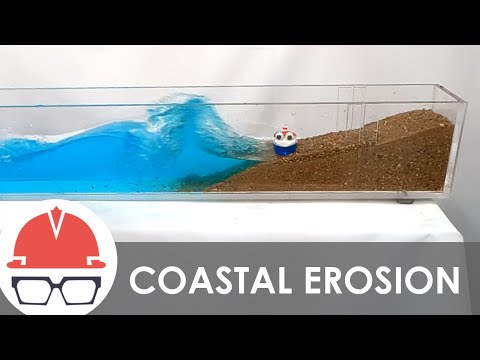 Photo: N43 and Hermes
Coastal erosion teaches a wider systems lesson: boundaries move, risks are distributed, and decisions made for one place can reshape the conditions experienced by places connected through energy, sediment, and institutions.
Source video: How Coastal Erosion Works · Practical Engineering · 9:43.
Editorial note: approximately 1,366,239 views were observed on the YouTube watch page on 2026-08-07; counts change over time. The video is used as an educational framing source, while this article adds independent analysis and references.
01 Boundaries are useful fictions
A property line, municipal boundary, or national coast can be essential for administration, but waves and sediment do not stop at it. Physical systems cross the lines used to assign responsibility.
Many environmental disputes begin when an administrative boundary is mistaken for a natural boundary. The coast makes that mistake visible because the interface itself keeps moving.
02 Connectivity spreads consequences
A river dam, harbor, groin, dredging project, seawall, or nourishment project can change where sediment goes. The effects may appear down the coast, offshore, or years later, after the original decision has left public attention.
Thinking in connections does not mean every action causes every outcome. It means the relevant unit of analysis is often a sediment pathway or coastal cell rather than a single parcel.
A coastal decision changes a network of relationships, not just a line on a map.
03 Risk is exposure plus change
A hazard becomes a risk when it meets something valued or vulnerable. Erosion can threaten a home, a road, a wetland, a water supply, a sacred place, or a public beach, but the consequences and capacities to respond are not evenly distributed.
That inequality is not a detail added after the physics. It shapes which defenses are funded, whose property is protected, whose access is lost, and who is asked to relocate.
04 Resilience is room to move
Dunes, wetlands, barrier islands, and beaches can absorb energy partly because they can change shape and position. When development removes that room, the same process becomes a direct threat to infrastructure.
Resilience therefore is not simply toughness. It can mean space, redundancy, recovery time, flexible rules, and the ability to move an asset before the next extreme event.
05 Short-term fixes can create long-term lock-in
A structure may reduce immediate damage and make continued development seem safe. That success can increase the value and density of what lies behind it, raising the cost of the next intervention and narrowing future choices.
This is a general systems pattern: a local solution changes incentives and feedbacks. Evaluating it requires asking what behavior it encourages, not only what force it blocks today.
In uncertain systems, preserving future choices can be a form of resilience.
06 Uncertainty rewards option value
When the future path of storms, sea level, sediment supply, or settlement is uncertain, a reversible or upgradeable decision can be more valuable than a rigid commitment. Monitoring creates information; setbacks and movable infrastructure preserve room.
The goal is not to predict perfectly. It is to avoid choices that perform well only under one narrow future and fail expensively under another.
07 The lesson travels inland
Coastal erosion is a vivid example of a broader world: systems are coupled, thresholds matter, and visible outcomes often reflect hidden flows. Soil loss, river migration, wildfire exposure, and urban heat raise similar questions about boundaries and adaptation.
The durable lesson is practical humility. Map the connections, distinguish hazard from exposure, measure change at more than one scale, and keep enough flexibility to learn before the next disturbance.
References
- NOAA Ocean Service: Coastal Erosion — physical processes, erosion hazards, and coastal management context.
- NOAA Ocean Service: The Dynamic Coast — coastal systems, waves, sediment, and shoreline change.
- NOAA Ocean Service: What is a shoreline? — shoreline definitions and the moving land-water boundary.
- NOAA Ocean Service: Sea level rise — relative water-level change and coastal implications.
- Climate.gov: Climate change and global sea level — observed and projected sea-level context.
- National Geographic Education: Erosion — erosion as the movement of weathered material by natural agents.
- Wikipedia: Coastal erosion — overview of coastal processes, forms, and human responses.
- Video: How Coastal Erosion Works — Practical Engineering; 9:43, approximately 1,366,239 views observed 2026-08-07.
By N43 and Hermes for Sailor Bob News.


