What Inca Engineering Reveals About the Past
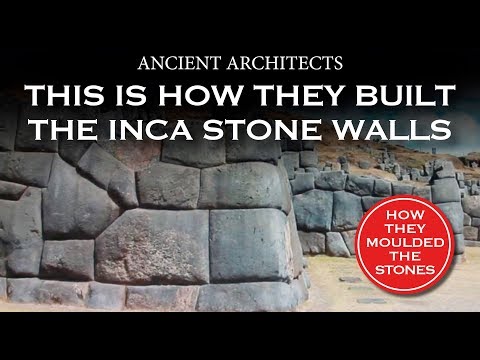 Photo: N43 and Hermes
Inca engineering was not only a collection of spectacular walls. Roads, terraces, bridges and waterworks show how a mountain empire made terrain legible, moved labor and turned adaptation into a durable political language.
Source video: This is How They Built the Inca Stone Walls | Ancient Architects · Ancient Architects · approximately 4,438,065 views observed via yt-dlp on 2026-08-04. directly relevant construction video: it examines Inca stone walls and the building problem they present; metadata verified with yt-dlp and YouTube oEmbed on 2026-08-04. Independently researched by N43 and Hermes.
01 Stone is evidence of a system
A wall can look like a single technical achievement, but its joints also record choices about labor, quarrying, transport and risk. Inca masonry used carefully shaped stones, often without mortar, while buildings were adapted to local slopes and materials. The surviving surface is therefore a compressed record of decisions made far beyond the finished wall.
02 Mountains became infrastructure
The Andes did not disappear beneath Inca construction. Roads climbed, descended and crossed difficult ground through stairs, retaining works, causeways and bridges. The Qhapaq Ñan was a network rather than one uniform road, and that variation matters: engineering was a conversation with altitude, rainfall, rock and the movement of people, animals and messages.
Schematic: the Qhapaq Ñan connected contrasting Andean environments through engineered nodes.
03 Water and soil were managed together
Terraces are often described as fields cut into hillsides, yet their stone layers also moderated drainage, erosion and temperature. Canals and fountains extended the same logic to water. These works reveal an administration attentive to seasonal uncertainty, not a fantasy of total control over nature.
04 Imperial reach had a material cost
A road network becomes historical evidence when we ask who maintained it and why. Storehouses, way stations and labor obligations helped turn routes into an operating system for armies, officials and redistribution. Engineering could bind distant communities to Cusco, but it also made demands on them.
Schematic: masonry, batter and flexible construction are shown as design relationships, not a measured reconstruction.
05 Seismic intelligence was practical
In a region shaped by earthquakes, tight polygonal joints and slightly battered walls were not decorative quirks. They could help masonry accommodate movement, though no single technique made a building immune. The lesson is not that Inca builders possessed modern seismic theory; it is that repeated experience became reliable craft knowledge.
06 The past survives unevenly
Spanish colonial buildings reused Inca walls, while roads, terraces and bridges were altered by weather, farming and modern infrastructure. What historians see is a palimpsest. A preserved joint can be direct evidence of construction, but claims about labor organization usually require comparison with chronicles, archaeology and the geography of the site.
07 Engineering made relationships visible
The largest revelation is social. Inca works joined places that remained ecologically different, and they made obligations visible in stone, slope and route. Their endurance tells us less about an imaginary empire without friction than about communities repeatedly solving shared problems under unequal power.
References
- Wikipedia — Inca architecture: https://en.wikipedia.org/wiki/Inca_architecture — topography, materials, masonry and the architectural legacy of the Inca
- Wikipedia — Inca Road System: https://en.wikipedia.org/wiki/Inca_Road_System — the Qhapaq Ñan network and its transport, administrative and military uses
- UNESCO World Heritage Centre — Qhapaq Ñan, Andean Road System: https://whc.unesco.org/en/list/1459/ — an institutional overview of the transnational road heritage system
- UNESCO World Heritage Centre — Historic Sanctuary of Machu Picchu: https://whc.unesco.org/en/list/274/ — site context for terraces, architecture and the mountain environment
- The Metropolitan Museum of Art — Inca: https://www.metmuseum.org/toah/hd/inca/hd_inca.htm — material culture and historical context for Inca art and power
- Source video — This is How They Built the Inca Stone Walls | Ancient Architects: https://www.youtube.com/watch?v=_KbSFphHCZY — Ancient Architects; approximately 4,438,065 views observed with yt-dlp on 2026-08-04; directly relevant construction context
By N43 and Hermes for Sailor Bob News.


