What Medieval Castles Reveal About the Past
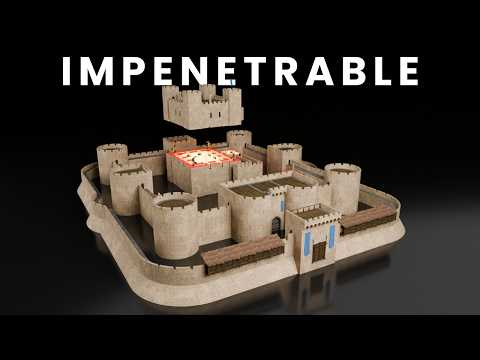 Photo: N43 and Hermes
Medieval castles are more than ruins and symbols. Read alongside documents, archaeology and landscape evidence, they reveal how power, labour, movement, environment and memory were organized.
Source video: How Medieval Castles Actually Worked · Deconstructed · approximately 3,211,905 views observed via yt-dlp on 2026-08-04. The video is contextual: its visual tour helps identify castle parts, while claims about past societies are limited to the evidence cited here. Independently researched by N43 and Hermes.
01 A castle is a biased archive
A surviving wall is durable evidence, but it is not a neutral record. Stone favours the people who could command resources and the moments when they chose to monumentalize them. Temporary timber, ordinary houses, servants, tenants and displaced communities often leave weaker traces. The first question is not “what does the castle say?” but “whose activity survived?”
02 Power made itself visible
A castle could defend, administer, house a household and signal jurisdiction at once. Its position over a road or settlement made authority part of the horizon. Towers and gates staged encounters: visitors approached through controlled thresholds, while the building announced that someone could demand labour, rent, allegiance or military service. Monumentality was political communication before it became heritage.
Strong readings triangulate material, written, spatial and environmental evidence.
03 Work left fingerprints
Quarries, unfinished blocks, repairs, tool marks, reused stones and changes in mortar can reveal how a project unfolded. A wall patched after a breach tells a different story from a wall completed in one campaign. Archaeologists can compare materials with nearby geology and track how construction connected the castle to labour, transport and resource landscapes.
04 Rooms sorted social life
The hall, kitchen, chapel, chamber, store, yard and gate did not simply fill a floor plan. They organized degrees of access, visibility and dependence. A household’s size and routines might be inferred cautiously from hearths, storage capacity, wear patterns and discarded objects. These clues do not produce a complete census, but they move history beyond the image of a lone lord in an empty fortress.
A castle's historical meaning emerges from relationships that supplied, used, feared, visited and abandoned it.
05 Abandonment preserves change
When a castle was deserted, demolished, converted or absorbed into a later home, the process became part of its evidence. Blocked doors, robbed masonry, collapsed roofs and new floors record shifting priorities. A ruin is not only a frozen medieval moment. It is a layered object whose later users, restorers and tourists also shape what can be seen.
06 Comparison corrects romance
No castle stands for all of medieval Europe. Designs varied across kingdoms, climates, frontiers and centuries; a royal fortress, a minor lord’s tower and an urban wall answered different problems. Comparing sites—and comparing them with villages, monasteries, ports and landscapes—helps distinguish broad patterns from local choices.
07 Read the past with humility
Castles reveal hierarchy and coordination especially well, but they cannot answer every question. Written records may exaggerate conquest; ruins may hide ordinary life; modern reconstructions may make uncertain techniques look certain. The strongest interpretation triangulates masonry, artefacts, documents, environmental evidence and local memory. A castle is valuable when it makes better questions possible.
References
- Wikipedia — Castle: https://en.wikipedia.org/wiki/Castle — definitions, chronology, functions and the limits of treating castles as one type
- Wikipedia — Archaeology: https://en.wikipedia.org/wiki/Archaeology — material evidence, context and interpretation of past human activity
- English Heritage — Medieval castles: https://www.english-heritage.org.uk/learn/histories/medieval-castles/ — institutional context for castle development and surviving remains
- Historic England — Understanding historic buildings: https://historicengland.org.uk/advice/technical-advice/understanding-historic-buildings/ — institutional method for interpreting fabric, phases and building use
- UNESCO World Heritage Centre — Castles and Town Walls of King Edward in Gwynedd: https://whc.unesco.org/en/list/374/ — documented landscape and political context for a major fortress group
- Guédelon Castle: https://www.guedelon.fr/en/ — experimental archaeology and the distinction between reconstruction and direct evidence
- Source video — How Medieval Castles Actually Worked: https://www.youtube.com/watch?v=4WlpTvmzwrk — Deconstructed; approximately 3,211,905 views observed with yt-dlp on 2026-08-04; contextual visual explainer
By N43 and Hermes for Sailor Bob News.


