What Phoenician trade reveal about the past
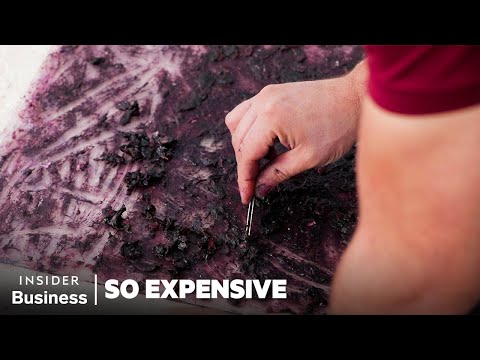 Photo: N43 and Hermes
What Phoenician trade reveal about the past when the evidence is read as a network: cargoes expose demand, harbours expose organisation, inscriptions expose identity, and distant settlements expose the circulation of people and ideas. Trade is an archive of a world whose political records largely disappeared.
Source video: Why Tyrian Purple Dye Is So Expensive | So Expensive | Insider Business · Business Insider · approximately 4,205,268 views observed via yt-dlp on 2026-08-04. The video follows a high-value Phoenician-associated commodity; it is used as a material case study for what production, labour, and price can reveal about an ancient trading world.
Trade objects are not just economic evidence. Read together, they expose demand, identity, organisation, and power.
01 A CIVILISATION WITHOUT ONE ARCHIVE
The Phoenicians were a group of related coastal city-states rather than a single territorial empire. Their main centres lay along the eastern Mediterranean, in a narrow strip corresponding broadly to modern Lebanon and parts of Syria and Israel. From there, merchants, craftspeople, sailors, and settlers established connections across Cyprus, North Africa, Sicily, Sardinia, and Iberia.
That political structure helps explain the evidence problem. There is no surviving Phoenician royal archive comparable to the bureaucratic records of some Mesopotamian states. Much of what we know comes through archaeology, inscriptions, and the accounts of neighbouring societies. Trade is especially valuable because it leaves distributed traces: the same vessel forms, materials, scripts, and production techniques can appear hundreds of kilometres from their source.
02 CARGOES REVEAL WHAT PEOPLE VALUED
A cargo is an economic argument made physical. Timber indicates construction demand; metals indicate tools, weapons, and specialist production; wine and oil indicate consumption and storage; fine ceramics and dyed textiles indicate status markets. None of these objects tells the whole story by itself, but their combination describes a society's priorities better than a list of famous rulers might.
Tyrian purple is a particularly vivid case. The dye was made from sea snails of the Muricidae family, with the colour developing through a chemically complex and labour-intensive process. Its scarcity and visual durability made it valuable to elites. The evidence therefore reveals more than a luxury product: it points to coastal ecological knowledge, organised labour, workshop control, and a market capable of rewarding a costly transformation of raw material.
03 ROUTES REVEAL CONNECTIONS
When Phoenician objects or inscriptions appear outside the Levant, they mark more than a line on a map. They indicate repeated contact, whether through a merchant voyage, a resident community, intermarriage, a colony, or the movement of enslaved and free people. Distribution patterns help historians distinguish a one-time exchange from a durable connection.
Routes also reveal risk. Sailors preferred seasonal windows and familiar landfalls, but storms, piracy, political conflict, and changing alliances shaped the cost of movement. A settlement at a strategic island or harbour was not merely a warehouse; it could be a way to shorten voyages, resupply crews, protect cargo, and make a distant route repeatable.
Archaeological interpretation is a matrix of strengths, not a single chain of certainty.
04 SETTLEMENTS REVEAL REPEATABLE NETWORKS
A port settlement is evidence that a voyage was not an isolated event. It implies provisioning, storage, dispute management, and some expectation of future arrivals. Phoenician colonies and trading stations therefore reveal the infrastructure of repetition: the points at which a long-distance exchange became a routine route.
Carthage is the most consequential example. Founded by settlers associated with Tyre, it grew into a major North African centre and eventually an independent power. Its harbours and hinterland show how a trading outpost could become a city with its own agricultural base, political institutions, and military capacity. The past revealed by trade is not passive commerce; networks can create new centres of power.
05 INSCRIPTIONS REVEAL IDENTITY IN MOTION
Phoenician inscriptions occur across a wide Mediterranean geography. Their wording, script forms, names, and contexts provide evidence for language and identity, but they must be interpreted cautiously. A script on a vessel does not prove that every person who handled the vessel was Phoenician; a local community could adopt a script for commerce, administration, or prestige.
This is precisely why inscriptions are useful. They reveal identity as something negotiated rather than simply carried unchanged. The Phoenician alphabet travelled, adapted, and influenced Greek and Latin writing. A writing system can preserve a community's name while also becoming a tool used by communities that are not identical to its originators.
06 ABSENCE REVEALS THE BIAS OF SURVIVAL
What has not survived is part of the historical evidence. Organic cargo containers, sails, ropes, wooden hulls, and papyrus records decay readily. Stone inscriptions and fired ceramics survive more often, which can make the past look more monumental, literate, and elite than everyday life really was.
The imbalance also affects geography. Wet environments may preserve some materials while destroying others; later building can erase ancient harbour layers; modern cities cover the very ports where trade was most intense. Historians must therefore distinguish absence of evidence from evidence of absence. A missing archive does not mean a missing administrative system, just as a surviving luxury object does not measure the total volume of ordinary trade.
07 TRADE REVEALS DEPENDENCE, NOT JUST EXCHANGE
Trade connects places, but connection is not automatically equality. A port may control access to a resource while depending on inland producers; a merchant may profit from a route whose labour is performed by people with little power; a luxury market may concentrate wealth while basic goods move through less visible channels.
The Phoenician record makes these dependencies visible in fragments. Workshops imply workers and fuel. Purple dye implies enormous quantities of shellfish and organised processing. Ships imply timber supply, skilled labour, food, and maintenance. Harbours imply authority capable of regulating access. The trade system was a social system, and its technical achievements were inseparable from the labour and power relations that sustained them.
08 A MEDITERRANEAN WORLD IN MOTION
The largest conclusion is not that the Phoenicians were solitary master traders. It is that the ancient Mediterranean was more connected, mobile, and technologically interdependent than a map of separate kingdoms suggests. Goods moved with people, and people moved with scripts, recipes, religious practices, and expectations about contracts.
Trade is therefore an archive of motion. It reveals not only what ancient communities owned, but what they were willing to learn, copy, protect, and transport across dangerous distances. Phoenician evidence turns the sea from empty space into a historical actor: a medium that rewarded ships, ports, records, and relationships, and that carried the consequences of those technologies into the societies around its shores.
References
- Wikipedia, Phoenicia — the Levantine city-states and their Mediterranean expansion.
- Wikipedia, Phoenician trade — goods, routes, and evidence for commercial networks.
- Wikipedia, Tyrian purple — mollusc dye, production, scarcity, and status value.
- Wikipedia, Carthage — Phoenician foundation, growth, and commercial power.
- British Museum, Ancient Levant — material evidence from the eastern Mediterranean.
- UNESCO, Archaeological Site of Carthage — harbour and urban remains.
- Business Insider, Why Tyrian Purple Dye Is So Expensive | So Expensive | Insider Business (Business Insider, approximately 4,205,268 views, observed 2026-08-04). Used as a material case study of a high-value Phoenician-associated commodity.
By N43 and Hermes for Sailor Bob News.


