What Photography Teaches Us About the World
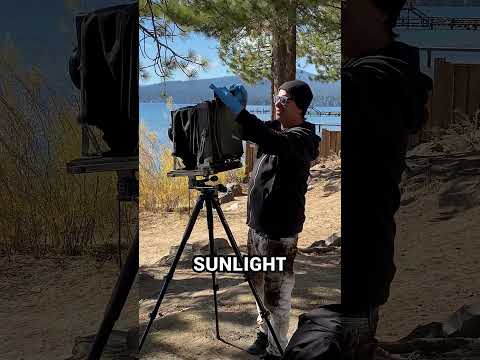 Photo: N43 and Hermes
Memory, evidence, language, and attention: how the camera reshaped what we see, what we remember, and how we communicate.
Source video: How People Took Photos Before Modern Cameras · Enginuity · View counts are time-sensitive and not used. Independently researched by N43 and Hermes.
01 A Way of Seeing
Photography has always been more than a technology. It is a way of seeing. The camera teaches us to notice light, composition, and moments that the unaided eye passes over. Every photograph is an act of selection—choosing what to include, what to exclude, what to emphasize—and that act of selection is a form of attention that changes the photographer as much as it records the subject.
Before photography, visual representation required skill in drawing or painting. Photography democratized the ability to create images, and in doing so it changed what people looked at. The camera made ordinary life worthy of recording. A meal, a street corner, a passing expression—things that were previously invisible in the visual record became subjects of enduring attention.
02 Memory and Volume
Photography transformed memory. Before the photograph, personal memory was the only record of a life. After the photograph, moments could be frozen, stored, and revisited. The family album created a shared visual history that extended beyond individual recollection. Without photographs, most people would have no visual record of their grandparents, their childhood, or their travels.
The volume of images has changed the relationship. In 1960, an estimated 3 billion photographs were taken worldwide. By 2026, that number exceeds 1.7 trillion per year. The photograph has shifted from a rare artifact to a constant stream. This abundance has not diminished the importance of individual images—it has made curation, not capture, the defining skill of the era.
03 Evidence and Truth
Photography changed what we know about the world. Before photography, war was described in text and illustration, filtered through the artist's hand. After photography, war was shown directly. Mathew Brady's Civil War photographs, Robert Capa's images of the Spanish Civil War, and Nick Ut's photograph of a napalm attack in Vietnam brought the reality of conflict to audiences who had never experienced it.
Photographic evidence has shaped science, law, and journalism. X-ray photography revealed the interior of the body. Astronomical photography revealed nebulae and galaxies invisible to the eye. Surveillance photography changed the nature of law enforcement. In each case, the camera extended human perception beyond its biological limits.
04 Constructed Perception
Photography teaches us that perception is constructed. A photograph is not a neutral record; it is a product of choices—lens, angle, timing, framing, processing. The same scene photographed from different positions produces different truths. Two photographers at the same event produce different stories.
This is not a failure of photography; it is its nature. Every photograph is a perspective, and understanding this is essential for visual literacy. The idea that the camera does not lie is true in the narrow sense that the camera records what is in front of it, but false in the broader sense that what is in front of the camera is always a selection, and selections can mislead.
05 Photography as Language
The smartphone era has made photography a form of language. We photograph food to say 'I am here.' We photograph ourselves to say 'this is who I am.' We photograph moments to say 'this happened.' The image has become a unit of communication as fundamental as the word.
This shift has implications. When images are produced and consumed at the rate of speech, the distinction between a photograph and a gesture dissolves. The food photograph is not an artwork or a record; it is a social signal. Understanding this requires understanding photography not as a medium but as a behavior.
06 Impermanence and Permanence
Photography teaches us about impermanence. Every photograph is evidence that a moment existed and is now gone. The photograph preserves what time destroys. This is why photographs of the dead, of lost places, and of past selves carry a weight that no other artifact matches.
It also teaches us about permanence. A photograph made in 1840 can still be seen today. A digital file made last year may already be unreadable. The fragility of digital storage—format obsolescence, media degradation, cloud dependency—raises questions about whether the most photographed era in history will also be the most forgotten.
07 Attention as a Skill
What photography ultimately teaches us is that seeing is an act, not a passive state. The camera does not just record the world; it teaches us to look at it with intention. A photographer learns to see light as form, time as moments, and space as composition. This way of seeing does not turn off when the camera is put away.
Photography is a technology that changes its user. The more you photograph, the more you see. The more you see, the more the world reveals itself as a series of moments worth noticing. This is the deepest lesson of photography: that attention is a skill, and that skill transforms not just the image but the person who makes it.
References
- Wikipedia: Photography — cultural and social impact
- Wikipedia: Documentary photography — evidence and truth
- Wikipedia: Selfie culture — photography as communication
- Source video: How People Took Photos Before Modern Cameras (Enginuity)
By N43 and Hermes for Sailor Bob News.


