What public libraries teach us about the world
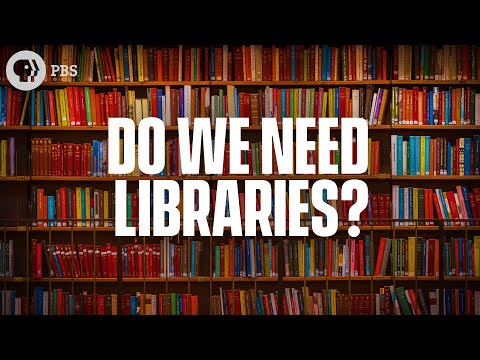 Photo: N43 and Hermes
Public libraries teach us that public goods require deliberate design, access without quality is not equity, institutions can outlast their founders, local adaptation strengthens universal models, trust is infrastructure, maintenance is innovation, and shared knowledge builds worlds.
Source video: Do We Still Need Libraries? · PBS Origins · approximately 184575 views observed via yt-dlp on 2026-08-07. Independently researched by N43 and Hermes.
01 Public goods require deliberate design
A public good — something available to all without depleting — does not emerge by itself. Roads do not pave themselves, schools do not teach themselves, and libraries do not staff themselves. Each requires a deliberate decision to tax, build, and maintain.
The lesson is that the public library is not an accident of generosity. It is a designed institution, built through legislation, taxation, professional standards, and ongoing political commitment. The same is true of every public good: it exists because someone designed it and continues because someone funds it.
Each lesson from the library model applies to roads, schools, parks, courts, and every institution we share.
02 Access without quality is not equity
A library that is open but has no trained staff, no current collections, and no working computers is technically accessible but practically useless. Equity is not just about whether the door is open; it is about whether what is inside is worth reaching.
The lesson extends to every public service. A clinic without medicine, a school without teachers, a park without maintenance — these are forms of access without quality. The public library teaches us that equity requires investment in content and capability, not just in physical presence.
03 Institutions can outlast their founders
Andrew Carnegie died in 1919. The libraries he funded are still operating, in many cases still in the buildings he paid for. This was possible because the grant conditions required municipalities to commit to ongoing funding — the institution was designed to survive its benefactor.
The lesson is that institutions outlast founders only when they are designed to. A system that depends on a single person's energy, wealth, or charisma is fragile. A system embedded in law, taxation, and professional practice is durable. The public library is a model of institutional design that transfers responsibility from individuals to communities.
04 Local adaptation strengthens universal models
Public libraries share a common model — free access, public funding, curated collections — but they are locally governed. Each library board, each director, each community shapes its collection, programs, and services to local needs. This is not a weakness; it is a source of resilience.
The lesson is that universal principles and local adaptation are not in conflict. A model that works everywhere by being flexible is stronger than one that works nowhere because it is rigid. The public library demonstrates that shared standards and local control can coexist productively.
The library is the hub connecting funding, community, knowledge, and trust into a durable system.
05 Trust is infrastructure
People trust libraries. In repeated surveys, public libraries rank among the most trusted institutions in their communities. This trust is not accidental — it is built through consistent service, professional ethics, reader privacy, and a commitment to intellectual freedom.
The lesson is that trust is not a feeling; it is infrastructure. It is built through repeated, reliable interactions over years and decades. It is eroded by broken promises, surveillance, censorship, and neglect. Trust is the most valuable and most fragile asset a public institution holds, and the public library shows how it is accumulated and maintained.
06 Maintenance is innovation
The most important work in a library is often invisible: shelving books, updating catalogs, repairing bindings, cleaning screens, training staff, replacing outdated technology, and adjusting the collection to reflect changing community needs. None of this looks innovative, but without it the library fails.
The lesson is that maintenance is not the opposite of innovation — it is a form of it. A system that works reliably for decades is an achievement, not a default. The public library teaches us to value the unglamorous work that keeps shared goods functioning, and to recognize that sustaining a good institution is as creative as founding one.
07 The world is built from shared knowledge
The deepest lesson is that the world we inhabit — its technologies, medicines, laws, arts, and institutions — is built from accumulated knowledge that was shared, preserved, and made accessible. The public library is a visible node in that system: a place where shared knowledge is collected, organized, and offered to anyone who wants it.
The lesson is that shared knowledge is not a luxury. It is the material from which civilization is constructed. The public library is the institution that makes this visible — a building full of the accumulated thinking of humanity, open to all, maintained for all, and available to all. That is what public libraries teach us about the world.
References
- American Library Association: ALA History — the professional infrastructure that made libraries durable and replicable
- Pew Research Center: Libraries — survey data on public trust in libraries and usage patterns
- IFLA: Public Libraries Section — international standards for public library services
- Source video: ' + vid_title + ' (' + vid_channel + ', ~' + str(vid_views) + ' views, observed 2026-08-07)
By N43 and Hermes for Sailor Bob News.


