What Swahili Cities Reveal About the Past
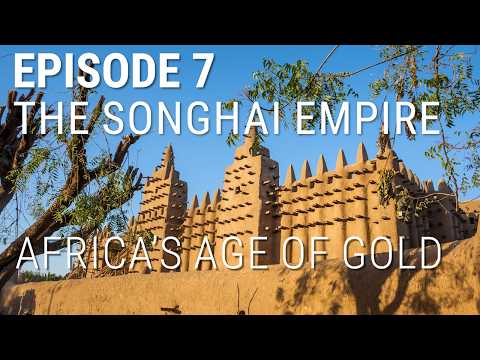 Photo: N43 and Hermes
Swahili cities reveal a past made by African communities, Indian Ocean exchange, Islamic institutions, local languages, ecological knowledge, and ordinary work that survives in ruins, objects, and living histories.
Source video: 7. The Songhai Empire - Africa's Age of Gold · Fall of Civilizations · approximately 10,571,742 views observed via yt-dlp on 2026-08-04. This is a contextual source for the article rather than a sole source for the specific claims below. Independently researched by N43 and Hermes.
01 THE PAST IS NOT A POSTCARD
Swahili cities reveal the past most clearly when we stop treating them as picturesque ruins. A coral-stone wall is not only an architectural image; it is evidence of quarrying, lime production, skilled labor, household wealth, and coastal geology. A bead is not merely decoration; it can mark a chain of exchange. The historical task is to connect small traces to the systems that made them meaningful.
02 RUINS SHOW HOW LOCAL AND GLOBAL MET
Sites along the coast preserve a productive tension. Their buildings and languages grew from African communities, yet their residents participated in Indian Ocean circuits that reached Arabia, Persia, India, and beyond. That is not a contradiction. It is the normal condition of a port city: local institutions decide how outside materials, styles, beliefs, and people are received, translated, or refused.
Archaeologists reconstruct urban life by comparing architecture with small, mobile, and environmental traces.
03 OBJECTS MOVE, BUT THEY DO NOT EXPLAIN THEMSELVES
Imported ceramics, glass beads, coins, and textiles can demonstrate contact, but contact is not the same as domination. An object may have arrived as cargo, a gift, a religious item, a household purchase, or a reused fragment. Archaeology becomes history when it asks who handled the object, where it was placed, and what local practice gave it a second life. The coast cannot be read by counting imports alone.
04 URBAN LIFE WAS LARGER THAN PALACES
Great mosques and elite houses attract attention because they survive dramatically, but cities were sustained by less monumental spaces: kitchens, courtyards, workshops, wells, paths, markets, and rooms where people stored and repaired things. These traces recover ordinary agency. They show merchants, builders, fishers, farmers, porters, religious teachers, and domestic workers making urban life possible even when written sources mention only rulers.
The city was a junction of ecological, maritime, institutional, and domestic relationships—not an isolated trading post.
05 THE SWAHILI LANGUAGE REMEMBERS CONTACT DIFFERENTLY
Swahili offers a historical lesson in mixture without erasure. Its grammatical foundation is Bantu, while centuries of exchange brought loanwords and writing practices from Arabic and other languages. The result is not a simple percentage of origins. It is a record of people choosing a common language for coastal life, shaping it through trade, kinship, religion, work, and regional identity.
06 ISLAM WAS EMBEDDED IN COASTAL SOCIETY
Mosques, tombs, inscriptions, and Islamic learning show that Islam was not an external label pasted onto an otherwise unchanged city. Conversion and practice were negotiated through families, patrons, teachers, and institutions. Religious life connected Swahili communities to wider intellectual worlds while remaining grounded in local architecture, local speech, and local social obligations.
07 THE COAST EXPOSES THE LIMITS OF ISOLATED NATIONAL HISTORIES
Modern borders can make the medieval coast look fragmented, yet its historical actors moved through waters and relationships that ignored today's map. Kilwa's connections, Gedi's urban fabric, Mombasa's harbor, and Zanzibar's later prominence belong to overlapping histories of Africa, the Middle East, South Asia, and the ocean itself. Swahili cities reveal a past made by circulation—not a past waiting to be assigned to one nation.
08 WHAT SURVIVES IS A QUESTION, NOT A VERDICT
Archaeology gives us powerful evidence, but it also preserves uncertainty. A buried wall can establish sequence without telling us every name; a coin can prove movement without revealing its final owner. That humility strengthens the history. Swahili cities matter not because they offer a complete story, but because they teach us to build a fuller one from architecture, objects, language, ecology, and living communities.
References
- Wikipedia, Swahili coast — urban history, trade networks, Islam, and coastal identity.
- UNESCO, Ruins of Kilwa Kisiwani and Songo Mnara — archaeological remains and historical significance.
- UNESCO, Gedi Historic Town and Archaeological Site — material evidence for urban life and regional connections.
- The Metropolitan Museum of Art, The Swahili Coast — objects, exchange, and coastal material culture.
- Source video: 7. The Songhai Empire - Africa's Age of Gold — Fall of Civilizations; contextual source rather than a direct excavation report, metadata verified with yt-dlp on 2026-08-04; 10,571,742 observed views.
By N43 and Hermes for Sailor Bob News.


