What the blood-brain barrier teaches us about the world
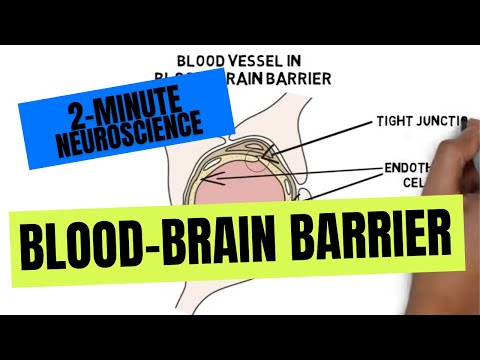 Photo: N43 and Hermes
The BBB is a compact lesson in boundaries: protection needs exchange, systems are made of relationships, and every measurement has a context.
Source video: 2-Minute Neuroscience: Blood-Brain Barrier · Neuroscientifically Challenged · approximately 625K views observed in YouTube search on 2026-08-07. Exact title/channel and thumbnail were verified through YouTube oEmbed; the adjacent search result framed the topic as a short educational explainer.
01 Boundaries are negotiated
A boundary is often imagined as a line separating inside from outside. The blood-brain barrier shows a more useful picture: a boundary is a set of negotiated permissions. It allows some molecules, refuses others, and changes the rules when the tissue sends a signal.
That pattern appears beyond neuroscience—in skin, gut, placenta, and the immune system. A living boundary does not preserve identity by refusing all contact. It preserves identity by controlling contact.
02 Protection can create dependence
The brain is shielded from many circulating hazards, but the same shield makes it dependent on transporters and local regulation. Neurons cannot simply draw every nutrient from the bloodstream. They rely on specific routes for glucose, amino acids, ions, and other supplies.
This is a systems trade-off: security reduces exposure but increases the importance of the approved supply chain. A failure in a transporter, vessel, or signalling partner can matter even when the gross structure looks intact.
03 The whole is more than its parts
Endothelial junctions, pericytes, astrocytes, matrix, blood flow, immune signals, and neurons each have identifiable roles. Yet none alone is “the barrier.” Their interactions produce the selective behaviour. This is a general lesson in biology and engineering: function often resides in coordination rather than inventory.
It also cautions against isolated fixes. Strengthening one junction protein may not restore transport balance, vascular tone, or immune regulation. Complex systems rarely have a single master knob.
04 Exceptions reveal the design
The brain’s more permeable circumventricular organs are revealing because they make the hidden purpose visible. The system is not optimized for maximum closure; it is optimized for useful control. Sensors and secretory regions need access to the blood even as most neural tissue is protected from it.
In many domains, exceptions are where the design intent becomes legible. A fire door, a customs checkpoint, or a data firewall is understood by studying both its default rule and its authorized openings.
05 Measurements are models of reality
A tracer image, a dye stain, a cell-culture assay, and a drug concentration each answer different questions. The famous early dye experiments were powerful because they exposed compartmentalization, but they could not identify every molecular gate. Modern assays are richer, not magically context-free.
Good science therefore pairs a measurement with its assumptions: what crossed, where it was measured, how long it was present, and whether injury changed the route. The same discipline improves decisions far outside medicine.
06 A better metaphor for knowledge
The blood-brain barrier is sometimes described as a fortress. A better metaphor may be a staffed border crossing with sensors, customs lanes, supply routes, and emergency rules. It is protective, porous, active, and vulnerable to changing conditions.
That metaphor leaves room for the final lesson: safety and openness are not opposites. The hard work lies in designing the conditions under which exchange remains beneficial—and in noticing when the conditions have changed.
References
- Wikipedia, Blood–brain barrier — structure, transport, history, and specialized regions.
- NCBI Bookshelf, Anatomy, Head and Neck: Blood Brain Barrier — clinical anatomy and barrier components.
- Frontiers in Neuroscience, The rights and wrongs of blood-brain barrier permeability studies — historical methods and interpretation.
- Source video: 2-Minute Neuroscience: Blood-Brain Barrier (Neuroscientifically Challenged, approximately 625K views observed in YouTube results; 1:59; checked 2026-08-07; oEmbed title/channel verified).
By N43 and Hermes for Sailor Bob News.