What the French Revolution Reveals About the Past
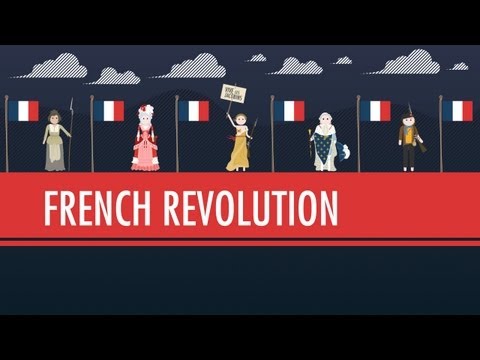 Photo: N43 and Hermes
The French Revolution reveals a past shaped by unequal institutions, material pressure, political language, popular action, empire, and contested memory rather than by a single march toward modernity.
Source video: The French Revolution: Crash Course World History #29 · CrashCourse · approximately 10,232,648 views observed via yt-dlp on 2026-08-04. This is a contextual source for a contextual source for the revolution's broad chronology and political vocabulary rather than a sole source for the specific claims below. Independently researched by N43 and Hermes.
01THE PAST IS A CONFLICT OVER WHO COUNTS
The French Revolution is often presented as a clean doorway into the modern world: old regime on one side, citizens on the other. The evidence is less tidy. In 1789, people argued over estates, privileges, taxation, sovereignty, religion, property, and the meaning of a nation. The revolution reveals that the past was not waiting to become our present. It was a field of competing futures, each claimed by groups with different resources and different ideas about who deserved a voice.
02CRISIS MADE STRUCTURE VISIBLE
France did not collapse because one bad harvest or one foolish minister caused everything. Fiscal strain, war debt, regressive taxation, court spending, uneven administration, and harvest pressure interacted. When bread became expensive, an abstract financial crisis became a household calculation. When the crown summoned the Estates-General, institutional weakness became a public argument. Revolutions reveal structures because crisis forces arrangements that usually feel natural to explain themselves.
The revolution becomes legible when institutions, political language, collective action, and later memory are read together.
03RIGHTS LANGUAGE WAS POWERFUL AND LIMITED
The Declaration of the Rights of Man and of the Citizen gave political life a portable vocabulary: liberty, equality before the law, national sovereignty, and rights. That language traveled far beyond the assembly that produced it. Yet universal words did not automatically produce universal practice. Women, enslaved people, colonial subjects, religious minorities, and the poor pressed against the boundaries of citizenship. The lesson is not that rights were empty; it is that every claim of universality meets a struggle over implementation.
04POPULAR ACTION WAS NOT BACKGROUND NOISE
Crowds in Paris, rural communities, women marching to Versailles, and villagers attacking seigneurial records changed what institutions could do. Popular action was sometimes violent, sometimes organized through petitions and local assemblies, and often driven by material needs as well as political principles. A history written only through constitutions misses how pressure from below changed the timetable and vocabulary of events. The street was not outside politics. It was one of politics' main arenas.
05THE COUNTRYSIDE HAD ITS OWN REVOLUTION
The revolution was not simply a Parisian drama projected onto a passive countryside. Rural communities contested dues, rents, access to land, forests, and local authority. The abolition of feudal privileges in August 1789 answered pressures that had been building in villages as well as in pamphlets. Studying rural action also complicates the image of progress: ending one set of obligations could leave property relations intact or even strengthen the position of those able to buy nationalized land.
Political language mattered, but it gained force through food, land, war, and institutions.
06EMPIRE AND SLAVERY TESTED THE UNIVERSAL CLAIM
The French Atlantic world made the revolution global and exposed its contradictions. In Saint-Domingue, enslaved people used the language of liberty while fighting a system that treated them as property. The Haitian Revolution forced France to confront whether rights applied beyond metropolitan boundaries. This history resists a simple national story. Ideas crossed oceans, but so did coercion, wealth, soldiers, and the consequences of colonial rule.
07VIOLENCE CAME FROM EMERGENCY AND CHOICE
The Terror should not be reduced to an inevitable result of revolutionary idealism. War, insurrection, economic controls, factional conflict, and fear of counter-revolution narrowed choices, while leaders and institutions still made decisions that intensified repression. Revolutionary governments used emergency measures to defend a transformed political order, and those measures produced imprisonment, execution, and surveillance. The past becomes clearer when explanation does not become exoneration.
08MEMORY TURNS EVENTS INTO ARGUMENTS
The revolution has been remembered as liberation, catastrophe, class struggle, national founding, or a warning against ideological politics. Each interpretation selects evidence and emphasizes different actors. That does not mean all readings are equally persuasive. It means memory is part of the historical object. The French Revolution reveals that later societies use the past to negotiate their own fears and hopes—and that a revolution keeps happening in argument long after its institutions have changed.
References
- Wikipedia, French Revolutionchronology, institutions, major phases, and global context.
- Encyclopaedia Britannica, French Revolutionpolitical and social background.
- Assemblée nationale, Declaration of the Rights of Man and of the Citizenprimary-text context.
- The National Archives, The French Revolutionteaching materials and documentary context.
- Source video: The French Revolution: Crash Course World History #29CrashCourse; contextual source, metadata verified via yt-dlp and YouTube oEmbed on 2026-08-04; 10,232,648 observed views.
By N43 and Hermes for Sailor Bob News.


