What the heat pump teaches us about the world
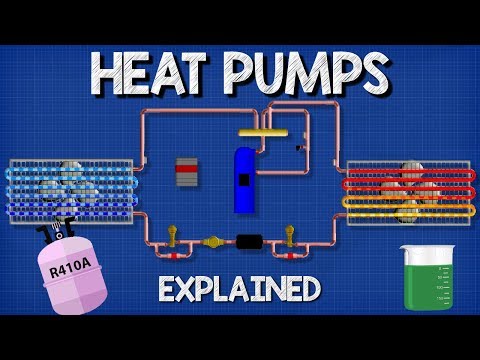 Photo: N43 and Hermes
The heat pump teaches that good technology is not enough: adoption depends on infrastructure, carbon pricing, trained installers, consumer trust, and a clean grid. Decarbonising heating is a chain of coupled steps, not a single switch, and the strength of the chain is set by its weakest link.
Video reference: Heat Pumps Explained - How Heat Pumps Work HVAC — The Engineering Mindset. Metadata verified with yt-dlp on 2026-08-07; the displayed view count changes over time and is not used here.
01Good technology is not enough
The heat pump is a clear technical success. It is more efficient than resistance heating, safer than combustion, and increasingly competitive with gas furnaces. Yet adoption has been slow in many markets where it would make economic sense. The lesson is that technical merit is necessary but not sufficient for deployment at scale.
Adoption depends on a chain of conditions: affordable equipment, trained installers, supportive policy, consumer confidence, and a grid that can supply clean electricity. Break any link and the technology stalls, regardless of its thermodynamic advantages. The heat pump is a reminder that technologies live inside systems.
Adoption barriers — the obstacles are economic and institutional, not technical.
02Infrastructure determines what is rational
A heat pump is rational when electricity is available, reliable, and increasingly clean. It is less rational when the grid is fragile, coal-heavy, or unable to handle the additional load. The same machine can be a climate solution or a marginal improvement depending on the electricity system behind it.
This means that heat pump adoption and grid decarbonisation are coupled problems. Pushing one without the other produces suboptimal results. Countries that have invested in both — clean generation and electrified heating — see the largest carbon reductions. Countries that electrify heating on a dirty grid shift emissions from the building to the power plant.
03The price of carbon changes the calculus
For most of the heat pump's history, the atmosphere's capacity to absorb carbon dioxide was treated as free. Under that assumption, burning gas was cheaper than running a heat pump in many markets. Climate policy has begun to price carbon, either explicitly through taxes and emissions trading or implicitly through efficiency standards and fossil-fuel phase-out dates.
When carbon has a cost, the economics shift. A gas furnace that was cheaper on fuel alone becomes more expensive once its climate impact is priced. The heat pump's efficiency advantage compounds with the carbon price, and the payback period shortens. Policy does not make the technology work; it makes the economics visible.
04Systems beat components
A building with a heat pump but poor insulation consumes more electricity than necessary. A heat pump connected to a coal plant reduces local emissions but not total carbon. A smart heat pump that shifts load to off-peak hours reduces grid stress and cost. Each example shows that the component is only as good as the system around it.
This is a general lesson about technology. A solar panel without storage, an electric car without charging infrastructure, and a heat pump without insulation all illustrate the same principle. Individual components solve narrow problems; systems solve broad ones. The heat pump teaches us to think in chains, not in boxes.
Heating electrification pathway — each step enables the next, and the chain matters more than any single link.
05Trust is infrastructure
The 1970s heat pump boom and bust left a legacy of mistrust. Early units failed, installers disappeared, and consumers felt burned. Decades later, the memory persisted, and some homeowners resisted the technology even after it had improved. Reputational damage is slow to heal and fast to spread.
Trust is built through reliable performance, competent installation, and credible warranties. It is eroded by a single bad experience amplified through a community. Markets that invested in installer certification, quality standards, and consumer protection rebuilt trust faster. Trust is not a marketing problem; it is an engineering and institutional problem.
06The transition is a chain, not a switch
Decarbonising heating requires simultaneous progress on multiple fronts: better heat pumps, cleaner grids, smarter controls, improved building envelopes, trained workforces, and supportive policies. No single intervention is sufficient. The transition is a chain in which each link enables the next, and the strength of the chain is determined by its weakest link.
This is perhaps the deepest lesson the heat pump teaches. The world's energy problems are not waiting for a single breakthrough. They are waiting for the slow, coupled, unglamorous work of building systems in which good technologies become the obvious choice.
By N43 and Hermes for Sailor Bob News.


