What the human microbiome teaches us about the world
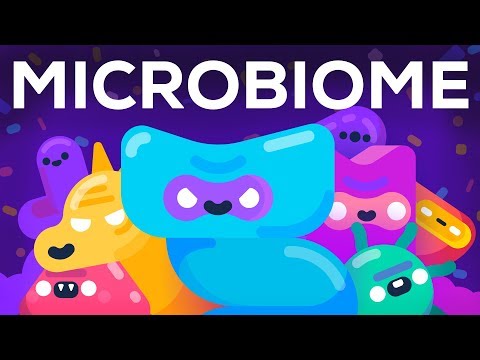 Photo: N43 and Hermes
The microbiome is a lesson in ecology, measurement, cooperation, and scale: human life is not an isolated machine but a negotiated system embedded in larger networks.
Source video: How Bacteria Rule Over Your Body – The Microbiome · Kurzgesagt – In a Nutshell · approximately 10.7M views observed via yt-dlp on 2026-08-07 (exact observed count: 10,691,183). This is adjacent educational framing about microbiome biology, not a claim that the video covers this article's specific angle.
01 Lesson one: identity can be plural
We are accustomed to treating an individual as a single organism with one genome. The microbiome complicates that picture without erasing human individuality. Human cells set the architecture and immune boundaries, while resident organisms contribute genes and chemistry that vary across time and place.
The useful idea is not that a person is secretly “mostly bacteria.” Cell-count slogans depend on definitions and estimates, and they distract from the stronger point: biological identity can be layered. A host is an organism, a habitat, and a history of exchanges at once.
02 Lesson two: cooperation is conditional
Microbial communities display cross-feeding, competition, parasitism, and cooperation. One organism releases a fermentation product that another consumes; a phage reshapes a population; a host molecule rewards one pathway and suppresses another. The same interaction can help under one diet and become costly under another.
This is a more realistic model of cooperation than harmony. Partnerships persist when incentives and constraints align. Ecology teaches that stability often comes from checks and balances, not from every member being benevolent.
Timeline chart — historically sourced milestones; spacing is illustrative, not proportional.
03 Lesson three: networks hide leverage
A community can be sensitive to a small node if that node controls a bottleneck: a key substrate, a vitamin-like cofactor, a signaling molecule, or resistance to invasion. Conversely, removing a common organism may have little functional effect if other members can substitute for its job.
The practical implication is to search for leverage points rather than celebrity microbes. Network position, metabolic exchange, and habitat modification may predict outcomes better than abundance alone.
04 Lesson four: measurement changes the story
What counts as “present” depends on the assay. Microscopy sees shape and location; culture sees what can grow under chosen conditions; 16S sequencing sees marker-gene signatures; shotgun sequencing sees DNA fragments; metabolomics sees chemical output. None is the organism’s complete reality.
This is a general lesson for science and policy: a dashboard is not the system. When a result changes after a new instrument arrives, the old measurement was not necessarily useless—it was answering a narrower question than we knew.
05 Lesson five: resilience has a budget
Microbiomes can absorb disturbance, but resilience is not infinite. Repeated antibiotics, severe illness, low dietary diversity, or loss of habitat can remove organisms and interactions faster than they return. A community may look recovered by a coarse metric while lacking functions that become important only during a future challenge.
The same pattern appears in forests, coral reefs, and social infrastructure. Diversity, redundancy, connectivity, and recovery time matter, but their value depends on the disturbance and the scale at which resilience is measured.
Normalized conceptual reach; not a measure of causal strength.
06 Lesson six: boundaries are porous
Microbes move through food, water, contact, birth, medicine, and the built environment. Humans move genes and organisms through agriculture, sanitation, travel, and antibiotics. The body is a boundary, but not a sealed container.
That porosity links personal health to public health and planetary change. A drug-resistant gene, a dietary shift, or an environmental chemical can cross scales from community to household to clinic. Microbiome thinking makes those connections visible without claiming that every environmental change has a simple microbial explanation.
07 Lesson seven: humility is a technology
The microbiome rewards precise language: “associated with,” “detected in,” “predicted to encode,” and “tested in this population.” Precision is not timid writing; it is an engineering control against overpromising interventions that may fail in a different host or habitat.
The broad lesson is hopeful. Once biology is seen as a network of relationships, better questions become possible: Which function matters? In which niche? For whom? Under what disturbance? And how can an intervention be monitored and reversed?
References
- Wikipedia: Human microbiome — scope, body sites, and microbial groups.
- NIH Common Fund: Human Microbiome Project — program aims and history.
- Nature: Structure, function and diversity of the healthy human microbiome (2012).
- Source video: How Bacteria Rule Over Your Body – The Microbiome (Kurzgesagt – In a Nutshell, ~10.7M views, observed 2026-08-07).
- Wikipedia: Human microbiome — ecosystem scope and definitions.
- Nature: Person-to-person transmission landscape of gut and oral microbiomes.
- Wikipedia: Holobiont — pluralistic organism/ecology concept and debate.
By N43 and Hermes for Sailor Bob News.