What the Khmer Empire Reveal About the Past
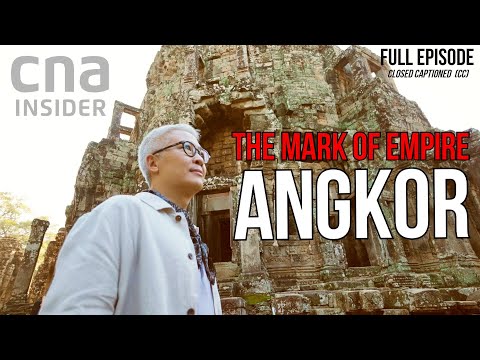 Photo: N43 and Hermes
Angkor does not hand us a finished story. It gives us stone, inscriptions, canals, remote-sensing traces and silences—and asks us to separate what the evidence shows from what later generations want the empire to mean.
Source video: Cambodia's Temple Kingdom | The Mark Of Empire | Angkor · CNA Insider · approximately 3,810,213 views observed via yt-dlp on 2026-08-04; title and channel cross-checked with YouTube oEmbed. Contextual documentary: its Angkor temple focus helps frame the empire's political and cultural reach rather than serving as a complete survey of every province. Independently researched by N43 and Hermes.
01 The past arrives in fragments
The Khmer Empire is unusually visible and unusually easy to misunderstand. Temples survive in monumental stone; much of the city around them was built from timber, earth and thatch. Inscriptions preserve royal and religious language; they rarely preserve the full texture of markets, households or dissent. Waterworks are legible from the air, but their dates and functions still require interpretation.
Historical knowledge therefore begins with a discipline of proportion. Angkor’s famous monuments are essential evidence, but they are not a census of the people who made the empire.
No single source is complete. The strongest interpretations compare durable monuments with texts, settlement traces and the evidence of absence.
02 Dates are frameworks, not verdicts
Histories of Angkor often use a conventional frame beginning with Jayavarman II’s accession in 802 and ending with the decline of Angkor as a dominant capital in the fifteenth century. Such dates help organize evidence, but they do not mean that a state began or ended overnight. Political authority, settlement and religious practice changed at different speeds.
Inscriptions can anchor a ruler, dedication or event, while archaeology can show that a landscape had a longer life than the inscription suggests. Good chronology lets different kinds of evidence revise one another.
03 Water complicates the collapse story
Angkor’s reservoirs and canals are often presented as proof of a hydraulic empire that simply “collapsed” when the system failed. The reality is more useful and more complicated. Waterworks supported urban life, yet they also demanded repair and responded to floods, droughts, sediment and shifting rainfall. Climate evidence, archaeology and historical interpretation point toward changing conditions rather than one universally accepted cause.
The lesson reaches beyond Cambodia: large infrastructure can be both adaptation and exposure. It solves problems while creating obligations that become visible only when conditions change.
04 A regional empire was not a uniform map
Khmer influence reached across mainland Southeast Asia, but influence could mean different things: direct rule, tribute, alliance, cultural prestige, military pressure or shared religious and artistic forms. A map colored as one empire can hide those differences. Inscriptions and regional archaeology are better read as evidence of relationships that varied across time.
This is a general warning for studying premodern states. Political geography was often layered. A local community could participate in a wider imperial order while retaining its own leaders, rituals and economic priorities.
A historical period is a bundle of overlapping timelines. Monument building, settlement change and religious transformation should not be collapsed into one curve.
05 Ordinary lives are the missing center
Farmers, porters, artisans, cooks, traders, monks and caretakers made the imperial landscape work. Their labor appears indirectly in foundations, food systems, tools, inscriptions and settlement patterns. The lack of personal testimony does not make those lives unimportant; it makes the historian’s method more comparative.
Household archaeology and landscape mapping are especially valuable because they shift attention from royal intention to lived infrastructure. A reservoir can be a royal monument in an inscription and a daily work obligation for a family nearby.
06 Angkor did not disappear
The phrase “lost civilization” turns a change of political center into a disappearance of people. Angkor’s importance changed, but Khmer communities, languages, religious practices and memories continued. Later Theravada Buddhist networks, regional trade and new centers reshaped the landscape rather than erasing it.
Conservation also creates a modern afterlife. The site is now interpreted through archaeology, tourism, Cambodian identity and international heritage institutions. Those uses are part of the history of Angkor, not a footnote after it.
07 What the evidence teaches us about history
Khmer history reveals that the past is not a completed archive waiting to be read. It is an argument assembled from materials with unequal survival, written from unequal positions of power. Temples can show ideology and engineering; inscriptions can show claims; landscapes can test those claims; absences can warn us not to overgeneralize.
The most responsible account is therefore neither romantic nor dismissive. Angkor was an extraordinary achievement, but its achievement becomes clearer when we see the people, maintenance and uncertainty behind the stone.
References
- Wikipedia: Khmer Empire — chronology, geography and political context.
- Wikipedia: Angkor — urban archaeology, monuments and the post-Angkor landscape.
- Wikipedia: Decline and fall of the Khmer Empire — competing explanations and the limits of a single-collapse narrative.
- UNESCO World Heritage: Angkor — archaeological evidence, conservation and continuing cultural significance.
- NASA Earth Observatory: Angkor: The City of the God-Kings — satellite and landscape perspectives on Angkor’s urban extent.
- Source video: Cambodia's Temple Kingdom | The Mark Of Empire | Angkor (CNA Insider, approximately 3,810,213 views, observed 2026-08-04; contextual documentary focused on Angkor and imperial memory).
By N43 and Hermes for Sailor Bob News.


