What the Khmer Empire teaches us about the world
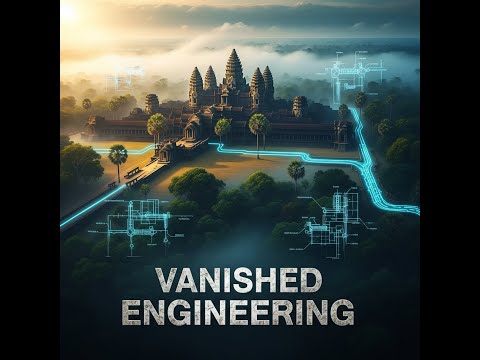 Photo: N43 and Hermes
The Khmer Empire teaches a modern lesson about interdependence: societies become powerful by linking systems, and vulnerable when those links outgrow the capacity to maintain them.
Source video: The Khmer Empire: How a Masterpiece of Water Engineering Vanished · The Wonder Lab · approximately 475 views observed via yt-dlp on 2026-08-07. Counts change; this video is contextual rather than the sole source for the article.
01 Systems hide inside monuments
A monumental city can look like the product of a few brilliant designs. In reality, it rests on food, transport, labor, water, accounting, and repeated maintenance. Angkor makes those hidden dependencies visible. The lesson applies to any city whose landmarks distract us from the networks that keep daily life possible.
Conceptual comparison · not a measured historical series
02 Resilience is not the same as size
Bigger reservoirs, longer roads, and larger institutions can increase capacity, but they can also increase the number of failure points. Resilience depends on feedback, redundancy, local knowledge, and the ability to change course. A system that cannot adapt its rules as conditions change may be less resilient than a smaller system with more slack.
03 Maps can exaggerate control
A political boundary suggests a uniform kind of power. Historical systems are often patchier: influence is strong near one center, negotiated along a road, and symbolic at a distant edge. The Khmer case cautions against treating every mapped territory as equally governed. This matters for how we read empires, states, and even modern administrative data.
04 Infrastructure is a social contract
A waterway works when people agree—or are compelled—to build, share, inspect, and repair it. Infrastructure therefore distributes opportunity and obligation. Its technical performance cannot be separated from trust, authority, labor, and legitimacy. When those relationships change, the same physical structure can produce different outcomes.
Relationship map · interpretive, not to scale
05 Decline usually has many causes
The end of a central role is rarely explained by one dramatic event. Climate variability, conflict, trade, disease, fiscal pressure, institutional change, and ordinary maintenance can interact. Angkor encourages a layered diagnosis: ask what changed, over what timescale, for whom, and which parts of the system continued. That is more useful than searching for a single villain.
06 Heritage is an active relationship
Angkor is not merely a frozen remnant. It is a protected landscape, a research site, a religious place, a source of national meaning, and part of local life. Conservation must balance stone, water, vegetation, visitors, residents, and the stories told about the past. The world inherits not only monuments but responsibilities.
07 The world lesson
The Khmer Empire shows that complexity is built from ordinary connections. Power grows when food, water, movement, meaning, and administration reinforce one another. Vulnerability grows when those connections become too rigid or too expensive to maintain. The practical lesson is modest but demanding: design for change, measure the whole system, and value repair before crisis makes it visible.
References
- World History Encyclopedia: World History Encyclopedia — overview of Khmer political history and chronology
- World History Encyclopedia: World History Encyclopedia — Angkor, its temples, urban setting, and waterworks
- Khan Academy / World History Project: Khan Academy / World History Project — Angkor Wat and the wider Khmer world
- Wikipedia: Wikipedia — chronology and cross-referenced overview; claims are checked against the institutional sources above
- Source video: The Khmer Empire: How a Masterpiece of Water Engineering Vanished (The Wonder Lab, approximately 475 views, observed 2026-08-07)
By N43 and Hermes for Sailor Bob News.


