What the Meiji Restoration Reveals About the Past
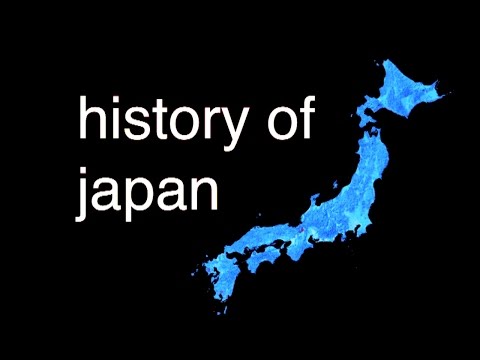 Photo: N43 and Hermes
The Meiji Restoration reveals a past shaped by contingency, selective modernization, social conflict, imperial power, and competing memories rather than by a straight march from tradition to modernity.
Source video: history of japan · bill wurtz · approximately 86,536,053 views observed via yt-dlp on 2026-08-04; this is a broad contextual source for Japan's long chronology; it is not treated as the sole source for the specific interpretations below. Independently researched by N43 and Hermes.
01THE PAST WAS NOT A STRAIGHT LINE
The Restoration is often narrated as a clean passage from feudal Japan to modern Japan. That language hides the uncertainty of the moment. People in the 1860s did not know which institutions would survive, who would rule, or what “civilization” would demand. The future was contested, not waiting at the end of a road. Studying the Restoration reminds us that historical change is made by choices under pressure, then given the appearance of inevitability by later stories.
02OUTSIDE PRESSURE DID NOT EXPLAIN EVERYTHING
Foreign warships and unequal treaties mattered, but they became decisive through Japanese debates about authority, defense, trade, and social order. Internal rivalries, domain finances, court politics, and popular unrest shaped the response. “Western pressure” is therefore a condition, not a complete explanation. The past is relational: global forces enter local institutions, where people interpret them through existing conflicts and available resources.
The Restoration looks different depending on the archive: proclamations show intent, infrastructure shows reach, households show cost, and empire shows power beyond the home islands.
03REFORM CARRIED COSTS
Centralization expanded schooling, transport, taxation, communication, and military coordination. It also demanded money, labor, obedience, and time from households. Land-tax burdens could provoke protest; conscription disrupted village life; factory discipline reorganized work. A reform can improve a state's capacity while worsening life for some people or shifting costs onto those with the least leverage. The historical record becomes clearer when achievement and injury are counted together.
04NATION BUILDING WAS SELECTIVE
The new nation was presented as a common project, but participation was uneven. The state classified people by household, status, gender, occupation, and territory. Education and citizenship language could widen horizons while political rights remained restricted. The past therefore resists simple labels such as “traditional” and “modern.” Institutions can be modern in technique and narrow in membership at the same time.
05EMPIRE IS PART OF THE RECORD
The Restoration reveals how national modernization and imperial expansion could reinforce each other. Administrative expertise, conscription, industry, and transport supported war and colonial rule. Victories were used to claim equality with Western powers, yet the resulting empire imposed unequal sovereignty on others. A history that celebrates only Japan's successful modernization leaves out the people who experienced that capacity as conquest.
A historical correction: administrative achievement and human cost are not competing stories. They are often evidence of the same expanding power.
06MEMORY CAN HIDE THE CONTRADICTION
Later memory often compresses a complex transformation into a heroic national recovery: emperor, samurai, industry, and progress arranged in a single line. Archives complicate that picture. Decrees reveal official intent; tax records show burdens; letters show uncertainty; industrial sites show labor; colonial documents show domination. The Restoration teaches a method as much as a lesson: compare the story a state tells with the traces left by people who had to live inside it.
References
- Wikipedia, Meiji Restoration competing political forces, reforms, conflict, and the transition from shogunate to imperial government.
- Wikipedia, Meiji period social, economic, military, and imperial developments from 1868 to 1912.
- Encyclopaedia Britannica, Meiji Restoration historical framing for the transformation and its international setting.
- UNESCO World Heritage Centre, Sites of Japan’s Meiji Industrial Revolution material evidence for industrial change and its human and environmental contexts.
- Source video: history of japan bill wurtz; a broad contextual source for Japan's long chronology; it is not treated as the sole source for the specific interpretations below; metadata verified via yt-dlp and YouTube oEmbed on 2026-08-04; 86,536,053 observed views.
By N43 and Hermes for Sailor Bob News.


