What the placebo effect teaches us about the world
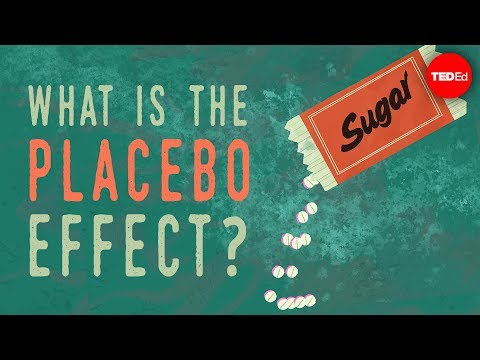 Photo: N43 and Hermes
Placebo research is a small laboratory for large questions: how predictions shape perception, how social signals enter biology, and how measurements become evidence. It teaches humility rather than wishful thinking.
Source video: The power of the placebo effect - Emma Bryce · TED-Ed · approximately 4,841,022 views and 278 seconds observed via yt-dlp on 2026-08-07. Independently researched by N43 and Hermes.
01 The body is open to meaning
A treatment is also a message: this is what the problem is, this is what will happen next, and someone has a plan. The nervous system does not receive that message as abstract prose; it uses it to regulate attention, threat, effort, and symptoms.
This does not mean the body is infinitely programmable. It means biology is responsive to information about safety, danger, and expected change. The placebo effect makes that responsiveness unusually visible.
02 Prediction is part of perception
The brain must interpret incomplete and noisy signals. A prior expectation can help it decide whether a sensation is alarming, tolerable, or worth attending to. In pain, a changed appraisal can alter suffering even when the underlying injury remains.
That lesson generalizes cautiously. A meaningful context can change what is experienced and reported, but it cannot replace evidence about the disease process. The power of a prediction is not proof that the prediction is true.
A mechanism map: the arrows describe a plausible pathway, not a guarantee that every patient passes through every step.
03 Trust is a biological variable
The clinician’s words, the organization of care, and the ritual of treatment all communicate credibility. Trust can support adherence and reduce threat; betrayal or frightening framing can produce the opposite, a nocebo-like burden.
This is not an argument for charisma over medicine. Trust is valuable precisely because it helps people use effective care: take the medicine, return for follow-up, report changes, and tolerate a difficult but necessary course.
04 Measurement is never neutral
A symptom score is not a direct camera pointed at disease. It is a structured report shaped by sensation, memory, attention, language, and the question asked. Biomarkers can add another layer, but they too have noise and a limited relationship to what matters to a patient.
Placebo-controlled designs teach a general rule for science: improvement after an intervention is evidence, but its interpretation depends on a counterfactual. Without a credible comparison, stories about cause become too easy.
05 Limits are part of the lesson
Placebo effects do not justify withholding antibiotics for bacterial infection, insulin for diabetes, or urgent care for a dangerous condition. An inert treatment may influence symptoms while the disease continues. Ethical care uses context to support proven treatment, not to disguise its absence.
The same caution applies to spectacular claims. If a result is described as “the body healing itself,” ask which endpoint changed, against which control, for how long, and with what biological evidence.
06 Uncertainty can be productive
Placebo science does not reduce medicine to mind over matter. It shows that mind, body, social setting, and measurement are coupled. That complexity is inconvenient, but it invites better questions: which parts of care help, for whom, under what expectations, and at what cost?
Illustrative normalized index for comparison, not a pooled clinical effect size; the source facts are explained in the surrounding text.
07 A more realistic picture of causality
The world is not split into “real drugs” and “mere psychology.” Molecules act in bodies that predict, learn, communicate, and report. Contextual effects are real inputs, while specific treatments still need controlled evidence. The durable lesson is disciplined openness: take experience seriously, test explanations fairly, and keep the limits of a claim in view.
References
- NCCIH, “Placebo Effect”: https://www.nccih.nih.gov/health/placebo-effect — Definition, expectancy, and randomized placebo-controlled trials.
- Wikipedia, “Placebo”: https://en.wikipedia.org/wiki/Placebo — Overview of terminology, history, and common placebo forms.
- FDA, “Step 3: Clinical Research”: https://www.fda.gov/patients/drug-development-process/step-3-clinical-research — Control groups, trial design, and limits on interpreting differences.
- PubMed, Beecher, “The Powerful Placebo”: https://pubmed.ncbi.nlm.nih.gov/1324154/ — The influential 1955 estimate and its historical role.
- Kaptchuk et al., PLOS ONE, “Placebos without Deception”: https://doi.org/10.1371/journal.pone.0015591 — Open-label placebo research in irritable bowel syndrome.
- TED-Ed, “The power of the placebo effect - Emma Bryce”: https://www.youtube.com/watch?v=z03FQGlGgo0 — Verified source video; 278 seconds and approximately 4.84 million views observed 2026-08-07.
By N43 and Hermes for Sailor Bob News.