What the steam turbine teaches us about the world
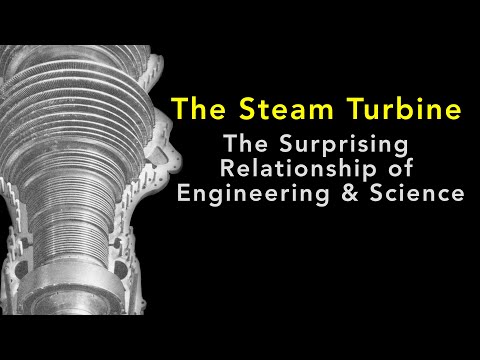 Photo: N43 and Hermes
The steam turbine is not just a machine but a lesson: about scale, about the limits of heat engines, about the invisible infrastructure that keeps civilization running, and about why the energy transition is harder than it looks.
Video reference: The Steam Turbine: The Surprising Relationship of Engineering & Science — engineerguy. Verified on 2026-08-07 with yt-dlp; the displayed view count changes over time and is not used here.
01The turbine and the electric age
The steam turbine made the electric age possible, and the electric age made the modern world. When Parsons connected his turbine to an alternator in the 1880s, he created the template for power generation that still dominates more than a century later. Every coal plant, every nuclear plant, every gas-fired station, and many solar-thermal plants use the same pairing: a heat source makes steam, a turbine spins, a generator makes electricity.
This is not a historical footnote. It means that the steam turbine is embedded in the infrastructure of civilization at a depth that is hard to overstate. When you switch on a light, charge a phone, or run a factory, there is a very good chance that the electricity arrived through a steam turbine. The machine is invisible, humming away in a building you will never visit, but it is one of the load-bearing walls of modern life.
02Scale and reliability: the grid's silent backbone
A single large steam turbine can generate over a gigawatt of electricity — enough for a city of a million people. It runs continuously for months at a time, shutting down only for scheduled maintenance. The reliability requirements are extreme: a sudden outage of a large turbine can destabilize an entire regional grid, triggering cascading failures and blackouts.
This scale has a paradoxical effect: it makes the turbine invisible. No one sees a steam turbine unless they work in a power plant. No one thinks about it unless it breaks. Yet the consistency of electric power — the fact that the lights come on every time you flip the switch — depends on hundreds of these machines running in synchronized harmony across a continent. The grid is not just wires; it is a thermodynamic system, and the steam turbine is its heart.
03The nuclear connection
Nuclear power is, in a thermodynamic sense, a variation on the steam turbine. A nuclear reactor is simply a different heat source: instead of burning coal or gas, it splits uranium atoms. The heat boils water, the steam drives a turbine, and the turbine drives a generator. Everything downstream of the reactor is identical to a fossil-fuel plant.
This is why nuclear power inherited the steam turbine's advantages and limitations. Nuclear plants can run at enormous scale and high reliability, but they are constrained by the same Carnot limit and the same condenser requirements. The reactor can reach high temperatures, but safety considerations often keep steam conditions lower than in the most advanced fossil plants, trading thermodynamic efficiency for engineering margins. The steam turbine is the bridge between atomic energy and the electrical outlet.
04The renewable paradox: steam's enduring role
One might expect that renewable energy would make the steam turbine obsolete. Solar panels and wind turbines generate electricity directly, without steam, without turbines, without heat. And indeed, the share of electricity from wind and solar is growing rapidly. But the steam turbine is not disappearing — it is adapting.
Concentrated solar power plants use mirrors to focus sunlight, generate steam, and drive turbines. Geothermal plants tap underground heat for the same purpose. Biomass plants burn organic fuel to make steam. And perhaps most importantly, many renewable-heavy grids rely on steam-turbine plants for backup: when the wind stops and the sun sets, something must keep the grid stable, and that something is often a gas or coal plant whose steam turbine can ramp up quickly. The energy transition is not a simple replacement of one technology with another; it is a reshuffling of roles, and the steam turbine continues to play several.
Coal, gas, and nuclear power — all steam-turbine-based — still produce most of the world's electricity.
05The limits of heat engines
The steam turbine teaches a lesson about limits. No matter how well engineered, a heat engine cannot exceed the Carnot bound. The best steam turbines in the world convert about 45 percent of their fuel's chemical energy into electricity; the rest leaves as waste heat. Combined-cycle gas plants — which use a gas turbine's exhaust to make steam for a steam turbine — can reach 60 percent, but the remaining 40 percent is still lost.
This is not a failure of engineering. It is the second law of thermodynamics, made visible in the cooling towers and condenser outflows of every power station. The heat that is not converted to electricity must go somewhere, and that somewhere is the environment. Understanding this limit is essential for thinking clearly about energy: improvements in efficiency are always possible at the margins, but the fundamental ceiling is set by physics, not by technology.
06What happens when the turbines stop
The fragility of this system becomes visible only when it fails. When a winter storm in Texas in 2021 knocked out natural gas supplies, steam turbines at power plants across the state stopped. The grid collapsed. Millions of people lost heat, light, and water in freezing temperatures. The event was a stark reminder that the steam turbine, for all its robustness, depends on a chain of inputs — fuel, water, cooling, maintenance — and that breaking any link can bring the whole system down.
The lesson is not that steam turbines are unreliable; they are among the most reliable machines ever built. The lesson is that civilization has built its energy foundation on a specific technology, and that technology's requirements — fuel supply, cooling water, skilled operators, precision manufacturing for replacement parts — are not optional. As the world transitions to new energy sources, the question is not whether the steam turbine will be replaced but how quickly, and what fills the gaps during the decades-long transition.
Actual efficiency has climbed steadily but remains bounded by the Carnot ceiling.
By N43 and Hermes for Sailor Bob News.


