What the water cycle teaches us about the world
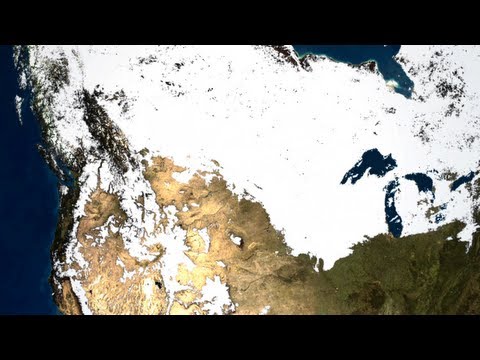 Photo: N43 and Hermes
The water cycle teaches a general systems lesson: what looks local is connected, what looks abundant may be slow to replace, and every shortcut changes a network of feedbacks.
Source video: NASA | Earth's Water Cycle · NASA Goddard · 5:53.
Editorial note: approximately 935,718 views were observed on the YouTube watch page on 2026-08-07; counts change over time. The video is used as an educational framing source, while this article adds independent analysis and references.
01 Boundaries are porous
A watershed has a line on a map, but its water does not respect every boundary. Atmospheric moisture crosses regions, rivers carry upstream decisions downstream, aquifers span property lines, and oceans connect distant climates.
Local responsibility still matters, but local control is never the whole story. Good decisions identify the external flows that keep entering the system.
The water cycle makes boundaries porous: a local basin is shaped by atmosphere, landscape, infrastructure, and decisions upstream and far away.
02 Abundance can be an illusion
A full river or reservoir can suggest security while hidden stores decline. Groundwater depletion, shrinking snowpack, soil moisture loss, and degraded wetlands may not be obvious in a single snapshot.
The cycle teaches us to ask about rates and residence times. A resource can appear plentiful because a slow reservoir is being spent faster than it is replenished.
03 Life is infrastructure
Roots, forests, wetlands, soils, microbes, and beavers change the movement and storage of water. They slow, filter, absorb, redirect, and return water to the atmosphere. Their work resembles infrastructure, but it is living, adaptive, and vulnerable.
Replacing those functions with concrete or pipes may solve one bottleneck while removing another. Systems thinking asks what ecological work was being performed before a structure was simplified.
04 Feedbacks make change uneven
Dry soils can reduce plant transpiration; altered vegetation can change local humidity and runoff; intense runoff can erode soil and reduce future infiltration. These are not universal one-way rules, but examples of how a change can modify the next pathway.
Feedback explains why two places with similar rainfall can experience different drought, flood, or recovery trajectories. History and structure shape sensitivity.
Water movement is not only a sequence of steps; changing one condition can alter the next set of pathways and the system's sensitivity.
05 Risk is distributed, not erased
A levee, dam, canal, or storm drain can reduce risk for some people and shift water, energy, or exposure elsewhere. A local success may depend on maintenance, upstream conditions, or a climate pattern that does not persist.
The ethical question is therefore not only whether an intervention works. It is who gains protection, who carries residual risk, and which ecological functions are traded away.
06 Data changes what counts as visible
Rain gauges reveal one kind of pattern; satellites reveal another; community memory may preserve a longer baseline than a short instrument record. No single view is complete.
This is a lesson about knowledge as well as water. Measurement choices determine which changes can be seen, compared, and acted upon. Better decisions combine scales instead of mistaking one dataset for the world.
07 Resilience means preserving options
A resilient water system has more than one way to store, move, clean, and release water. It retains wetlands, permeable soils, diversified supplies, functioning aquifers, and institutions that can adapt when conditions change.
The water cycle teaches the same lesson as many complex systems: resilience is not invulnerability. It is the capacity to keep multiple pathways available when one pathway fails.
References
- U.S. Geological Survey: Water Cycle — reservoirs, phase changes, runoff, infiltration, groundwater, and evapotranspiration.
- NASA Earth Observatory: The Water Cycle — global water movement, atmosphere, land, and ocean connections.
- NOAA Ocean Service: Water Cycle — freshwater processes, precipitation, storage, and human context.
- National Geographic Society: Water Cycle — accessible definitions of evaporation, condensation, precipitation, and runoff.
- Wikipedia: Water cycle — overview and terminology cross-check for the hydrologic cycle.
- Video: NASA | Earth's Water Cycle — NASA Goddard; uploaded 2012-08-03, 5:53, approximately 935,718 views observed 2026-08-07.
By N43 and Hermes for Sailor Bob News.


