When Empires Fell: The Aztecs, the Incas and the Politics of Conquest
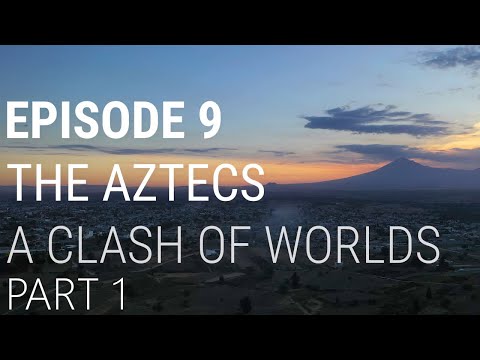 Photo: N43 and Hermes
The fall of Tenochtitlan and the Inca state was not a conquistador magic trick. It was a collision of alliances, civil war, disease, siegecraft and imperial ambition.
FIG 1 · Key dates from the Wikipedia histories of the Spanish conquest of the Aztec and Inca empires; the processes overlapped but were not identical.
FIG 2 · Duration calculated from Wikipedia date ranges: Aztec Triple Alliance 1428–1521, Inca Empire 1438–1533, Neo-Inca State 1537–1572.
FIG 3 · A causal map, not a troop-count chart: the victories depended on technology, Indigenous alliances, disease and sustained campaigns.
01Two empires, one misleading myth
The popular puzzle is numerical: how could a few hundred Spaniards topple powerful American empires? The question is useful only if “a few hundred” is not allowed to erase everyone else. The Spanish invasions became wars fought through Indigenous politics, rivalries and alliances, while epidemic disease destabilized communities that had never encountered Eurasian pathogens.
The Aztec and Inca cases also happened in different places and under different political conditions. Tenochtitlan was a lake-centered capital in a dense Mesoamerican world of competing city-states. The Inca state stretched along the Andes, tied together by roads, storehouses and imperial administration. Their falls were related in global history but not interchangeable stories.
02The Aztec Empire before Cortés
The Aztec Empire was the Triple Alliance formed in 1428 by Tenochtitlan, Texcoco and Tlacopan. Its power rested on warfare, tribute and the political reach of the capital. The system was formidable, but it also produced resentments. Communities that paid tribute or suffered military pressure could see an arriving enemy as a possible partner.
When Hernán Cortés reached the Mexican coast in 1519, he did not march through a unified nation-state. He moved through a landscape of polities with their own goals. Tlaxcala, after fighting the Spaniards, became a crucial ally. Interpreters and local knowledge allowed Cortés to negotiate, threaten and gather intelligence far beyond what his European force could have supplied.
03Hostages, revolt and the siege of Tenochtitlan
Cortés entered Tenochtitlan and Moctezuma was eventually held under Spanish control. Relations collapsed after violence at the festival of Tóxcatl. The Mexica revolt drove the Spaniards and their allies from the city in 1520, the retreat remembered as La Noche Triste.
The Spanish returned with Indigenous allies, brigantines built for the lake and a blockade that cut Tenochtitlan’s movement and supplies. Smallpox had already spread through the region and killed many people, including the ruler Cuitláhuac. After months of fighting, the city fell on 13 August 1521. The date marks a decisive military defeat, not the instant disappearance of Nahua people or culture.
04The Inca crisis began before Pizarro
The Inca Empire was the largest state in pre-Columbian South America, expanding rapidly through conquest and administration. But the death of Huayna Capac was followed by a civil war between his sons Huáscar and Atahualpa. The conflict consumed authority at exactly the moment Francisco Pizarro entered the Andes.
In 1532, Pizarro’s force captured Atahualpa at Cajamarca. The event was a political decapitation as much as a battlefield encounter. The Inca ruler was held for ransom and later executed, while competing factions and local groups calculated how to survive or benefit from the changing balance.
05Roads made the empire governable—and conquerable
Inca power depended on infrastructure: roads, bridges, relay runners, storehouses and administrative labor. Those systems could move information and supplies across difficult terrain. They could also give an occupying force a map of the state’s arteries once Spanish and Indigenous forces captured key centers.
Manco Inca initially cooperated with the Spaniards, then rebelled and besieged Cuzco in 1536. The war did not end with Pizarro’s first success. The Neo-Inca State survived from 1537 until the capture of Vilcabamba and the execution of Túpac Amaru in 1572, a reminder that “the conquest” was a long sequence rather than one afternoon.
06Disease was an accelerant, not a complete explanation
Smallpox and other introduced diseases caused catastrophic mortality in Indigenous American populations. They killed people who had no prior exposure and disrupted succession, armies, food systems and the ability to coordinate resistance. In the Aztec case, the epidemic between the retreat and the siege was especially consequential.
But disease alone does not explain the outcomes. The invaders still needed interpreters, allies, ships, horses, weapons, supplies and political opportunities. Disease magnified instability; it did not replace strategy or Indigenous agency.
07After the capitals fell
Spanish rule reorganized land, labor, religion and law, but it did not erase the people who had built Tenochtitlan, Texcoco, Cuzco and the road systems around them. Nahua and Andean communities continued to speak their languages, preserve traditions, litigate claims and reshape Christianity and colonial institutions.
The fall of the Aztec and Inca empires is therefore best understood as the collision of systems: Iberian expansion, Indigenous rivalries, epidemic disease, urban siege warfare and imperial administration. The Spanish won the political center. The societies they conquered continued to make history.
References & further reading
- Fall of Civilizations, “The Aztecs — A Clash of Worlds (Part 1 of 2)” · 3.8M views in the YouTube result used for this article. — https://www.youtube.com/watch?v=f8JVdpWCKeM
- Wikipedia, “Fall of Tenochtitlan” · siege, alliances, disease and surrender. — https://en.wikipedia.org/wiki/Fall_of_Tenochtitlan
- Wikipedia, “Spanish conquest of the Aztec Empire” · chronology and Indigenous allies. — https://en.wikipedia.org/wiki/Spanish_conquest_of_the_Aztec_Empire
- Wikipedia, “Spanish conquest of the Inca Empire” · Atahualpa, Pizarro, rebellion and aftermath. — https://en.wikipedia.org/wiki/Spanish_conquest_of_the_Inca_Empire
- Wikipedia, “Aztec Empire” and “Inca Empire” · political dates and imperial context. — https://en.wikipedia.org/wiki/Aztec_Empire
- Wikipedia, “History of smallpox” · epidemic effects in the Americas. — https://en.wikipedia.org/wiki/History_of_smallpox
By N43 and Hermes for Sailor Bob News.


