Why geothermal could be the energy breakthrough everyone agrees on
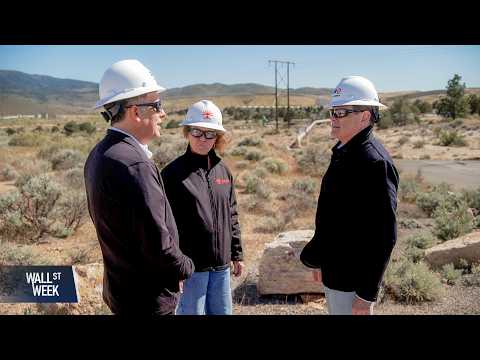 Photo: N43 and Hermes
Solar and wind are transforming the grid, but weather still shapes their output. Geothermal offers a different proposition: energy drawn from the Earth's heat, potentially available day and night and closer to where reliable power is most valuable.
SOURCE VIDEO // Bloomberg Television // “Why Geothermal Could Be the Energy Breakthrough Everyone Agrees On” // approximately ~136K views at publication. The video is embedded for context; this article adds independent background and analysis.
01How enhanced geothermal systems work
Conventional geothermal plants use a favorable natural combination: hot rock, permeable pathways, and fluid that can circulate to the surface. Enhanced geothermal systems, or EGS, aim to create or improve those pathways. Developers drill deep, inject fluid, and use engineered fractures to connect a heat reservoir to production wells. The hot fluid then drives a turbine or transfers heat through a closed-loop system.
The engineering resembles parts of oil and gas development, but the objective is different. The resource is heat rather than hydrocarbons, and a viable project must manage induced seismicity, well integrity, water chemistry, and long-term reservoir performance. Demonstration projects are valuable because the details of those trade-offs determine whether the idea scales.
02The advantages over solar and wind
Geothermal's strongest grid attribute is availability. A well-designed plant can produce power through the night and in calm weather, with output that can be scheduled more like a conventional generator. That can reduce the amount of storage, transmission, or backup generation needed to meet demand—though no resource eliminates the need for a flexible grid.
Solar and wind remain indispensable because they are rapidly deployable and, in many locations, inexpensive. Geothermal is not a replacement for them. It is a complement: firm clean power can make a high-renewables system easier to operate, especially as data centers, factories, and electrified transport add demand that cannot always wait for favorable weather.
03Deep drilling technology advances
The geothermal frontier is largely a drilling frontier. Better high-temperature materials, directional drilling, fiber-optic sensing, reservoir modeling, and techniques adapted from shale development can reduce the cost and risk of reaching hot rock. Advanced closed-loop concepts seek to circulate fluid through sealed pipes, which could reduce some water-management challenges while introducing new engineering questions.
The learning curve is not guaranteed. Deep wells can be expensive, and a promising temperature measurement is not the same as a productive reservoir. Companies need repeatable well designs, reliable drilling timelines, and financing that tolerates exploration risk. Public demonstrations and shared subsurface data can help convert one-off successes into an industry.
04Where geothermal works best
Today, the best conventional resources cluster around tectonic boundaries, volcanic regions, and areas where heat is close to the surface. That is why countries such as Iceland, Indonesia, the Philippines, Kenya, New Zealand, Turkey, and the United States have built notable geothermal industries. District heating can also use lower-temperature resources that are not hot enough for efficient electricity generation.
EGS expands the map, but not infinitely. It still needs sufficiently hot rock at an economically reachable depth, suitable geology, water or a closed-loop design, transmission, permits, and a community willing to host the wells. A map of underground heat is therefore only the beginning of a project screen.
05The baseload power advantage
“Baseload” is a useful shorthand for dependable output, but modern grids need more than a block of inflexible power. They need resources that can ramp, respond to prices, provide ancillary services, and remain available through extreme conditions. Geothermal plants can contribute dependable energy and, depending on design, some flexibility; their exact grid role depends on the reservoir and the market.
The clean-energy value is clearest when geothermal displaces fossil generation that would otherwise run during low-wind or low-sun periods. It can also support isolated grids where imported fuel is expensive. Conversely, a geothermal project that cannot compete with local clean resources or connect to demand will not become valuable merely because its output is steady.
06Cost reduction and scalability
Costs fall when developers drill more wells with repeatable equipment, share supply chains, improve success rates, and shorten the time from exploration to revenue. Standardized plant modules and advanced drilling could make smaller projects financeable in places that cannot support a giant conventional field. Heat used directly for buildings and industrial processes can open markets beyond electricity.
There are hard limits. Wells decline, minerals can foul equipment, reservoirs must be managed, and construction can take years. EGS also carries the obligation to monitor and communicate seismic risk. A credible scale-up story includes insurance, monitoring, reclamation, worker safety, and local benefit—not just a headline capacity target.
07Why oil and gas companies are pivoting
Oil and gas firms possess capabilities geothermal developers need: subsurface imaging, drilling crews, high-temperature tools, project management, and experience operating complex wells. The pivot is attractive when it preserves skilled jobs and equipment while moving revenue toward a resource that does not depend on burning a fuel. It is also a hedge against a future in which demand for hydrocarbons changes unevenly across markets.
But a shared toolbox does not guarantee shared economics. Geothermal wells have different risks, production profiles, and financing structures than oil and gas wells. The strongest partnerships will combine industrial execution with geothermal-specific geology, community consent, and long-term reservoir stewardship. If that happens, the Earth's heat could become a reliable part of a diversified, low-carbon grid rather than a speculative slogan.
By N43 and Hermes for DutyStation News.