Zelensky’s War: The Search for Peace After Nearly Five Years of Fighting
Ukraine’s president says the fastest way to stop the killing is a ceasefire along the current front line, followed by negotiations. But the distance between Kyiv’s demand for lasting security and Moscow’s territorial and political objectives remains vast.
Analysis | November 12, 2026
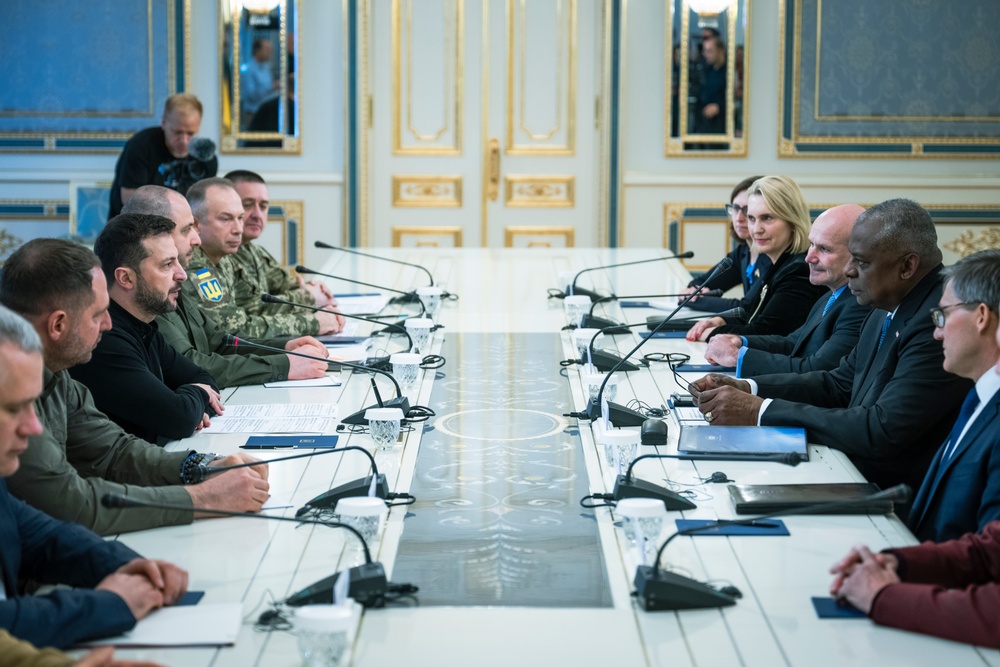
Volodymyr Zelensky’s view of how the war in Ukraine should end has narrowed toward a difficult proposition: stop the fighting first, even if the hardest political questions cannot be settled for months or years.
In an interview with Danish broadcaster DR on November 10, the Ukrainian president described a ceasefire along the existing line of contact as the quickest way to halt the war’s most lethal phase. Diplomacy could then continue over the issues that remain unresolved—including territory and security arrangements—while people no longer died in the same numbers on the battlefield.
The proposal contains an implicit distinction that is central to understanding Ukraine’s position: stopping where armies are fighting is not the same as legally accepting that occupied Ukrainian territory belongs to Russia. For Zelensky, a ceasefire would be a way to stop further killing while leaving Ukraine’s territorial claims and future security to negotiation. Ukrainska Pravda’s account of the DR interview
The problem is that Moscow has not accepted that sequence. Russian President Vladimir Putin has sought a settlement addressing Russia’s territorial demands and broader security objectives, and has argued that a general halt in fighting could give Ukraine time to rebuild its forces.
That disagreement—whether to stop shooting before resolving the political dispute or resolve the dispute as part of stopping the shooting—is one reason that another round of diplomacy has produced movement without a breakthrough.
On November 10 and 11, Ukrainian, Russian and American representatives met in Abu Dhabi. The parties reported an agreement in principle for a substantial prisoner exchange, although the details and completion of that exchange remained outstanding. U.S. envoys then met Putin in Moscow and Zelensky in Dublin. Further talks were discussed; a comprehensive settlement was not announced. Associated Press
The war’s future is therefore being shaped on two tracks at once. Negotiators are exploring whether a settlement can be assembled, while Russian and Ukrainian forces continue fighting—and while attacks on Ukrainian cities and energy infrastructure continue to make the cost of waiting unmistakable.
Zelensky’s starting point: A ceasefire is not a settlement
Zelensky entered Ukraine’s presidency in 2019 promising to address a conflict that had already taken thousands of lives in the country’s east. Russia’s full-scale invasion in February 2022 transformed both the scale of the war and his presidency.
His public position today combines two ideas that can appear contradictory but are not necessarily so. He says he wants fighting to stop quickly. He also insists that an agreement cannot leave Ukraine unable to defend itself or require it to surrender territory that Russia has failed to capture.
In his November 10 interview, Zelensky presented a ceasefire at current positions as a way to stop the immediate loss of life while negotiations continue. That approach would not answer the most contentious questions on day one. It would postpone them: What happens to occupied territory? Who monitors a ceasefire? What happens if either side violates it? What guarantees would deter a new invasion?
Zelensky’s preference reflects the position of a country under attack but also the pressures of a long war. Ukraine must maintain an army, protect cities, sustain its economy and preserve international backing while families continue to endure deaths, injuries, displacement and uncertainty.
The public record does not allow outsiders to know exactly what concessions Zelensky would ultimately accept in private negotiations. It does show that he has rejected voluntarily giving Russia Ukrainian territory it does not control, as well as restrictions on Ukraine’s military and its relationships with Western partners. Associated Press
Those positions make sense within Kyiv’s security logic. They also collide directly with Moscow’s demands.
Russia’s objectives and the territorial divide
Russia illegally annexed Crimea in 2014 and later claimed to annex four additional Ukrainian regions—Donetsk, Luhansk, Zaporizhzhia and Kherson—after its full-scale invasion in 2022. Russian forces do not fully control all the territory Moscow claims.
Putin has demanded that Ukraine withdraw from areas of those regions still under Kyiv’s control. Ukraine rejects the idea that it should hand over territory Russia has not taken militarily.
This is more than an argument over a line on a map. A settlement must address at least four different questions:
- Who controls territory in practice when the fighting stops?
- What legal claims does each government maintain?
- What happens to civilians living under occupation or displaced from their homes?
- Can either side use a ceasefire to prepare for another offensive?
A ceasefire based on the existing front line could temporarily answer the first question without answering the others. Such arrangements are possible: an armistice or monitored separation line can exist without a final peace treaty or formal recognition of territorial claims.
But this solution creates its own risk. The line could become durable in practice even if Ukraine never recognizes it in law. Ukrainians living under Russian occupation would remain separated from Kyiv’s authority, and the safety and rights of residents in those areas would remain urgent issues rather than matters solved by a map.
Moscow’s demands extend beyond territory. Russia has sought limits on Ukraine’s military and its Western security relationships. Putin has also rejected the idea of European troops deploying to Ukraine after a ceasefire and said Russia would view such a presence as a threat. Associated Press
For Kyiv, those restrictions strike at the core of the problem: Ukraine wants the means to prevent Russia from invading again. For Moscow, some of the measures Ukraine and its partners consider deterrence are themselves unacceptable.
The security-guarantee problem
Zelensky has repeatedly argued that an agreement cannot rely solely on a promise that the fighting will not resume.
In a November 5 interview, he framed the question in practical terms: if Russia attacks again, which partners would respond, with what capabilities, and how quickly? That is a more demanding standard than a general declaration of support. It asks whether a commitment is specific enough that both Ukraine and Russia can understand the consequences of renewed aggression. Associated Press
A credible security arrangement could contain several elements:
- Continued equipment and training for Ukrainian forces.
- Air and missile defenses, including a dependable supply of interceptors.
- Intelligence sharing and early warning.
- Funding for Ukraine’s defense industry and military sustainment.
- A ceasefire-monitoring system capable of documenting violations.
- Predetermined diplomatic, economic or military responses if large-scale attacks resume.
These elements are not interchangeable. A monitoring mission can document a violation without necessarily having the means to stop one. A promise to supply weapons after an attack can be valuable, but it may be less immediate than forces or air defenses already in place. A formal defense commitment can strengthen deterrence, but it can also create a risk that its guarantors become directly involved in a future war.
European governments and other partners outlined a proposed framework in the January 2026 Paris Declaration, including monitoring, sustained support for Ukraine’s armed forces and a prospective multinational force. It is a framework for a possible settlement, not evidence that a ceasefire is in force or that every proposed commitment has been implemented. Paris Declaration
Russia’s rejection of European troops illustrates the dilemma. A force that Ukraine sees as reassurance could be treated by Russia as a provocation or target. Excluding any such force might make a deal easier to negotiate while leaving Kyiv less confident that the settlement will survive.
What the battlefield can—and cannot—decide
Nearly five years after Russia’s full-scale invasion began, neither side has achieved all of its stated aims.
Russia retains substantial advantages in population, territory, industrial capacity and its ability to absorb losses. Ukraine has shown that it can continue defending against a larger force, strike targets far from the front and impose significant costs on Russian military operations.
The current war is not static simply because the front does not move quickly. Along a front roughly 750 miles long, local advances and counterattacks can determine control of roads, towns, logistics routes and positions from which drones and artillery operate. Outside the immediate front, both sides use long-range weapons against military and infrastructure targets.
At the same time, the recent pattern offers no sound basis for declaring that either side is certain to achieve a decisive military victory soon. Modest territorial changes can come at enormous human cost, while an apparent local success may not translate into a strategic breakthrough.
For Ukraine, the war’s direction depends in part on personnel, ammunition, air defense, weapons production, external financing and the resilience of its power system. For Russia, it depends on recruitment, equipment replacement, industrial output, revenue, command decisions and how long the state can sustain heavy losses.
These are competing capacities, not fixed clocks. Analysts can identify trends; they cannot know when either government will conclude that continuing to fight is more costly than accepting a compromise.
The human toll on Ukraine’s civilians
The most concrete civilian figures are also necessarily incomplete.
In a November 9 briefing to the United Nations Security Council, a UN official said the Office of the UN High Commissioner for Human Rights had verified that at least 17,968 civilians, including 874 children, had been killed in Ukraine since the full-scale invasion began on February 24, 2022.
That is a documented minimum, not a complete death toll. Verification is difficult in areas where access is limited, including occupied territory and places exposed to continuing combat. The true number is likely higher. UN briefing
The toll did not peak only in the first year of the invasion. The UN Human Rights Monitoring Mission in Ukraine recorded 2,570 civilians killed and 15,211 injured from January through September 2026—a 59% increase in combined verified civilian casualties compared with the same period in 2025.
In September alone, the mission verified at least 328 civilians killed and 2,105 injured. It identified long-range missiles and drones as the leading cause of recorded civilian casualties that month, followed by short-range drones. UN Human Rights Monitoring Mission
Civilian harm also extends beyond immediate deaths and injuries. Russian attacks on electricity and heating infrastructure have caused outages as Ukraine approaches winter. Hospitals, households and businesses face the effects of disrupted power, water and heat, while repeated alerts and strikes complicate repair work. Associated Press
Millions have been displaced. UNHCR estimated in 2026 that approximately 3.7 million people remained displaced within Ukraine and more than 5.9 million remained abroad as refugees. Those numbers are estimates from a particular period, and displacement changes over time as people leave, return or move again. UNHCR
The military toll on both sides
Military casualty figures are more contested than verified civilian counts. Governments restrict information, estimates use different methods, and the word casualty generally includes people who were wounded or missing as well as those killed.
A July 2026 assessment by the Center for Strategic and International Studies estimated that, from February 2022 through June 2026:
| Force | Estimated battlefield casualties | Estimated deaths within that total |
|---|---|---|
| Russian forces | Approximately 1.4 million killed, wounded or missing | Approximately 400,000–450,000 |
| Ukrainian forces | Approximately 525,000–625,000 killed, wounded or missing | Approximately 125,000–150,000 |
The estimated deaths are included in, not added to, the casualty totals. These are CSIS estimates, not independently verified counts of every individual, and they stop in June 2026; they do not capture losses incurred afterward. Center for Strategic and International Studies
The uncertainty matters. Ukrainian and Russian officials have incentives to protect information about their own losses and to emphasize the losses of the opposing force. Independent researchers can use public records, demographic data, intelligence assessments and other evidence, but each method has limits.
The human consequences are not limited to those killed. Wounded veterans may require years of medical care, rehabilitation, prosthetics, mental-health treatment or income support. Families of people missing in action face a different, prolonged uncertainty. Both Ukrainian and Russian families bear those losses, even though responsibility for starting the full-scale invasion rests with Russia’s government.
Russian civilians have also been killed or injured in attacks connected to the war. The available UN monitoring figures for civilian deaths in Ukraine should not be treated as a complete, comparable count of civilian harm inside Russia.
The economic cost will outlast the fighting
Even if a ceasefire were reached soon, the cost of the war would continue for decades.
A joint assessment by the Ukrainian government, World Bank, European Commission and United Nations estimated Ukraine’s reconstruction and recovery needs at nearly $588 billion over the following decade. The assessment measured damage and needs as of December 31, 2025; it is not a final bill and does not include all damage inflicted since that date. World Bank assessment
The figure covers more than rebuilding damaged buildings. Recovery includes housing, energy systems, transport, schools, health care, environmental cleanup, demining and the restoration of economic activity.
Reconstruction also depends on security. A power station rebuilt without protection can be struck again. A displaced family may not return merely because a home is repaired if employment, schools, medical care and basic safety remain uncertain. Private investors may be reluctant to commit capital if insurance and the risk of renewed war cannot be addressed.
Russia faces costs of its own: military losses, pressure on public spending, constraints on access to technology and financial systems, and the longer-term effects of directing labor and industrial capacity toward the war. Those burdens do not automatically mean Moscow will change course. States can sustain costly wars longer than outside observers expect, particularly when leaders believe their political objectives justify the expense.
What the latest talks achieved
The November 10–11 Abu Dhabi discussions were important because Ukrainian and Russian representatives engaged in a U.S-mediated format after a lengthy interruption.
The announced prisoner-exchange agreement was the clearest reported humanitarian outcome. It was an agreement in principle, however, and the parties had not established its completion or final numbers in the reporting reviewed. The talks did not resolve the territorial dispute or produce a comprehensive ceasefire. Associated Press
European participation is another unresolved issue. U.S. envoy Steve Witkoff said Putin had agreed that Europeans could join a subsequent meeting, and Zelensky welcomed the prospect. A Kremlin aide did not confirm the same arrangement, leaving the format to be clarified. Reuters reporting
For Zelensky, European participation is not a procedural detail. European states would be central to reconstruction financing, sanctions decisions, future military support and any multinational security arrangement. An agreement that assigns Europe responsibilities without giving European governments a meaningful role in shaping them would face obvious political and practical difficulties.
What the United States can do
Washington has tools that neither Ukraine nor Europe can fully replicate on its own. It can communicate directly with both Kyiv and Moscow, influence sanctions and financial policy, support intelligence sharing and air defense, and help coordinate the positions of allies.
Those tools are most useful when they serve a coherent negotiating strategy. Several possible lines of effort stand out.
Keep diplomacy tied to measurable steps
A broad declaration that the sides are “close” to peace is less useful than identifying what each side has agreed to do and how compliance will be checked.
The United States could press for a sequence of concrete measures: completed prisoner exchanges, protected humanitarian access, return of civilians, a halt to specified categories of attacks, and a mechanism for reporting and investigating violations.
Limited agreements would not by themselves settle sovereignty or security. Their value would be in reducing harm and testing whether each government is willing and able to implement commitments.
The risk is that partial measures become a substitute for progress on the central dispute. A prisoner exchange can save lives and build channels of communication while the war continues at full intensity. It should be recognized for what it achieves without being mistaken for a peace agreement.
Sustain Ukraine’s ability to defend itself
The United States and its partners can support air defense, ammunition, maintenance, training and Ukraine’s own defense production while negotiations proceed. The strategic logic is that a country able to defend itself is less likely to be forced into accepting terms it regards as incompatible with its survival.
There are real constraints. U.S. and allied stockpiles are finite; production takes time; governments disagree about spending and escalation; and equipment commitments do not become battlefield capability until they are financed, produced, delivered and maintained.
NATO’s Prioritized Ukraine Requirements List mechanism provides one example of how allies can fund U.S.-origin equipment for Ukraine. NATO says participating allies have made substantial commitments through the mechanism, but a commitment or proposed sale should not be confused with delivery of every item. NATO’s support for Ukraine
Continued support does not guarantee that Russia will compromise. Reducing support does not guarantee that it will compromise either. The effect depends on how Moscow and Kyiv assess the balance of future costs, risks and achievable objectives.
Put a workable ceasefire design on the table
A ceasefire proposal would need far more detail than an instruction for both sides to stop firing. Negotiators would have to define:
- The exact geographic line and the status of contested areas.
- Which weapons, units and activities are restricted.
- How drones, long-range strikes and attacks on infrastructure are treated.
- Who monitors compliance and what access monitors receive.
- How alleged violations are investigated.
- What response follows a serious breach.
A poorly specified ceasefire can collapse because each side interprets the same action differently—or claims the other side violated the agreement first. An arrangement with intrusive monitoring and credible consequences may be more durable, but it is also harder to negotiate and enforce.
Connect sanctions and incentives to verifiable behavior
Sanctions give Washington leverage, but they are not a simple switch that can produce peace on demand. Restrictions can impose costs on Russia’s finances, technology access and trade; Russia can adapt, redirect commerce and seek alternative suppliers.
A U.S. strategy could connect any proposed relief to specific, verified actions rather than offering broad relief solely for entering talks. It could also define how sanctions would respond to violations. The tradeoff is that Moscow may resist conditions it considers intrusive, while Ukraine and its partners may oppose concessions that are difficult to reverse.
The same principle applies to positive incentives: economic or diplomatic benefits are most credible when linked to observable steps and when the parties understand what would happen if commitments are broken.
Treat humanitarian issues as urgent, not merely bargaining chips
Prisoner exchanges, the return of detained or transferred civilians, family reunification and access for humanitarian organizations can move forward even when the parties remain far apart on territory.
These issues deserve attention on their own terms. They affect identifiable people and families now, and progress does not require the public to pretend that a larger peace agreement is imminent.
How the war could end
No single outcome is inevitable. The evidence supports several possible paths, each with different implications.
A monitored ceasefire followed by lengthy negotiations
This is closest to the sequence Zelensky has publicly described: stop major fighting along an agreed line, establish monitoring and negotiate the political settlement afterward.
Its advantage is the possibility of reducing deaths before the hardest disputes are resolved. Its weakness is that the unresolved disputes remain dangerous. The line could harden into a long-term division, and a ceasefire without effective enforcement could give both sides time to prepare for renewed fighting.
A comprehensive settlement
A broader agreement could attempt to resolve territory, security guarantees, sanctions, reconstruction and relations between Russia, Ukraine and Europe in a single package.
Such a settlement could address the causes of renewed conflict more fully than a narrow ceasefire. But the parties’ positions remain far apart, and the more issues placed in one package, the more opportunities each side has to block agreement.
A prolonged war of attrition
The sides could continue fighting while negotiating intermittently. Russia may calculate that time improves its position; Ukraine may calculate that continued resistance can deny Russia its objectives and preserve better terms.
That path avoids immediate concessions but carries continuing costs in lives, infrastructure, economic capacity and political cohesion. Neither side can assume the battlefield or outside support will remain favorable indefinitely.
A ceasefire that fails
Even if leaders sign an agreement, implementation could break down. Disputed troop movements, drone strikes, sabotage, unclear boundaries or disagreements over monitoring could produce accusations and escalation.
The durability of a ceasefire would depend less on the ceremony around its announcement than on the institutions behind it: communications between the parties, access for monitors, reliable evidence, political will and consequences for violations.
The choice beneath the negotiations
Zelensky’s public position reflects a stark problem: Ukraine needs the killing to stop, but it also needs an outcome that does not make another invasion easier.
Russia’s government has its own calculations, but its demand for Ukrainian territory and restrictions on Ukrainian sovereignty cannot be treated as merely a neutral disagreement over security. The present war began with Russia’s full-scale invasion, following its earlier seizure of Crimea and intervention in eastern Ukraine.
For the United States, the challenge is to use its leverage to make a ceasefire and a durable settlement more plausible without promising results it cannot deliver. That means helping Ukraine retain the capacity to defend itself, keeping European partners involved, pressing Moscow as well as Kyiv for concrete commitments, and distinguishing humanitarian progress from a final peace.
Zelensky’s proposed sequence—stop the fighting, then negotiate the hardest questions—offers one possible route out of the immediate killing. Whether it can become a durable peace will depend on details that remain unresolved: where forces stop, who protects the people behind the lines, what Ukraine is allowed to defend itself with, and what happens if Russia attacks again.
DutyStation News prepared this AI-assisted analysis using the linked public sources.
By DutyStation News (AI-assisted).