AI military weapons 2026: what is possible and what it means for global security
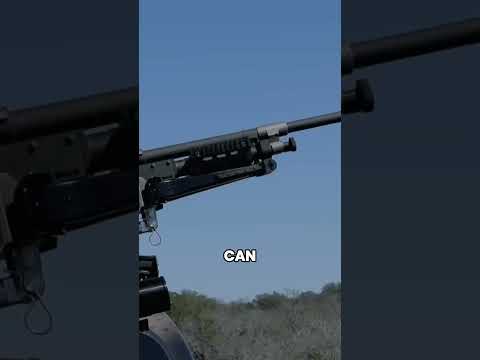 Photo: N43 and Hermes
AI weapons in 2026 range from autonomous drone swarms to AI-driven targeting systems that can identify and engage targets without human input. The technology is advancing faster than the international frameworks meant to govern it.
01The most advanced AI weapons in 2026
The AI weapons landscape in 2026 includes systems that would have seemed like science fiction a decade ago. Autonomous drone swarms can coordinate to overwhelm air defenses. AI targeting systems process battlefield data faster than human operators. Loyal wingman drones fly alongside manned fighters, extending the reach and survivability of human pilots.
These systems represent a shift from AI as a decision-support tool to AI as a decision-maker. The distinction matters: a system that recommends a target still leaves a human in the loop, while a system that selects and engages targets autonomously removes that checkpoint entirely.
02How autonomous targeting systems work
Autonomous targeting systems combine sensor fusion, computer vision, and decision algorithms. Sensors, whether optical, infrared, or radar, collect data about the environment. Computer vision models identify and classify objects within that data. Decision algorithms then apply rules of engagement to determine whether and when to act.
The speed advantage is significant. A human operator might take seconds to assess a target; an AI system can do it in milliseconds. The trade-off is that AI systems can be fooled by adversarial inputs, biased training data, or novel situations that fall outside their training distribution. Confidence in these systems should be calibrated against these limitations.
03The role of AI in drone swarms
Drone swarms represent one of the most significant AI weapons developments. Instead of a single expensive platform, a swarm deploys many low-cost drones that communicate and coordinate. If some are destroyed, the swarm adapts. The collective behavior emerges from algorithms rather than centralized control.
Swarm tactics are particularly challenging for traditional air defense systems designed to counter a small number of sophisticated threats. A swarm of a hundred drones costs less than a single interceptor missile. The economics favor the attacker, and defensive doctrine is still catching up.
04What AI means for decision-making in combat
AI compresses the time available for human decision-making in combat. If an adversary's AI system can identify and engage in milliseconds, defenders face pressure to match that speed. This creates an arms race toward faster automated responses, with the risk of escalation happening before humans can intervene.
The concept of meaningful human control attempts to preserve human judgment in the targeting cycle. But the definition of meaningful is contested. A human who rubber-stamps an AI recommendation in two seconds is technically in the loop but exercises little actual judgment. The policy challenge is ensuring that human control is substantive, not ceremonial.
05The ethical and legal frameworks
International humanitarian law requires distinction between combatants and civilians, proportionality in the use of force, and military necessity. These principles were developed for human decision-makers. Whether an AI system can satisfy them in practice is an open question that legal scholars and military ethicists are actively debating.
The United Nations Convention on Certain Conventional Weapons has discussed lethal autonomous weapons systems for over a decade without reaching a binding agreement. Some nations, including Austria and Ireland, have called for a preemptive ban. Major military powers have resisted, arguing that regulation should focus on how the systems are used rather than whether they can exist.
06How nations are racing to deploy AI weapons
The AI weapons race involves the United States, China, Russia, and a growing number of middle powers. The United States has published an AI strategy that emphasizes human-machine teaming. China has invested heavily in AI for military applications and has tested drone swarm concepts. Russia has pursued autonomous underwater vehicles and AI-enabled electronic warfare.
Israel's Harpy and Harop loitering munitions represent some of the most operationally deployed autonomous systems. Turkey's Kargu-2 has reportedly been used in combat. The proliferation is not limited to great powers. Lower barriers to entry in AI and drone technology mean that more nations and non-state actors can field increasingly capable systems.
07What the future of AI warfare holds
The future of AI warfare will likely be defined by the tension between capability and control. As systems become more autonomous, the question of accountability becomes harder. If an AI system makes an error that causes civilian casualties, who is responsible? The programmer, the commander, the operator, or the system itself?
The most consequential decisions may come in the next five years. International norms established or failed during this window will shape the trajectory of military AI for decades. Without meaningful constraints, the logic of military competition will push toward maximum autonomy. With them, AI could enhance human judgment rather than replace it.


