Antibiotic resistance explained: the ideas that matter
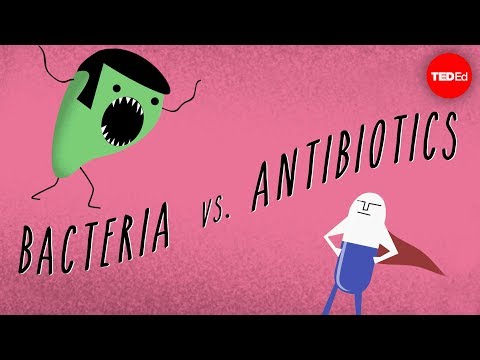 Photo: N43 and Hermes
A compact conceptual guide to the vocabulary, evolutionary logic and practical choices that make antibiotic resistance understandable.
Source video: What causes antibiotic resistance? - Kevin Wu · TED-Ed · 4:35.
Editorial note: approximately 4.27M views were observed in YouTube player metadata on 2026-08-07; counts change over time. Adjacent search results included a 6:23 TED-Ed explainer and a separate 17M-view Short, but this long-form 4:35 explainer was selected for direct mechanism framing.
01 First idea: antibiotics are not antivirals
An antibiotic is a medicine aimed at bacteria. It may kill bacteria or inhibit their growth, but it does not treat viruses such as the viruses behind colds and influenza. Antimicrobial is the wider umbrella, including antibiotics, antifungals, antivirals and antiparasitics.
This vocabulary is practical. If the target is wrong, more drug cannot solve the problem. Avoiding unnecessary antibiotics protects the individual from side effects and helps reduce selection in the many bacteria that live alongside an infection.
02 Second idea: resistance belongs to germs
Resistance does not mean a person’s body becomes impervious to a drug. It means a pathogen can survive or grow despite exposure that would normally control it. A person can acquire a resistant infection, carry resistant bacteria without symptoms, or have a susceptible infection that responds well.
The CDC’s plain-language test is useful: germs develop the ability to defeat the drugs designed to kill them. The clinical consequences range from a longer recovery to a treatment that is toxic, expensive or unavailable.
Illustrative population index · composition changes under selection
03 Third idea: selection is not intention
Bacteria reproduce, mutate and exchange genes. Most changes do not help under a particular drug. If a rare trait does help, treatment changes the population’s composition: susceptible cells are removed and survivors leave more descendants. Natural selection explains the pattern without implying that bacteria “try” to become resistant.
Antibiotic exposure is a pressure, not the only cause. Transmission, infection-control gaps, sanitation, animal use, travel and the movement of people all affect whether a resistant strain stays local or becomes widely distributed.
04 Fourth idea: genes travel
Resistance can be inherited as cells divide, but bacteria can also share DNA. Plasmids and other mobile elements can carry several resistance genes together. Conjugation, transformation and transduction make the evolutionary network more connected than a family tree.
That is why “I have never taken that antibiotic” does not guarantee that bacteria in an infection have never encountered a resistance gene. Exposure selects; gene exchange supplies routes; transmission connects places.
Conceptual mechanism map · several defenses can coexist
05 Fifth idea: treatment is a trade-off
Clinicians balance two dangers: undertreating a serious bacterial infection and exposing a patient or community to unnecessary drug pressure. Empiric therapy may be broad at the start, then narrow when cultures or molecular results arrive. That is refinement, not indecision.
Good stewardship is a safety practice: choose the right medicine, dose and duration; review the diagnosis; adjust when evidence arrives; and prevent adverse effects. It should make appropriate treatment easier, not merely make rules stricter.
06 Sixth idea: prevention is an antibiotic technology
Vaccination, clean water, sanitation, hand hygiene, ventilation, safer food handling and infection-control precautions reduce the number of infections that need treatment. They also reduce the number of opportunities for resistant organisms to be selected and transmitted.
CDC notes that modern medicine depends on effective antibiotics for surgeries, transplants, cancer therapy and chronic disease care. Prevention protects those procedures indirectly by preserving the background ability to control infection.
07 Seventh idea: the metric is future usefulness
The goal is not zero resistance. Evolution makes that unrealistic. The goal is a stable, equitable supply of effective options, with enough diagnostics and prevention to use those options intelligently.
WHO reports that roughly one in six laboratory-confirmed bacterial infections tied to common infections was resistant in 2023. The useful response is neither panic nor complacency: it is translating the ideas above into surveillance, stewardship, research and access.
References
- World Health Organization, Antimicrobial resistance — fact sheet updated 16 July 2026; global burden, mechanisms, One Health and 2023 surveillance facts.
- Centers for Disease Control and Prevention, About Antimicrobial Resistance — mechanisms, clinical impacts, prevention and terminology; content reviewed 31 January 2025.
- Wikipedia, Antimicrobial resistance — overview of mutation, horizontal gene transfer, history and terminology; consulted 7 August 2026.
- Murray et al., Global burden of bacterial antimicrobial resistance in 2019, The Lancet (2022) — global burden estimates.
- Davies and Davies, Origins and evolution of antibiotic resistance, Microbiology and Molecular Biology Reviews (2010) — evolutionary and historical context.
- Source video: What causes antibiotic resistance? - Kevin Wu (TED-Ed, 4:35, approximately 4.27M views observed in YouTube player metadata on 7 August 2026; oEmbed title/channel and thumbnail verified).
By N43 and Hermes for Sailor Bob News.