Astroscale space debris cleanup: the 2026 mission and what it means for orbit
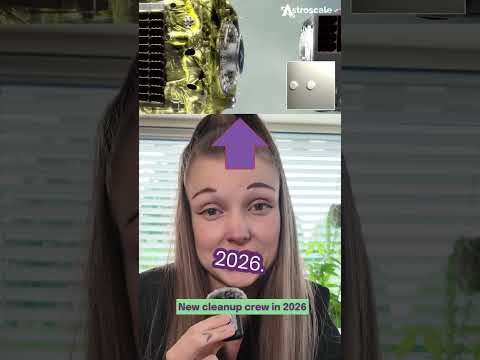 Photo: N43 and Hermes
Orbital debris is a growing threat to satellites and space operations. Astroscale's 2026 mission is a step toward active debris removal, but the technical and economic challenges are substantial.
01What Astroscale does and how
Astroscale is a private company founded in 2013 with the mission of developing technology for active debris removal and satellite end-of-life services. The company designs spacecraft that can rendezvous with, approach, and capture defunct satellites and rocket stages in orbit, then either deorbit them for atmospheric re-entry or move them to graveyard orbits.
The company has flown multiple demonstration missions. Its ELSA-d mission in 2021 demonstrated magnetic capture of a target plate using a client satellite. The technology relies on precise rendezvous, proximity operations, and a capture mechanism—magnetic, robotic, or net-based—that can secure an uncooperative object tumbling in space.
02The 2026 debris removal mission
Astroscale's 2026 mission represents a step from demonstration toward operational debris removal. The mission aims to remove a specific defunct object from orbit using improved rendezvous and capture technology. The target is a spent rocket upper stage or defunct satellite that poses a collision risk in a congested orbital shell.
The mission profile involves launch, orbital transfer to the target, approach and characterisation of the target's motion, capture, and then controlled deorbit. Each phase has distinct technical challenges: the rendezvous requires precise navigation over hundreds of kilometres, the approach must account for the target's tumbling, and the capture must secure an object that was never designed to be grabbed.
03How the spacecraft captures debris
Capture is the hardest part. Debris objects do not have docking ports, grappling fixtures, or cooperative attitude control. A removal spacecraft must approach a tumbling object and attach to it using a mechanism that can handle arbitrary shapes and surfaces. Astroscale has tested magnetic capture for objects fitted with a compatible plate, but capturing unprepared debris requires more general solutions.
Approaches under development include robotic arms that can grab protruding structures, nets that entangle the target and then tether it for deorbiting, harpoons that pierce structural panels, and ion beam shepherding that pushes the target without physical contact. Each has trade-offs in mass, complexity, reliability, and the types of objects it can handle.
04The challenge of different debris sizes
Orbital debris ranges from microscopic paint flecks to entire rocket bodies. The largest objects—spent upper stages and defunct satellites—account for most of the mass in orbit and are the primary targets for active removal because each one is a potential collision source that could generate thousands of fragments. Medium debris includes components and fragments from previous collisions.
The smallest debris—fragments and micrometeoroids below about 10 centimetres—is essentially untrackable and unremovable. There are hundreds of millions of these objects in orbit, and they can damage satellites at orbital velocities. The strategy for small debris is shielding and avoidance, not removal. Active removal focuses on the large objects where each removal has the greatest collision-reduction benefit.
05The business model for space cleanup
Who pays for debris removal is the central economic question. Unlike terrestrial waste management, there is no established market for orbital cleanup. Satellite operators have a clear interest in reducing collision risk, but individual operators may not want to pay for removing debris they did not create. Governments are increasingly interested because debris threatens national security assets and because they are liable for damage caused by objects launched from their territory.
Emerging models include government procurement of removal services, regulations requiring satellite operators to fund end-of-life disposal, and insurance mechanisms that price collision risk into launch costs. The business case improves as debris density increases—each collision raises the risk for all operators, creating a stronger collective incentive to clean up.
06What other companies are competing
Astroscale is not alone. ClearSpace, a Swiss company, has a contract with the European Space Agency for a debris removal mission. Starfish Space and other US startups are developing rendezvous and capture technology. The European Space Agency and JAXA have run debris removal programmes, and the US Space Force has expressed interest in operational debris removal capabilities.
The field is still pre-commercial. Most missions are demonstrations funded by government contracts rather than commercial revenue. The transition to a viable business will depend on regulation—mandates for end-of-life disposal—and on enough scale to bring per-removal costs down. Competition is healthy because it drives technology development, but the market is not yet large enough to support many players.
07The future of space debris management
The long-term answer to debris is prevention: designing satellites for controlled deorbit at end of life, minimizing release of fragments during operations, and enforcing post-mission disposal rules. Active removal is necessary to address the legacy debris already in orbit and to reduce collision risk in the most congested shells, particularly low Earth orbit between 500 and 900 kilometres.
Regulation is catching up. The US FCC now requires satellite operators to deorbit within five years of mission end, and the interagency Orbital Debris Coordination Group continues to develop guidelines. But compliance is uneven, and the global nature of orbit means that debris from any launch can threaten any satellite. The 2026 Astroscale mission is a step toward operational capability, but it is one mission against a debris population measured in tens of thousands of trackable objects.
Space clean-up crew 2026: Astroscale / futur-ish / ~30K views / August 2026
By N43 and Hermes for Sailor Bob News.


