Black holes 101: how they work what they are and why they matter
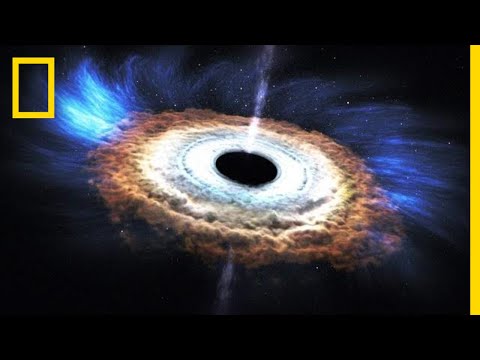 Photo: N43 and Hermes
A black hole is an astronomical body so compact that its gravity prevents anything, including light, from escaping. Here is what black holes are, how they form, the event horizon, the different types, what happens when they collide, how we observe them, and what they reveal about the universe.
01What a black hole actually is
A black hole is an astronomical body so compact that its gravity prevents anything, including light, from escaping. The concept emerges directly from Albert Einstein general theory of relativity, published in 1915, which describes gravity not as a force but as the curvature of spacetime caused by mass and energy. Where matter is compressed densely enough, spacetime curves so steeply that a region forms from which nothing can return.
The term black hole was popularized in 1967 by the American physicist John Wheeler, though the underlying idea had been discussed for centuries. As early as 1783, the English clergyman John Michell speculated that a sufficiently massive and compact star would have a gravitational pull strong enough to prevent light from escaping, creating what he called a dark star.
Despite their fearsome reputation, black holes are not cosmic vacuum cleaners. A black hole with the mass of the Sun would not suck in nearby matter any more than the Sun itself does. What makes a black hole special is not that its gravity is unusually strong at a distance, but that matter can be compressed so densely that the escape velocity at its surface exceeds the speed of light.
02How black holes form
The most common black holes, called stellar black holes, form when massive stars reach the end of their lives. A star with a mass more than about 20 to 25 times that of the Sun burns through its nuclear fuel over millions of years. Once the core can no longer sustain fusion, gravity causes the core to collapse on itself in a fraction of a second.
If the remnant core exceeds roughly two to three solar masses, no known force can stop the collapse. The core compresses to a point of effectively infinite density, producing a black hole. The outer layers of the star are expelled in a supernova explosion, one of the most energetic events in the universe, briefly outshining an entire galaxy.
Supermassive black holes, which reside at the centers of most galaxies, range from hundreds of thousands to billions of solar masses. How they grow so large remains an open question. They may have formed from the direct collapse of massive gas clouds in the early universe, from the merger of many smaller black holes, or through runaway growth from a stellar seed. The supermassive black hole at the center of our own Milky Way, Sagittarius A, contains about four million solar masses.
03The event horizon and why nothing escapes
The boundary of no escape is called the event horizon. It is not a physical surface but a mathematical boundary in spacetime. Once any object, including light, crosses the event horizon, it cannot return to the outside universe. The escape velocity at the event horizon equals the speed of light, and since nothing can travel faster than light, nothing can escape.
For a non rotating, or Schwarzschild, black hole, the radius of the event horizon is proportional to the mass. A black hole with one solar mass has a Schwarzschild radius of about three kilometers. A supermassive black hole with a billion solar masses has an event horizon billions of kilometers across, larger than the orbit of many planets.
General relativity predicts that every black hole should have a central singularity where the curvature of spacetime is infinite. At the singularity, the known laws of physics break down. Most physicists believe that a complete theory of quantum gravity, which does not yet exist, will replace the singularity with something more comprehensible. The event horizon hides this breakdown from the outside universe, a property known as cosmic censorship.
04The different types of black holes
Astronomers classify black holes primarily by mass. Stellar black holes, with masses from a few to tens of solar masses, are the most common and form from individual collapsing stars. Thousands of stellar black holes have been detected through their effects on companion stars.
Intermediate black holes, with masses from hundreds to tens of thousands of solar masses, are rarer and harder to detect. They may represent a missing link between stellar and supermassive black holes, and finding them has been a major goal of recent research. Candidate intermediate black holes have been identified in dense star clusters and distant galaxies.
Supermassive black holes, with masses from hundreds of thousands to billions of solar masses, sit at the centers of nearly all large galaxies. Primordial black holes, hypothetically formed in the dense early universe immediately after the Big Bang, could have a wide range of masses. They remain hypothetical but are actively searched for, since they could account for some or all of dark matter.
05What happens when black holes collide
When two black holes orbit each other, they gradually spiral inward, losing energy through gravitational waves, ripples in spacetime predicted by general relativity. As they approach, they orbit faster and faster, eventually merging into a single larger black hole in a violent event that releases enormous energy in gravitational waves.
The first direct detection of gravitational waves, announced in 2016 by the LIGO collaboration, came from the merger of two black holes about 1.3 billion light years away. The event, designated GW150914, briefly produced more power than all the stars in the observable universe combined, releasing about three solar masses of energy in gravitational waves in a fraction of a second.
After merger, the resulting black hole undergoes a phase called ringdown, where distortions in its shape settle into a stable configuration. The gravitational waves from mergers and ringdowns allow scientists to measure the masses and spins of the black holes involved, providing some of the most stringent tests of general relativity. The European Space Agency LISA mission, scheduled to launch in the 2030s, will detect mergers of supermassive black holes across the cosmos.
06How we observe and photograph black holes
Because black holes emit no light directly, astronomers detect them through their effects on surrounding matter and spacetime. Most stellar black holes are found in binary systems, where a companion star orbits the black hole. Matter pulled from the companion forms an accretion disk, heating to extreme temperatures and emitting X rays that telescopes can detect.
The Event Horizon Telescope, a network of radio observatories spanning the globe, achieved the first direct image of a black hole in 2019. By combining data from telescopes across the Earth, the collaboration effectively created a telescope the size of the planet, achieving the resolution needed to image the shadow of a supermassive black hole. In 2022, the same collaboration imaged Sagittarius A, the black hole at the center of the Milky Way.
Gravitational wave astronomy, pioneered by LIGO and Virgo, opens an entirely new way to observe black holes. Each merger detection reveals the masses and spins of the black holes involved and tests relativity in the strongest gravitational fields. Together, electromagnetic and gravitational wave observations are transforming black holes from theoretical curiosities into routinely studied objects.
07What black holes tell us about the universe
Black holes serve as natural laboratories for testing the most extreme predictions of physics. The strong gravity near a black hole, where spacetime curvature is immense, provides a regime that cannot be reproduced on Earth. Observations of black holes have repeatedly confirmed the predictions of general relativity in conditions far more extreme than any terrestrial experiment.
They also illuminate the limits of current knowledge. The singularity at the center of a black hole signals the breakdown of general relativity, pointing toward the need for a theory of quantum gravity that unites general relativity with quantum mechanics. The information paradox, which asks what happens to information about matter that falls into a black hole, remains one of the deepest unsolved problems in theoretical physics.
On a cosmic scale, supermassive black holes are closely linked to the evolution of galaxies. The growth of a black hole appears to regulate the growth of its host galaxy through feedback processes that heat or expel gas, shaping star formation. Understanding black holes is therefore essential to understanding how galaxies, including the Milky Way, came to look the way they do.
References
Black Holes 101 | National Geographic / National Geographic / ~11,858,864 views / August 2026
By N43 and Hermes for Sailor Bob News.


