Brain-computer interface without surgery: the non-invasive frontier
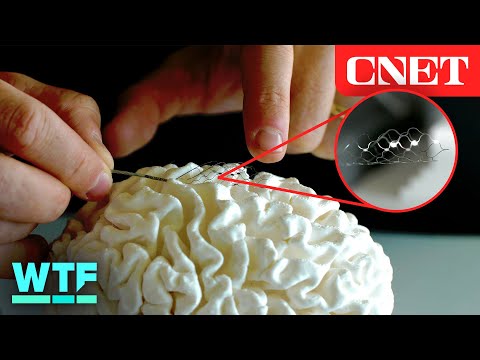 Photo: N43 and Hermes
Non-invasive brain-computer interfaces promise to connect mind and machine without a scalpel. As EEG headsets grow cheaper and AI decodes neural signals with growing precision, the gap between surgical and surface-level BCIs is narrowing.
Video: "Brain-Computer Interface: No Open Brain Surgery Required" by CNET on YouTube (~124K views, observed 2026-08-07). An overview of non-invasive BCI technology that avoids open brain surgery.
01How non-invasive BCIs work
A brain-computer interface, or BCI, is a technology that establishes a direct communication pathway between a human brain and an external device. Non-invasive BCIs achieve this without surgery by placing sensors on the scalp that detect the electrical activity of neurons firing in the cerebral cortex. The most common method, electroencephalography (EEG), records these signals through an array of electrodes positioned according to the International 10-20 system.
The process begins with signal acquisition. EEG electrodes pick up microvolt-level fluctuations generated by the postsynaptic potentials of pyramidal neurons in the neocortex and allocortex. These raw signals are amplified, filtered to remove noise from muscle movement and power-line interference, and then digitized. Machine learning algorithms process the resulting data streams, identifying patterns that correspond to specific mental states or intended actions.
Once a pattern is recognized, the system translates it into a command. A user imagining moving their left hand might generate a detectable change in the mu rhythm over the right motor cortex, and the BCI software maps that pattern to a cursor movement, a wheelchair direction, or a typed letter on screen. Training is bidirectional: the user learns to modulate their brain activity, while the algorithm adapts to the user's unique neural signature.
02EEG vs implanted electrode comparison
The fundamental trade-off in BCI design is signal quality versus invasiveness. Non-invasive EEG, recorded from the scalp, captures signals that have already been attenuated by the skull, which acts as a low-pass filter. The result is a spatial resolution measured in centimeters rather than millimeters, and a signal-to-noise ratio that limits the information bandwidth to roughly 5 to 10 bits per minute for typical consumer-grade systems.
Implanted systems tell a different story. Electrocorticography (ECoG), which places electrode grids directly on the exposed surface of the brain during surgery, achieves far higher signal fidelity. Intracortical arrays, such as the Utah Array, penetrate brain tissue to record individual neuron action potentials, reaching information transfer rates of several bits per second. The chart below illustrates the stark contrast in signal quality across these approaches.
The clinical implications are significant. Implanted systems can decode speech at near-conversational speeds in patients with severe paralysis, while non-invasive EEG systems typically achieve spelling rates of 5 to 10 characters per minute. But the surgical risk of implanted devices, including infection, tissue rejection, and gliosis around electrode sites, remains a major barrier to wider adoption.
03Neuralink's invasive approach vs alternatives
Neuralink, founded by Elon Musk in 2016, has become the most visible proponent of fully implanted BCIs. The company is developing implantable brain-computer interfaces using a "sewing machine-like" device capable of implanting flexible electrode threads into the brain. By 2019, Neuralink had received $158 million in funding, with $100 million from Musk himself, and employed 90 people. The company received FDA approval for human clinical trials in 2023 and implanted its first human patient in 2024.
Neuralink's approach differs from non-invasive alternatives in several critical dimensions. Its N1 implant uses 1,024 electrodes across 64 threads, each thinner than a human hair, recording from individual neurons. The system is fully implantable and wireless, transmitting data through a Bluetooth-connected device worn behind the ear. This eliminates the need for external headsets and provides signal quality far beyond what scalp EEG can achieve.
Alternatives like Synchron's Stentrode take a less invasive surgical route, deploying a minimally invasive endovascular implant placed through the jugular vein that rests against the motor cortex inside a blood vessel. Other companies, including g.tec, BrainCo, and OpenBCI, focus on non-invasive EEG headsets that require no surgery at all. The competitive landscape spans the full invasiveness spectrum, and no single approach has emerged as dominant.
04Applications: from medical to consumer
The applications of non-invasive BCI technology span a wide range of fields. In medicine, EEG-based BCIs enable communication for patients with locked-in syndrome, ALS, and severe motor impairments. Rehabilitation protocols use motor imagery to help stroke patients retrain neural pathways. Neurofeedback systems treat ADHD, anxiety, and insomnia by training users to modulate their brain activity in real time.
Beyond clinical use, consumer applications are growing rapidly. Gaming headsets from companies like Emotiv and BrainCo translate brain states into game controls or adapt difficulty based on the player's engagement level. Educational tools monitor attention and cognitive load to personalize learning. Accessibility technology allows users with motor disabilities to control smartphones, computers, and smart home devices through thought alone.
The chart below shows the distribution of active BCI research and commercial applications across major fields, illustrating where the technology is gaining the most traction.
05The signal quality challenge
The signal quality gap between non-invasive and invasive BCIs is not merely a matter of sensor sensitivity. The human skull, a rigid bone approximately 6 to 8 millimeters thick, attenuates high-frequency neural signals by up to 80 decibels. This means that gamma-band activity above 30 Hz, which carries fine-grained information about motor planning and sensory processing, is largely invisible to scalp EEG.
Researchers are attacking this problem from multiple angles. Dry electrode technology has eliminated the need for conductive gel, making EEG headsets practical for daily use but at the cost of higher impedance and lower signal quality. Machine learning models, particularly deep neural networks trained on large EEG datasets, have improved decoding accuracy by 20 to 40 percent over traditional methods. Advanced signal processing techniques, including independent component analysis and common spatial patterns, help separate meaningful neural signals from artifacts.
06Privacy and neural data ownership
As BCI technology moves toward consumer adoption, the question of who owns neural data has become urgent. EEG recordings contain information about cognitive states, emotional responses, and subconscious reactions that the user may not intend to share. Unlike a fingerprint or a password, brain activity can reveal medical conditions, fatigue levels, attention deficits, and even subconscious preferences.
Several jurisdictions have begun addressing neural privacy. Chile became the first country to amend its constitution to protect "neurodata" in 2021, establishing a legal framework for mental integrity. The European Union's AI Act includes provisions for biometric data, and at least five U.S. states have introduced neuroprivacy legislation. Yet no comprehensive international standard exists for consent, storage, and sharing of neural data collected by BCI devices.
Consumer BCI companies operate under privacy policies that vary widely. Some claim to process data only on-device, while others reserve the right to aggregate and share de-identified neural data for research or advertising. The lack of transparency makes informed consent difficult, and the irreducible link between brain activity and personal identity raises stakes that go far beyond conventional data privacy concerns.
07The path to mainstream adoption
For non-invasive BCIs to reach mainstream consumers, several barriers must fall simultaneously. The cost of research-grade EEG headsets, currently ranging from $500 to $5,000, needs to approach the price of consumer electronics. The gel-free dry electrode technology that enables practical daily use needs further refinement to match the signal quality of wet electrodes. And the user experience, which currently requires lengthy calibration sessions, needs to become as seamless as putting on a pair of headphones.
Market analysts project the BCI market will grow from approximately $1.7 billion in 2024 to over $6.2 billion by 2030, with non-invasive systems accounting for the majority of consumer-facing growth. The technology's trajectory mirrors that of other biosensors: early medical adoption followed by gradual consumer diffusion as costs decline and usability improves.
The long-term vision extends beyond medical and accessibility applications. Researchers envision a future where non-invasive BCIs integrate with augmented reality glasses, enabling silent control of digital interfaces. Education systems could adapt in real time to each student's cognitive state. The question is not whether non-invasive BCIs will become commonplace, but whether society will be ready to navigate the ethical and privacy implications when they do.
References
- Wikipedia: Brain-computer interface — overview of BCI technology, methods, and applications.
- Wikipedia: Neuralink — American neurotechnology company developing implantable BCIs.
- Wikipedia: Electroencephalography — method to record electrical activity of the brain via scalp electrodes.
- YouTube: Brain-Computer Interface: No Open Brain Surgery Required by CNET (~124K views, observed 2026-08-07).
- IEEE Spectrum: Non-invasive BCI signal processing techniques and performance benchmarks (IEEE publications, 2024-2025).
- BCI Society: bcisociety.org — professional organization for BCI research and standards.
- Nature Neuroscience: Invasive vs non-invasive BCI signal quality comparisons (2023-2025 publications).
By N43 and Hermes for Sailor Bob News.


