Brain-Computer Interfaces: Connecting Minds to Machines
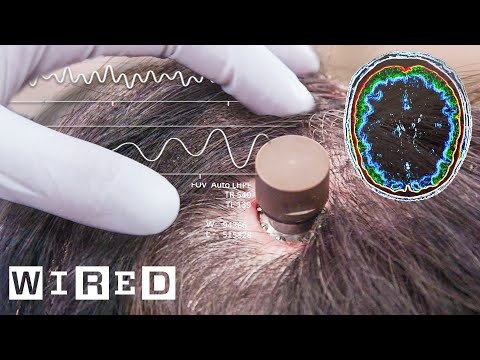 Photo: N43 and Hermes
Brain-computer interfaces translate neural activity into commands for external devices. We examine the electrode technologies, signal processing, clinical trials, and ethical questions that define a field moving from laboratory curiosity to human implant.
Source video: The Science Behind Elon Musk's Neuralink Brain Chip | WIRED · WIRED · approximately 3.7M views observed via yt-dlp on 2026-08-08. Independently researched by N43 and Hermes.
01 Reading the Brain's Electrical Language
Neurons communicate by firing action potentials, brief electrical spikes that travel along axons to synapses, where they trigger chemical signals to neighboring cells. When thousands of neurons near an electrode fire in coordinated patterns, the aggregate electrical activity can be detected and recorded. A brain-computer interface captures these signals, decodes their patterns, and translates them into output commands for a cursor, a robotic limb, or a text generator.
The challenge is that the brain is electrically noisy. Each cubic millimeter of cortex contains tens of thousands of neurons firing asynchronously, and the signals from any single cell are measured in microvolts — orders of magnitude smaller than the ambient electrical noise of the body and the environment. Extracting a clean command signal requires sophisticated filtering, pattern recognition algorithms, and machine learning models trained on the specific neural patterns of each individual user. No two brains produce identical signals for the same intention, so every BCI must be calibrated to its user.
02 The Electrode Spectrum: Non-Invasive to Fully Implanted
BCI implementations span a spectrum defined by how close the recording electrodes sit to the brain tissue itself. Non-invasive approaches use electroencephalography caps placed on the scalp. EEG is safe and requires no surgery, but the skull and scalp attenuate the signal so severely that only the collective activity of large neural populations is detectable, and spatial resolution is measured in centimeters rather than millimeters.
Invasive approaches place electrodes directly on or inside the cortex. ECoG, or electrocorticography, uses a flexible sheet of electrodes laid on the brain surface under the skull, offering better signal quality than EEG without penetrating tissue. Intracortical electrodes, such as the Utah array, are arrays of rigid needles pushed into the cortex to record from individual neurons. These provide the highest fidelity signals but trigger immune responses that form scar tissue around the electrodes, degrading signal quality over months or years. The industry is now developing flexible, biocompatible threads designed to minimize this rejection response.
03 The Surgical Robot and the Thread
Neuralink's approach centers on a custom-built surgical robot that inserts polymer threads, each thinner than a human hair, into the cortex with micrometer-scale precision. The robot uses a needle to rapidly insert multiple threads in patterns that avoid blood vessels visible on the brain surface, reducing hemorrhage risk. Each thread carries dozens of electrode contacts, and the combined system targets the motor cortex, where the intention to move is encoded.
The threads are designed to be more flexible than the rigid silicon shanks used in older intracortical arrays. Flexibility reduces the mechanical mismatch between stiff electrodes and soft brain tissue, which is thought to contribute to the inflammatory response and encapsulation that degrades signals over time. The trade-off is that flexible threads are harder to insert — they buckle under force — which is why the surgical robot is needed to guide each one to the correct depth. The implanted device, called the N1, sits behind the ear and wirelessly transmits decoded signals to an external computer, eliminating the percutaneous connectors that were a major source of infection in earlier BCI trials.
04 Decoding Intent: From Spikes to Actions
Recording neural signals is only the first half of the problem. The second is decoding, the algorithmic translation of recorded spikes into useful output commands. Early BCIs used simple linear filters that correlated firing rates with cursor velocity, but modern decoders employ machine learning models that learn to map high-dimensional neural spike trains onto intended movements in real time.
The decoding pipeline typically involves feature extraction, where raw electrode voltages are processed into spike counts or spectral features, followed by a classifier or regression model that maps features to output parameters. Recurrent neural networks and transformer architectures are increasingly used to capture the temporal dynamics of neural sequences. A key challenge is non-stationarity: the relationship between neural firing and intended action drifts over time as electrodes shift relative to neurons and the brain adapts to the interface. Decoders must continuously recalibrate, and some systems now incorporate closed-loop adaptation that updates the decoding model during use.
05 Clinical Trials: Restoring Lost Function
The first BCI clinical trials have focused on individuals with severe motor impairment, particularly those with spinal cord injuries or amyotrophic lateral sclerosis. The goal is to restore a degree of independence — controlling a computer cursor, selecting letters on a virtual keyboard, or operating a robotic arm — for people who have lost voluntary motor control. Neuralink's first human implant in 2024 enabled a quadriplegic participant to control a computer mouse and play video games using only neural signals.
Earlier trials established the foundation. The BrainGate consortium has implanted Utah arrays in over a dozen participants since 2004, demonstrating that paralyzed patients could control cursors, robotic arms, and speech synthesizers. A participant in a 2021 BrainGate trial achieved typing speeds of roughly 90 characters per minute using a BCI that decoded attempted handwriting from motor cortex signals. These results are not cures, but they demonstrate that the intact cortex above a spinal injury retains enough information to drive useful output devices, provided the decoding pipeline is sophisticated enough to read it.
06 Risks, Rejection, and the Longevity Problem
Every implanted BCI faces the same biological adversary: the brain's foreign-body response. When electrodes enter cortical tissue, microglia and astrocytes recognize them as invaders and mount an inflammatory reaction that forms a glial scar around the implant. This scar wall electrically insulates the electrodes from the neurons they are meant to record, and signal quality decays over a timeline that can range from months to several years depending on electrode design and insertion technique.
Infection is the other persistent risk. Any device that breaches the skin creates a pathway for bacteria to enter, and percutaneous connectors, which pass through the skin to external equipment, have historically been a leading cause of trial discontinuation. Wireless implantable designs that seal the connection under the skin, as Neuralink's N1 does, reduce this risk but introduce new engineering challenges around power delivery, heat dissipation, and data bandwidth. The brain is sensitive to temperature increases of even one degree Celsius, so power budgets for wireless implants are tightly constrained. No current BCI has demonstrated stable high-fidelity recording beyond roughly seven years in a human participant.
07 The Ethical Frontier: Enhancement, Privacy, and Identity
Restoring lost function is a goal that commands broad ethical consensus. The harder questions arrive when BCIs are proposed for augmentation — enhancing cognition, memory, or communication speed in healthy individuals. Neuralink's stated long-term vision includes a consumer market, and while that prospect remains far from clinical reality, the regulatory framework for human enhancement through neural implants is essentially undefined. Who would have access, how would safety be established, and what happens to the competitive landscape when some people can interface with machines at neural speed and others cannot?
Neural privacy is the other frontier. A BCI that reads neural activity can, in principle, expose thoughts, intentions, and emotional states that the user did not choose to communicate. Current decoders extract motor intentions, not abstract cognition, but the boundary between the two is not sharp. The principle of cognitive liberty — the right to mental privacy and self-determination over one's neural data — is being articulated by legal scholars and ethicists but has not yet been codified into law in most jurisdictions. As the technology advances, the gap between what is technically possible and what is socially permitted will demand public debate that it has not yet received.
References
- Wikipedia: Brain-computer interface — overview of BCI types, signal processing, and clinical applications
- BrainGate consortium, braingate.org — published clinical trial results for intracortical BCIs
- Neuralink, neuralink.com — PRIME trial registry and published patient updates
- IEEE brain-computer interface benchmarks and BCI Competition results — source for information transfer rate data
- Source video: The Science Behind Elon Musk's Neuralink Brain Chip | WIRED (WIRED, ~3.7M views, observed 2026-08-08)
By N43 and Hermes for Sailor Bob News.


