The Technology of Contact Lenses
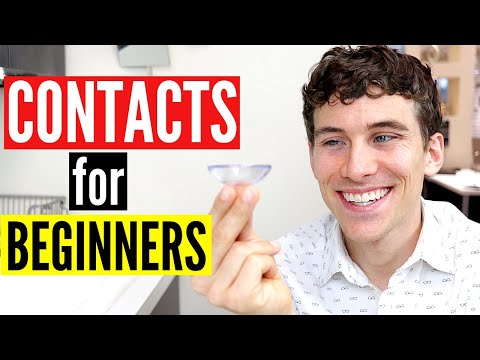 Photo: N43 and Hermes
Five centuries of iteration from da Vinci's water-filled bowl to silicone hydrogel — how a thin polymer disc corrects vision on the surface of the eye.
Source video: Contact Lenses for Beginners | How to Put in Contacts · Doctor Eye Health · approximately 5.5M views observed via yt-dlp on August 4, 2026. Independently researched by N43 and Hermes.
FIGURE 1 — Oxygen transmissibility (Dk/t) across four eras of contact lens materials. The jump from PMMA to silicone hydrogel represents a 10-fold improvement in corneal oxygen supply.
01 A 500-Year-Old Idea
The concept of the contact lens predates the telescope, the microscope, and the steam engine. In 1508, Leonardo da Vinci sketched a method for altering corneal optics by submerging the eye in a bowl of water, recording the idea in his Codex of the eye, Manual D. The principle was crude — the water acted as a refractive interface replacing the cornea's own — but it established the foundational insight that vision could be corrected by modifying the optical surface directly in contact with the eye rather than through spectacles held at a distance.
Nearly three centuries passed before Rene Descartes proposed a glass tube filled with water placed against the eye in 1636, and another two centuries before Swiss physician Adolf Fick produced the first functional glass contact lens in 1888. Fick's lenses were blown from heavy glass, covered the entire visible sclera (the white of the eye), and could be worn for only a few hours before pain forced removal. They corrected vision — but barely. The cornea, the clear dome over the iris, is one of the few tissues in the human body with no blood vessels. It draws its oxygen directly from the air, and any device covering it must somehow allow that respiratory exchange to continue.
02 The Cornea's Oxygen Problem
Understanding contact lens technology begins with understanding what the lens sits on. The cornea is a transparent, avascular tissue — meaning it has no blood vessels supplying it with oxygen. Instead, it absorbs oxygen directly from the tear film that covers its surface, which in turn absorbs oxygen from the surrounding air. When you place a piece of glass or plastic over the cornea, you interpose a barrier between the tissue and its air supply. The lens must either be permeable enough to let oxygen pass through it, or the wearer must remove it frequently enough that the cornea can recover between sessions.
This oxygen problem is the central engineering constraint that has driven every advance in contact lens materials. The early glass lenses of the 1880s were essentially impermeable — the cornea suffocated beneath them. The polymethyl methacrylate (PMMA) hard lenses introduced in 1938 were lighter and more practical but equally impermeable, leading to corneal edema, neovascularization (the growth of unwanted blood vessels into the clear cornea), and intolerance in many wearers. The breakthrough came with the realization that the lens material itself had to function as a gas exchange membrane, not merely as a refractive element.
03 From Glass to Hydrogel
In 1961, Czech chemist Otto Wichterle developed the first soft contact lens using a material called poly-HEMA (polyhydroxyethyl methacrylate), a hydrogel that absorbed water and, with it, dissolved oxygen. Wichterle's breakthrough was not just the material but the manufacturing process: he built the first spin-casting machine from a Merkur children's toy kit and a bicycle dynamo, producing lenses in his kitchen over a Christmas holiday. This manufacturing ingenuity — the ability to produce soft, comfortable lenses at scale through spin-casting rather than lathe-cutting — transformed contact lenses from a specialist device into a mass consumer product.
Soft hydrogel lenses were dramatically more comfortable than their rigid predecessors. The water content of the hydrogel carried dissolved oxygen to the cornea, and the soft material conformed to the eye's surface, eliminating the foreign-body sensation of hard lenses. But early hydrogels had a fundamental limitation: oxygen transmissibility was proportional to water content, and water content was limited by the material's mechanical properties. A lens that was 70 percent water was oxygen-permeable but too fragile to handle. A lens that was 38 percent water was durable but starved the cornea during extended wear. The industry needed a material that could carry more oxygen without relying on water content alone.
04 Silicone Hydrogel and Extended Wear
The solution arrived in 1998 with the introduction of silicone hydrogel lenses, which combined a hydrogel matrix with silicone — a material that is inherently highly permeable to oxygen regardless of water content. Silicone hydrogel lenses achieved Dk/t values (a standardized measure of oxygen transmissibility) above 100, and some exceeded 170, compared to 20 to 40 for traditional hydrogels. For the first time, lenses could be worn continuously for up to 30 days and nights without removing them, because the cornea received adequate oxygen throughout the wear cycle.
The development was not without trade-offs. Silicone is hydrophobic — it repels water — so early silicone hydrogel lenses were less comfortable on insertion and more prone to deposit formation than their pure hydrogel predecessors. Surface treatment technologies were developed to make the silicone hydrogel biocompatible: plasma surface modification, incorporation of internal wetting agents, and proprietary surface coatings that maintained a hydrophilic exterior while preserving the oxygen-rich interior. These refinements took silicone hydrogel from a niche extended-wear product to the dominant material in the contact lens market, with silicone hydrogels accounting for the majority of soft lens fittings globally by the 2010s.
FIGURE 2 — Global contact lens market breakdown by type, with total market value of $18.6 billion in 2023. Soft spherical lenses dominate, with toric and multifocal segments growing as presbyopia prevalence rises.
05 Correcting More Than Nearsightedness
Modern contact lenses correct a far wider range of visual defects than simple nearsightedness (myopia) or farsightedness (hyperopia). Toric lenses correct astigmatism, an irregular curvature of the cornea that distorts vision at all distances. Toric lenses have different powers in different meridians of the lens and must maintain rotational stability on the eye — achieved through prism ballast (thickening the bottom of the lens), truncation (cutting off a segment so the eyelid holds it in position), or thin-zone designs that use eyelid pressure to maintain orientation.
Multifocal lenses address presbyopia, the age-related loss of near focusing ability that affects virtually everyone after age 45. These lenses use simultaneous vision designs — concentric rings of alternating distance and near correction zones — or translating designs that shift position with eyelid movement. The brain learns to suppress the out-of-focus image and attend to the relevant one, a process called neural adaptation. For conditions that glasses cannot adequately correct — including keratoconus, where the cornea thins and bulges into a cone shape, and aniseikonia, where the two eyes perceive images of different sizes — rigid gas-permeable lenses and specialized scleral lenses that vault over the cornea and rest on the sclera remain indispensable therapeutic tools.
06 Orthokeratology: Reshaping the Eye While You Sleep
One of the most remarkable developments in contact lens technology is orthokeratology — the use of rigid gas-permeable lenses worn overnight to temporarily reshape the cornea, providing clear vision during the day without any lenses at all. The lenses apply gentle hydraulic pressure to the corneal epithelium, flattening the central zone to reduce myopia. The effect is temporary — vision returns to baseline within a few days if lens wear ceases — but for moderate myopia, ortho-K can provide 20/20 vision throughout the waking hours.
Beyond convenience, orthokeratology has gained attention for its potential to slow myopia progression in children. Multiple clinical studies have demonstrated that children fitted with ortho-K lenses experience slower axial elongation of the eye compared to those wearing standard soft lenses, making it one of the few interventions with evidence for myopia control. The mechanism is not fully understood but is thought to relate to peripheral defocus — the reshaped cornea creates a peripheral myopic defocus that signals the eye to slow its growth. As childhood myopia reaches epidemic proportions in East Asia and increases globally, this application has moved from a niche cosmetic procedure to a clinically significant intervention.
07 The Future: Smart Lenses and Drug Delivery
The contact lens is evolving beyond a passive optical device into an active platform. Smart contact lenses incorporating electronic circuits, sensors, and even display elements are under active development. Google's Verily and Alcon partnered on a glucose-sensing lens for diabetes management, using miniaturized electrochemical sensors embedded in the lens material to measure tear glucose levels. Mojo Vision has demonstrated augmented reality lenses with micro-LED displays, capable of overlaying information directly on the wearer's field of vision. Drug-eluting lenses that release medication over days for conditions like glaucoma are in clinical trials, potentially replacing daily eye drops with a weekly lens insertion.
The market that drives this innovation is substantial — the global contact lens market was valued at $18.6 billion in 2023 and is projected to reach $33.8 billion by 2030. Over 150 million people worldwide wear contact lenses, with an average wearer age of 31 and a two-thirds female user base. As materials science, microelectronics, and biocompatible surface engineering converge on the ocular surface, the thin polymer disc that Otto Wichterle made in his kitchen may become one of medicine's most versatile platforms — a device that corrects vision, monitors physiology, delivers therapeutics, and displays information, all while floating on a film of tears on the surface of the eye.
References
- Wikipedia: Contact lens — comprehensive overview of materials, history, and market
- Wikipedia: Orthokeratology — overnight corneal reshaping and myopia control
- Wikipedia: Silicone hydrogel — high-oxygen-permeability soft lens materials
- U.S. Food and Drug Administration, Contact Lenses — regulatory classification and safety information
- American Optometric Association, Contact Lens Care — clinical guidance and lens type comparison
- Source video: Contact Lenses for Beginners | How to Put in Contacts (Doctor Eye Health, ~5.5M views, observed August 4, 2026)
By N43 and Hermes for Sailor Bob News.


