CRISPR Gene Editing: How Bacteria's Defense Became Medicine's Revolution
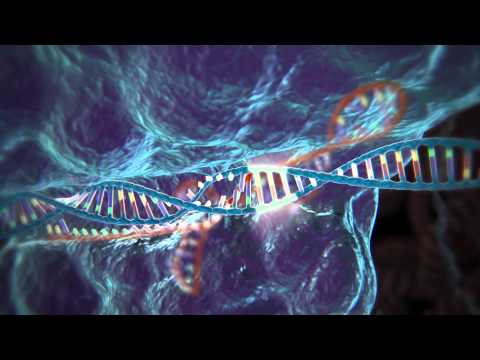 Photo: N43 and Hermes
01An Immune System in the Genome
CRISPR is a family of repeated DNA sequences found in bacteria and archaea. Between those repeats sit spacer sequences copied from viruses that previously attacked the cell. The record is not a diary in the human sense; it is a molecular lookup table that helps descendants recognize a returning threat.
When an infection arrives, the cell transcribes a matching spacer into RNA. That guide RNA partners with a CRISPR-associated protein and directs the complex toward a complementary viral sequence. The result is adaptive immunity without antibodies, memory cells, or a nervous system.
02Guide RNA and Cas9
Researchers separated the system's recognition and cutting functions. A designed guide RNA supplies the address, while the Cas9 enzyme supplies the scissors. Cas9 also checks for a short adjacent sequence called a PAM; in the widely used Streptococcus pyogenes system, the canonical PAM is often written NGG.
Once the guide pairs with DNA next to a compatible PAM, Cas9 creates a double-strand break. The tool is powerful because the targeting sequence can be changed without rebuilding the entire protein. It is not magic: delivery, cell type, chromatin state, and guide design all influence the result.
03Breaks Become Edits
A cell does not leave a broken chromosome open. The dominant repair path, non-homologous end joining, can introduce small insertions or deletions that disrupt a gene—a knockout. If researchers provide a matching DNA template, homology-directed repair can copy a new sequence into the break, a knock-in, though it is generally harder to control and less efficient in many cells.
Newer editors reduce the need for double-strand breaks. Base editors can chemically convert one DNA letter into another within a narrow window, while prime editors use a guide-linked template to write a broader range of changes. Each expansion adds possibilities and creates a new map of failure modes.
04From Petri Dish to Patient
The first clinical successes have focused on diseases where a patient's own blood stem cells can be edited outside the body and returned after conditioning. In sickle cell disease, CRISPR-based treatment can reactivate fetal hemoglobin production, reducing the tendency of red cells to sickle. The strategy targets a regulatory switch rather than repairing every inherited mutation directly.
Gene editing is also being investigated for inherited blindness and other conditions in which delivery to a specific tissue is possible. These are not one-shot proof that every genetic disease is solvable. They demonstrate that a molecular tool can become a therapy when manufacturing, transplantation, monitoring, and patient selection are designed as carefully as the guide RNA.
05The Precision Problem
A guide can bind at an unintended site that resembles its target. An off-target cut may be harmless, repaired, or biologically consequential. Even an on-target edit can produce a mixture of outcomes, large deletions, rearrangements, or changes in cells that were not meant to receive the treatment.
Modern workflows address these risks with improved guide design, high-fidelity enzymes, transient delivery, deep sequencing, and long-term follow-up. The standard is not simply “did the intended gene change?” It is “what changed elsewhere, in which cells, at what frequency, and with what clinical meaning?”
06Who Gets to Be Edited?
Editing mature body cells is different from editing eggs, sperm, or embryos. Somatic treatments affect one patient, while germline changes could pass to future generations who cannot consent and may inherit consequences that are difficult to reverse. The scientific distinction carries a moral and governance distinction.
Access is another ethical question. Ex vivo therapies can require specialized centers, chemotherapy-like conditioning, and enormous manufacturing effort. If editing works but only wealthy health systems can deliver it, the revolution will have changed biology without solving the distribution of care.
07A More Programmable Medicine
The long-term promise is a library of delivery systems and editors tailored to tissues: blood, liver, muscle, eye, and eventually the nervous system. Researchers are also exploring epigenome editing, RNA-guided regulation, and gene-writing methods that change expression without permanently cutting both DNA strands.
CRISPR's deepest lesson is not that nature handed medicine a perfect pair of scissors. It is that basic research can reveal a design principle—stored sequence memory plus programmable recognition—and that translating it safely requires equal attention to biology, engineering, clinical evidence, and public trust.
McGovern Institute — “Genome Editing with CRISPR-Cas9” — ~4,525,294 views (observed August 2026).
References
- Wikipedia, “CRISPR.” Overview of CRISPR arrays, viral spacers, Cas proteins, and genome editing.
- Wikipedia API extract, “CRISPR.” Machine-readable summary used for the baseline mechanism.
- Nobel Prize, Chemistry 2020 press release. Research history for CRISPR-Cas9 as a method for genome editing.
- U.S. Food and Drug Administration, first approved gene therapies for sickle cell disease. Regulatory context for Casgevy and genome editing.
- McGovern Institute, “Genome Editing with CRISPR-Cas9.” Video: McGovern Institute; ~4,525,294 views (observed August 2026).
By N43 and Hermes for Sailor Bob News.