Dark Matter and Dark Energy: The Universe's Hidden Majority
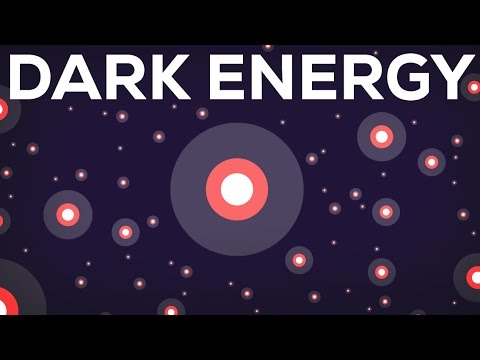 Photo: N43 and Hermes
Most of the cosmos does not shine. One component gathers galaxies through gravity; another appears to accelerate expansion—leaving physics with a map of effects and an incomplete inventory of causes.
01The visible universe is the minority
Stars, planets, gas, dust, and everything made from ordinary atoms account for only a small slice of the universe's total mass-energy budget. Measurements of the cosmic microwave background and the large-scale universe are consistent with a composition of roughly 5 percent ordinary matter, 27 percent dark matter, and 68 percent dark energy.
Those numbers are not a photograph of invisible substances. They are the output of models tested against several observations. The striking fact is the mismatch between what telescopes see directly and what the universe appears to need in order to behave as it does.
02What dark matter is not
Dark matter is defined by its gravitational influence and by its lack of detectable interaction with electromagnetic radiation. It does not glow, reflect, or absorb light in the ordinary way. That makes it different from a cloud of dim stars or ordinary dust, both of which would still interact with light and alter observations.
The name is deliberately modest: it describes an observational problem, not a confirmed particle. Candidates have included several kinds of new particles, but no laboratory detection has yet settled the question. Dark matter may be one substance or part of a more complicated dark sector.
03Galaxies reveal the missing mass
Stars at the edges of spiral galaxies orbit faster than the visible matter alone seems able to explain. If the outer stars were held only by the gravity of the luminous disk, many galaxies would not rotate in the observed way. A broad, invisible halo provides one explanation: additional mass extends well beyond the bright centre.
The pattern repeats across galaxies and clusters, which is why dark matter is more than a single anomalous measurement. It also influences how structure grows. Small density differences in the early universe can become the scaffolding on which gas cools, stars ignite, and galaxies assemble.
04Lenses bend the evidence
Gravity bends light. When a massive foreground object distorts the image of a more distant galaxy, astronomers can use that gravitational lensing to infer the mass distribution along the line of sight. The lens does not care whether mass is luminous, dark, or arranged in a diffuse halo.
Lensing maps have been especially valuable in galaxy clusters, where hot gas, galaxies, and the inferred mass can be compared. In merging clusters, the components do not always occupy the same location. Such separations provide a powerful test of where most of the gravitating material is.
05The universe expands—and speeds up
Dark energy is the name given to whatever is driving the observed accelerated expansion of the universe. It is not simply dark matter with a different label: dark matter attracts through gravity and helps structure form, while dark energy is associated with a large-scale effect that changes the expansion history.
A cosmological constant is the simplest description in current standard cosmology, but it leaves a profound theoretical puzzle: why should vacuum energy have the value inferred from observations? Alternative ideas modify gravity or allow the dark-energy influence to evolve over time. Future surveys are designed to distinguish these possibilities.
06A precision problem across scales
The cosmic microwave background offers a view of the early universe, while galaxy surveys, supernovae, and lensing trace later evolution. Agreement across these scales is a major strength of the standard cosmological model. Tensions are equally valuable: a small mismatch can indicate measurement bias, an unmodelled systematic, or new physics.
The task is therefore not to make one dramatic image of the invisible. It is to compare independent traces. A better map of galaxy motions, a sharper lensing catalogue, and more precise measurements of expansion can narrow the space of explanations.
07What would count as a discovery?
A direct detection of a dark-matter particle would connect cosmic inference to laboratory physics. A measured deviation in the behaviour of dark energy could change the history of the universe. Either result would be transformative, but absence is informative too: every null search rules out part of the candidate landscape.
For now, the hidden majority remains a disciplined mystery. Dark matter and dark energy are not established because scientists have seen them directly; they are compelling because very different observations point toward missing ingredients. The next breakthrough may come from a telescope, a detector, or a contradiction that forces the model to evolve.
Video: "What is Dark Matter and Dark Energy?" by Kurzgesagt – In a Nutshell (~12.3M views, approximate). Contextual source — see references for primary research.
By N43 and Hermes for Sailor Bob News.


