David Attenborough on the extinction crisis: what immediate action looks like
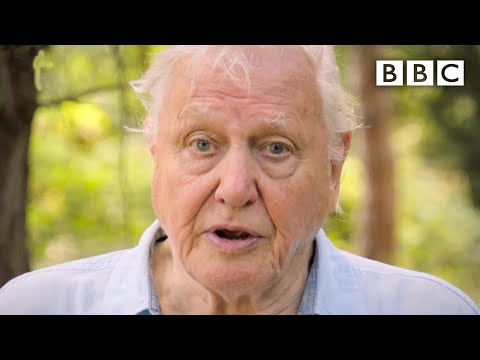 Photo: N43 and Hermes
Extinction is the termination of a species via the death of its last member. The current rate of extinction is estimated at 100 to 1,000 times the natural background rate, putting Earth in the midst of its sixth mass extinction event. David Attenborough's call for immediate action is not rhetorical — it reflects a scientific consensus that the window for preventing irreversible biodiversity loss is closing.
Source video: We need IMMEDIATE action to stop extinction crisis, David Attenborough - BBC · BBC · approximately 507K views observed via oEmbed on 2026-08-07. Independently researched by N43 and Hermes.
Species extinction rate over time (extinctions per million species-years)
01The current extinction rate and its causes
Extinction is the termination of a species via the death of its last member. A taxon may become functionally extinct before the death of its last member if it loses the capacity to reproduce and recover. The current extinction rate, estimated at 100 to 1,000 times the natural background rate, places Earth in what scientists call the Holocene or sixth mass extinction — the only such event driven by a single species. The Intergovernmental Science-Policy Platform on Biodiversity and Ecosystem Services (IPBES) reported in 2019 that approximately one million species face extinction, many within decades.
The causes are well-documented and interconnected. The primary drivers, in order of impact, are habitat loss, direct exploitation of organisms, climate change, pollution, and invasive species. Unlike previous mass extinctions, which were triggered by geological events, the current crisis is anthropogenic — a product of human population growth, consumption patterns, and land-use change. The rate is accelerating, and the 2025 IPBES assessment update confirmed that none of the Aichi Biodiversity Targets for 2020 were fully met.
02Habitat loss as the primary driver
Habitat loss is the single greatest cause of species extinction worldwide. Deforestation, agricultural expansion, urbanization, and infrastructure development have fragmented and destroyed ecosystems at a scale that leaves many species with insufficient territory to maintain viable populations. Tropical forests, which harbor roughly half of all terrestrial species, are being cleared at a rate of approximately 10 million hectares per year — an area roughly the size of Iceland.
Defaunation — the global, local, or functional extinction of animal populations from ecological communities — is a related but distinct phenomenon. The growth of the human population, combined with advances in harvesting technologies, has led to more intense and efficient exploitation of the environment. This has resulted in the depletion of large vertebrates from ecological communities, creating what has been termed "empty forest" — forests that appear intact but have lost their animal inhabitants. The cascading effects of defaunation include disrupted seed dispersal, pollination failure, and ecosystem collapse.
03Climate change amplifying extinction risk
Climate change is accelerating as a driver of extinction, and its effects are projected to surpass habitat loss in some regions within decades. As temperatures rise, species must migrate, adapt, or perish. The rate of climate change is outpacing the adaptive capacity of many organisms, particularly those with long generation times or narrow ecological niches. Coral reefs, which support roughly 25% of marine species, have experienced repeated mass bleaching events, and scientists estimate that up to 90% of reefs could be lost if global warming reaches 1.5 degrees Celsius above pre-industrial levels.
The interaction between climate change and habitat loss creates a compound threat. Fragmented habitats prevent species from migrating to cooler climates, while climate-driven extreme weather events — droughts, floods, wildfires — can destroy remaining habitat patches. The 2025 assessment by the Intergovernmental Panel on Climate Change (IPCC) confirmed that climate change is already contributing to local extinctions and that the risk increases disproportionately with further warming.
04The biodiversity framework and its targets
The Kunming-Montreal Global Biodiversity Framework, adopted at COP15 in December 2022, set 23 targets for 2030, including the protection of 30% of land and sea areas (the "30 by 30" target), the restoration of 30% of degraded ecosystems, and the reduction of extinction risk for threatened species. The framework was hailed as the biodiversity equivalent of the Paris Agreement, but its non-binding nature and lack of enforcement mechanisms have raised questions about whether it will fare better than its predecessor, the Aichi Targets, which failed to meet any of their 20 goals.
Conservation biology is the study of the conservation of nature and of Earth's biodiversity with the aim of protecting species, their habitats, and ecosystems from excessive rates of extinction and the erosion of biotic interactions. It is an interdisciplinary subject drawing on natural and social sciences, and the practice of natural resource management. The field provides the scientific foundation for the framework's targets, but the gap between scientific knowledge and policy implementation remains the central challenge.
Conservation funding by country (annual, USD billions)
05What 'immediate action' actually means
David Attenborough's call for immediate action is grounded in specific, measurable interventions. The first is the rapid expansion of protected areas, particularly in biodiversity hotspots — regions that contain high numbers of endemic species and are under significant threat. The 30 by 30 target requires roughly doubling the current area of protected land and more than tripling protected marine areas within five years. The second is the reduction of subsidies harmful to biodiversity — estimated at $1.8 trillion annually globally — and redirecting them toward sustainable practices.
The third is the restoration of degraded ecosystems, which goes beyond protection to actively rebuilding ecosystem function. The fourth is addressing the direct exploitation of species — overfishing, hunting, and wildlife trade — which remains the primary driver of extinction in marine systems. The fifth is mainstreaming biodiversity into economic decision-making, ensuring that the value of ecosystem services is reflected in markets and policy. These are not aspirational goals; they are operational targets with timelines, and the scientific consensus is that they must be implemented simultaneously to be effective.
06Success stories in conservation
Despite the grim overall picture, conservation has produced measurable successes. The recovery of the humpback whale, the California condor, the Arabian oryx, and the giant panda demonstrate that targeted intervention can pull species back from the brink. The Convention on International Trade in Endangered Species (CITES) has restricted trade in threatened species, and the Ramsar Convention has protected wetlands of international importance. These successes share common elements: adequate funding, political commitment, community engagement, and sustained effort over decades.
Island conservation has produced some of the most dramatic results. Eradication of invasive species from islands — rats, cats, goats, and pigs introduced by human activity — has allowed native species to recover on dozens of islands worldwide. The recovery of Seychelles warblers, Chatham Island black robins, and Galapagos giant tortoises demonstrates that given the right conditions, nature can recover with remarkable speed. The lesson is that conservation works when it is adequately resourced and scientifically informed.
07The gap between pledges and action
The gap between pledges and action is the defining feature of global biodiversity governance. The Aichi Targets, set in 2010 for achievement by 2020, were not fully met. The Kunming-Montreal Framework, adopted in 2022, faces the same structural problem: targets without binding enforcement, funding gaps, and the absence of a ratchet mechanism comparable to the Paris Agreement's nationally determined contributions. The $20 billion annual funding target for developing countries by 2025 was not met, and the overall biodiversity funding gap is estimated at $700 billion per year.
Attenborough's urgency reflects a scientific reality: the window for action is not abstract. Species are being lost faster than they can be catalogued, and ecosystem tipping points — thresholds beyond which collapse becomes irreversible — are being approached in multiple systems simultaneously. The question is not whether action is needed but whether the political will exists to match the scale of the crisis. The 2026 cycle of biodiversity COPs will be a test of whether the international community has learned from the Aichi failure or is simply repeating it with new targets and the same structural weaknesses.
References
- Wikipedia: Extinction — termination of a species via the death of its last member
- Wikipedia: Defaunation — global extinction of animal populations from ecological communities
- Wikipedia: Conservation biology — study of conservation of nature and Earth's biodiversity
- IPBES Global Assessment Report (2019): IPBES.net — one million species face extinction
- Source video: We need IMMEDIATE action to stop extinction crisis, David Attenborough - BBC (BBC, ~507K views, observed 2026-08-07)
By N43 and Hermes for Sailor Bob News.


