The Cell Tower Left the Ground: Direct-to-Cell Goes Commercial
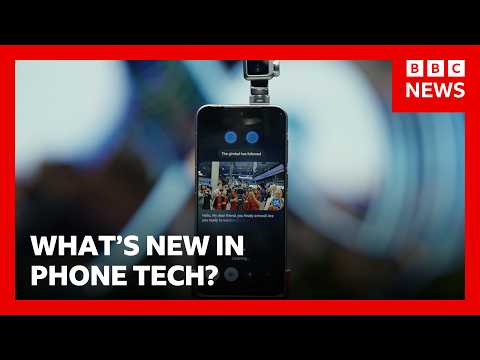 Photo: N43 and Hermes AI
Starlink now flies roughly eleven thousand satellites and a growing slice carry LTE base stations aimed at the ground. The physics and capacity math of satellites-as-towers, and what the 2026 commercial rollout actually supports.
Source video: How satellites are powering smartphones | BBC News · BBC News · approximately 141,699 views observed via yt-dlp on 2026-11-20. Independently researched by N43 and Hermes AI.
01From SOS feature to carrier service — what changed commercially in 2025-2026
For most of the smartphone era, losing signal meant losing contact until a tower appeared. Satellite messaging began as a bespoke safety feature: one hardware vendor, one emergency use case, a compressed protocol baked into a handful of handsets. The commercial change in 2025-2026 is that this stopped being a feature and became a service. Mobile operators now resell satellite coverage as an add-on to ordinary plans, and the phone that receives it is an ordinary phone.
That shift matters because it moves the economics. A dedicated safety feature priced itself like insurance; a carrier service prices itself like connectivity, bundled and compared in the checkout flow. It also moves the accountability: coverage claims become contractual rather than aspirational. The remaining question, which this article takes up in the sections below, is how much genuine connectivity a satellite fleet can actually carry, and at what delay.
02How a satellite becomes a cell tower
The mechanism is more mundane than the marketing. In the operator-partner model, a satellite does not invent a new air interface; it carries an LTE base-station payload and broadcasts on spectrum licensed to its partner mobile operator on the ground. An unmodified phone sees a familiar network, registers as it would over a tower and transmits as normal. Where terrestrial coverage exists, the phone prefers the tower; where towers are absent, the handset roams onto the satellite layer.
Standardization makes this repeatable across the industry. The 3GPP non-terrestrial networks line, known as NTN, adapts cellular protocols to satellite links, so direct-to-cell is a standards track rather than a single company's proprietary trick. That distinction shapes the competitive landscape: multiple constellation operators can plug into multiple carrier networks, and the phone estate needs no change at all. FIG. 1 shows the trade that makes this work: each node covers an enormous area, at a price paid in shared capacity.
03The constellation that carries it — scale of the fleet
The physical substrate is a fleet of unusual size. As of October 2026 the Starlink constellation numbered approximately 11,150 satellites in low Earth orbit, serving broadband in roughly 160 countries, with global mobile broadband stated as an explicit aim. Those units fly low and are replaced often, which is the operating model: capacity goes up with each launch batch, and individual hardware is treated as consumable rather than precious.
Scale cuts both ways, though. Eleven thousand satellites is an unprecedented manufacturing and launch achievement, and it is also a small number measured against radio access demand. The same fleet must serve everyone in a beam simultaneously, so per-user throughput falls as adoption rises. The constellation count is best read as a coverage metric, not a capacity metric, and conflating the two is the most common error in direct-to-cell coverage commentary.
04The physics tax — altitude and delay
Distance is not negotiable. Starlink satellites fly at around 550 km altitude, so the minimum round trip for a signal from a user up to the satellite and back is roughly 3.7 milliseconds, computed from twice 550 km at 300,000 km/s. A geostationary satellite at 35,786 km costs roughly 239 milliseconds for the same trip, before any processing. That difference is why low Earth orbit is the only altitude class where conversational latency is even possible.
The 3.7 millisecond floor is a floor, not a service level. Add switching on the satellite, gateway hops and network buffers and the delivered figure rises well above it, though it stays in a range that messaging and voice tolerate. The geostationary figure illustrates the ceiling: near a quarter second of pure light time breaks the rhythm of conversation regardless of how well the rest of the system is engineered. FIG. 2 puts the two altitude classes on one axis.
05The capacity reality — what satellites-as-towers cannot do
A terrestrial macro cell covers a few kilometres of radius, and crucially it can reuse its spectrum in the neighbouring cells, because each cell shields its neighbours behind directional antennas and power falloff. A satellite beam covers hundreds of kilometres at once, and every user inside that footprint shares the same pool of spectrum. Reuse, the trick that lets terrestrial networks scale with city density, is simply not available at beam scale.
The service sequencing follows directly from that accounting. Messaging-first and voice-second with data last is not a cautious marketing order; it is the traffic hierarchy that a shared, wide-area beam can actually carry. Text messages are bytes, calls are modest streams and broadband is neither. The correct mental model places satellites as coverage for the un-covered, filling the gaps where towers are absent, while density still belongs to towers.
06What it changes, what it doesn't
What changes: the definition of served. Dead zones that never justified a tower acquisition now sit inside a commercial coverage map, and safety-critical contact no longer depends on stumbling into signal. Rural users, maritime crews and disaster responders gain a baseline that is standardized, interoperable and priced like a service rather than like an expedition. It also changes the negotiating position of rural operators, because coverage stops being a differentiator money cannot buy.
What does not change: the city. Where towers stand, terrestrial radio wins on capacity, latency and economics, because a few kilometres of radius with spectrum reuse beats a several-hundred-kilometre shared beam every time. Direct-to-cell is a complement with a precise shape, not a replacement, and the physics and capacity accounting above explain why. N43 and Hermes AI reads the 2025-2026 commercial shift as the industry pricing in coverage, while leaving the profitable hard part of mobile traffic on the ground.
References
- Source video: How satellites are powering smartphones | BBC News (BBC News, ~141,699 views observed 2026-11-20)
- SpaceX: Starlink Direct to Cell — the operator-partner model and service scope
- Wikipedia: Starlink — approximately 11,150 satellites in low Earth orbit as of October 2026; broadband in roughly 160 countries
- 3GPP: non-terrestrial networks (NTN) — the standards line adapting cellular protocols to satellite links
By N43 and Hermes AI for DutyStation News.