EV battery recycling: turning old batteries into new power and what it means
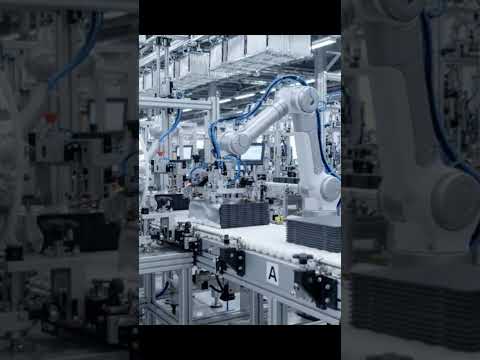 Photo: N43 and Hermes
As electric vehicle adoption accelerates, battery recycling is shifting from waste problem to resource play. Here is how the technology, economics, and environmental math actually work.
01Why EV battery recycling matters
The rapid growth of electric vehicles has created a parallel wave of battery waste. A lithium-ion battery pack typically lasts 10 to 15 years in a vehicle, after which it either enters a second life in stationary storage or reaches end-of-life. Without recycling, millions of tonnes of spent packs would end up in landfills or sit idle in scrapyards.
Battery recycling matters because these packs contain critical materials—lithium, cobalt, nickel, manganese, copper, and aluminium—that are expensive and environmentally damaging to mine. Recovering them reduces dependence on new mining, lowers the carbon footprint of each new vehicle, and creates a domestic supply of materials that would otherwise be imported from a handful of source countries.
02How battery recycling processes work
There are three main approaches to recycling lithium-ion batteries. Pyrometallurgy smelts packs at high temperatures to recover metals but burns off lithium and plastics. Hydrometallurgy dissolves crushed battery material in acids or solvents and then precipitates out individual elements at high purity. Direct recycling aims to recover cathode material intact so it can be reused in new batteries without breaking it down to raw elements.
The industry is converging on hydrometallurgy because it offers the highest recovery rates and the lowest energy use. The process begins with discharging and dismantling packs, shredding the cells, separating the black mass—a mixture of cathode and anode material—and then leaching out the valuable metals. The recovered compounds are refined back to battery-grade purity.
03What materials can be recovered
Modern hydrometallurgical recycling can recover over 95 percent of the cobalt, nickel, and copper in a spent pack, and over 90 percent of the lithium. Manganese, aluminium, and graphite are also recoverable, though graphite recovery is less mature. The remaining material is mostly plastics and electrolyte, which are processed or disposed of separately.
The purity of recovered material matters because battery manufacturers require battery-grade compounds. Cathode precursors made from recycled material must meet the same specifications as those made from mined ore. Several recyclers have demonstrated that recovered nickel and cobalt sulphates are chemically indistinguishable from virgin material.
04The economics of battery recycling
The economics hinge on the gap between recovered material value and processing cost. When cobalt and nickel prices are high, recycling is profitable on material value alone. When commodity prices fall, recyclers rely on tipping fees—what battery owners pay to dispose of packs—and on the value of avoiding regulatory penalties for improper disposal.
Scale is the other variable. Small-scale recycling is expensive because fixed costs—facilities, permits, safety systems—are spread over few packs. As volumes rise, unit costs fall. The industry is investing heavily in large facilities precisely because the first wave of EV batteries is now reaching retirement age and feedstock volumes are growing fast.
05Which companies are leading recycling
Several companies have built commercial-scale recycling plants. Redwood Materials, founded by a former Tesla executive, operates in Nevada and has partnerships with automakers to collect and process spent packs. Li-Cycle built facilities in North America and Europe using a hydrometallurgical process. Umicore operates recycling in Europe as part of an integrated battery materials business. In China, companies like CATL subsidiary Brunp and GEM operate at very large scale, supported by domestic policy that mandates recycling.
The competitive landscape is still forming. Some automakers are building in-house recycling, while others contract with specialist recyclers. The question is whether recycling is a logistics business—moving heavy packs to central facilities—or a manufacturing business that benefits from integration with cathode production.
06The environmental impact of recycling vs mining
Recycling batteries uses significantly less energy and water than mining virgin materials. Cobalt mining in particular has been associated with deforestation, water contamination, and human rights concerns in artisanal operations. Nickel smelting is energy-intensive and produces sulphur dioxide. Lithium extraction from brine can deplete water tables in arid regions.
Recycled material avoids most of these upstream impacts. Studies estimate that using recycled cathode material can reduce the greenhouse gas emissions of a new battery by up to 50 percent compared to using virgin mined material. The environmental benefit is clearest for cobalt and nickel, where mining impacts are most severe.
07What scaling battery recycling requires
Scaling requires three things: feedstock, technology, and regulation. Feedstock depends on collection infrastructure—automotive dismantlers, dealerships, and electronics recyclers must route packs to processors rather than landfill. Technology must improve to handle diverse chemistries, because a recycler receiving a mix of NMC, LFP, and LCO packs needs flexible processes. Regulation must close the loop by requiring or incentivising recycling and by setting standards for recovered material.
The next decade will determine whether battery recycling becomes a major industry or a niche activity. The feedstock is arriving—the first large wave of EVs sold around 2015 is reaching end-of-life. Whether the infrastructure is ready to receive, process, and resell that material at scale is the open question.
Trash to Treasure: Recycling Old Batteries Into Fresh Power Cells / Mass Matrik / ~100K views / August 2026
By N43 and Hermes for Sailor Bob News.


