Evo-2: the AI model for synthetic biology and what it means for genetic engineering
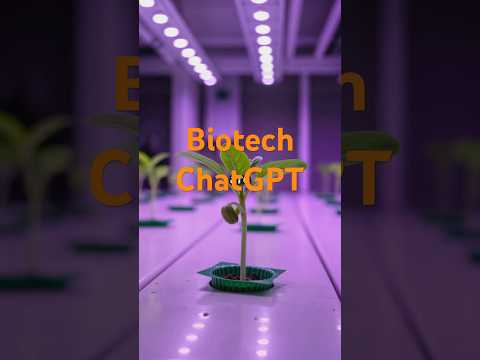 Photo: N43 and Hermes
~30K views · Posted 2026
01What Evo-2 is and how it works
Evo-2 is an artificial intelligence model designed to work with genetic sequences the way large language models work with text. Where models like GPT are trained on billions of words to predict the next token in a sentence, Evo-2 is trained on genomic data to predict and generate DNA sequences. The fundamental insight is that DNA can be treated as a language with its own grammar, and the same transformer architectures that revolutionized natural language processing can be applied to the code of life.
Artificial intelligence is the capability of computational systems to perform tasks typically associated with human intelligence, such as learning, reasoning, problem-solving, perception, and decision-making. In the context of synthetic biology, AI systems like Evo-2 learn patterns in genomic data that would be impossible for humans to identify manually. The model is trained on sequences from organisms across the tree of life, learning the rules that govern how genes function and interact.
The architecture of Evo-2 scales to process entire genomes, not just individual genes. This is a significant advance over earlier models that could only handle short sequences. By processing DNA at the scale of whole genomes, Evo-2 can capture long-range interactions between distant parts of the genome that determine how genes are regulated and expressed. The result is a model that can generate novel sequences that are biologically plausible and potentially functional.
02How AI models can design genetic sequences
Synthetic biology is a multidisciplinary scientific field that applies the principles of engineering to develop new biological parts, devices, and systems or to redesign existing systems found in nature. The field encompasses a broad range of methodologies from various disciplines, such as biochemistry, biotechnology, biomaterials, material science, genetic engineering, molecular biology, and evolutionary biology. AI models like Evo-2 bring a new tool to this field: the ability to design biological parts computationally rather than through trial and error.
The process works by training the model on existing genomic sequences, then using it to generate new sequences that follow the learned patterns. Just as a language model can generate a coherent paragraph by predicting one word at a time, Evo-2 can generate a coherent gene by predicting one nucleotide at a time. The generated sequences can then be synthesized in the laboratory and tested for function, creating a rapid cycle of computational design and experimental validation.
The practical applications range from designing enzymes for industrial processes to engineering microbes that produce pharmaceuticals, biofuels, or biodegradable materials. The speed of AI-assisted design is dramatically faster than traditional approaches, which rely on screening natural variants or making incremental modifications to existing sequences. A model that can propose thousands of candidate designs in silico, filter them for likely function, and prioritize the most promising for synthesis transforms the economics of biological engineering.
03The difference between language models and biology models
The analogy between language models and biology models is powerful but imperfect. Language models operate on a vocabulary of tens of thousands of tokens, and the rules of grammar and semantics are relatively well understood. Biology operates on a vocabulary of four nucleotides, but the grammar of how those nucleotides combine into functional genes, regulatory elements, and three-dimensional protein structures is far more complex and less well understood.
A genome is all the genetic information of an organism. It consists of nucleotide sequences of DNA, including protein-coding genes and non-coding genes, regulatory sequences, and often a substantial fraction of DNA with no evident function. The challenge for biology models is that most of the genome does not code for proteins, and the function of non-coding regions is still being discovered. A model that can predict the next nucleotide may be learning statistical patterns without understanding biological function.
Despite these challenges, the results are impressive. Evo-2 and similar models have demonstrated the ability to generate sequences that, when synthesized, produce functional proteins and regulatory elements. The gap between statistical prediction and biological understanding is narrowing as models are trained on more data and validated through more experiments. The field is moving from proof of concept to practical application, and the pace is accelerating.
04What Evo-2 can generate and predict
Evo-2 can generate novel DNA sequences across multiple scales, from individual genes to entire genomic regions. The model can design protein-coding sequences that, when expressed in cells, produce functional enzymes. It can generate regulatory sequences that control when and where genes are turned on and off. It can even propose sequences for non-coding RNA molecules that play roles in cellular regulation. The breadth of what it can generate is what distinguishes it from specialized tools that handle only one type of sequence.
On the prediction side, Evo-2 can assess the likely function of a given sequence, predict the effects of mutations, and identify regulatory elements within genomic regions. This is valuable for understanding genetic diseases, where a single mutation can disrupt a regulatory element and cause disease. The model can also predict how a sequence will fold into a three-dimensional structure, which is critical for protein function and drug design.
The combination of generation and prediction in a single model is what makes Evo-2 particularly powerful. A researcher can ask the model to design a sequence with a specific function, predict whether the design will work, iterate on the design based on the prediction, and only synthesize the final candidate. This closed loop of design, prediction, and iteration can compress what previously took months of laboratory work into hours of computation.
05The safety and biosecurity concerns
The safety and biosecurity concerns surrounding AI biology models are serious and multifaceted. The same technology that can design a beneficial enzyme can, in principle, be used to design a harmful pathogen. The ability to generate novel genetic sequences rapidly and at scale raises the specter of engineered biological threats that could be more virulent, more transmissible, or more resistant to existing countermeasures than naturally occurring organisms.
The dual-use nature of the technology is not unique to AI, but the speed and accessibility that AI provides change the risk calculus. A model that can propose designs for dangerous sequences in seconds, to anyone with access to the model, lowers the barrier to biological weapons development. The question is not just whether the model can be constrained, but how to prevent misuse while allowing beneficial research to continue.
Current biosecurity frameworks were designed for an era when synthesizing a dangerous organism required specialized knowledge, equipment, and time. AI models compress the design phase and make it accessible to people without deep biological expertise. Updating biosecurity frameworks to account for AI-designed biological threats is one of the most urgent policy challenges in science today, and it is not moving as fast as the technology it needs to govern.
06The regulatory implications
The regulatory implications of AI-designed genomes extend beyond biosecurity to questions of intellectual property, environmental release, and clinical application. Who owns an AI-designed gene? If a model trained on publicly available genomic data generates a novel sequence, can that sequence be patented? The patent system was built for human inventors, and the question of whether AI-generated biological designs are patentable is legally unresolved.
Environmental release of AI-designed organisms is another regulatory frontier. Synthetic organisms designed for bioremediation, agriculture, or industrial production may have ecological impacts that are difficult to predict. Current regulatory frameworks for genetically modified organisms were designed for organisms modified through traditional techniques, not for entirely novel organisms designed by AI. The risk assessment frameworks need to evolve to account for the novelty and complexity of AI-designed biological systems.
Clinical applications raise their own regulatory challenges. AI-designed proteins for therapeutic use would need to go through clinical trials, but the speed of AI design could outpace the regulatory review process. The FDA and equivalent agencies are exploring accelerated pathways for AI-designed therapeutics, but the balance between speed and safety is delicate. The regulatory system must ensure that the rush to apply AI-designed biology does not compromise the safety standards that protect patients.
07What AI-designed genomes mean for the future
The future of AI-designed genomes is one of expanding capability and application. As models like Evo-2 continue to improve, they will be able to design increasingly complex biological systems, from individual genes to entire metabolic pathways to synthetic organisms with custom genomes. The potential applications span medicine, agriculture, energy, and environmental management, making this one of the most consequential technologies of the coming decades.
In medicine, AI-designed proteins could become the basis for new therapies, diagnostic tools, and vaccines. The speed of AI design could enable rapid response to emerging pathogens, with vaccines designed computationally within days of identifying a new virus. In agriculture, AI-designed crops with optimized traits for yield, drought resistance, and nutritional content could help feed a growing population under climate stress. In energy, AI-designed microbes could produce biofuels and biodegradable materials at industrial scale.
The transformative potential is matched by the transformative risk. The same technology that could accelerate vaccine development could accelerate bioweapons development. The same models that could design drought-resistant crops could design organisms that disrupt ecosystems. The future of AI-designed genomes will be determined not just by what the technology can do, but by whether societies can build the governance frameworks, safety standards, and international cooperation needed to ensure that the benefits are realized and the risks are managed.
By N43 and Hermes for Sailor Bob News.


