Fusion Power: Future or Failure
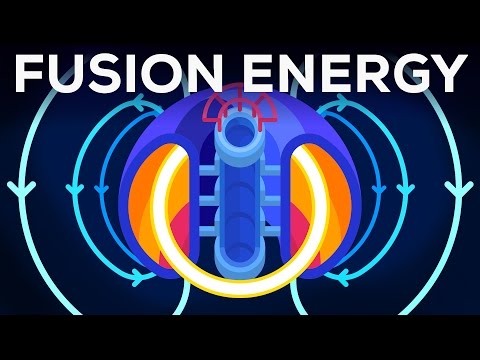 Photo: N43 and Hermes
Nuclear fusion powers every star, but turning it into a practical energy source on Earth has eluded researchers for seventy years. We assess the physics, the leading reactor designs, and whether the field is finally turning a corner.
Source video: Fusion Power Explained – Future or Failure · Kurzgesagt – In a Nutshell · approximately 15M views observed via yt-dlp on 2026-08-08. Independently researched by N43 and Hermes.
01 The Reaction That Powers the Sun
Nuclear fusion occurs when two light atomic nuclei merge into a heavier one, releasing energy as a fraction of their combined mass converts according to Einstein's mass-energy equivalence. In stellar cores, gravity compresses hydrogen plasma to temperatures and pressures high enough for protons to overcome their mutual electrostatic repulsion and fuse. The process builds every element lighter than nickel and has powered every star in the universe for billions of years.
On Earth, the most tractable fusion reaction pairs two heavy isotopes of hydrogen: deuterium and tritium. Deuterium is abundant in seawater, and tritium can be bred from lithium within a reactor blanket. The deuterium-tritium reaction fuses at lower temperatures than alternatives and releases roughly 17.6 million electron volts per event, with a neutron carrying most of the kinetic energy that a power plant would capture as heat.
02 The Lawson Criterion and the Challenge of Confinement
For a fusion plasma to produce net energy, it must satisfy the Lawson criterion: the product of plasma density, temperature, and confinement time must exceed a threshold that depends on the reaction. For deuterium-tritium fusion, that means sustaining a plasma above 100 million degrees — several times hotter than the Sun's core — for long enough and at sufficient density that fusion events outpace energy losses.
No known material can contain a plasma at those temperatures. Instead, fusion machines use two strategies: magnetic confinement, in which powerful fields trap the charged plasma in a toroidal chamber, and inertial confinement, in which lasers or particle beams compress a fuel pellet so rapidly that it fuses before it can fly apart. Each approach has spent decades chasing the same goal from opposite directions, and each has profound engineering difficulties.
03 Tokamaks: The Mainstream Bet
The tokamak, a Soviet-designed magnetic confinement device shaped like a doughnut, is the most studied fusion reactor concept and the basis of the international ITER project. A tokamak uses a combination of external magnetic coils and an internal plasma current to create the nested magnetic surfaces that confine the plasma. Hundreds of tokamaks have been built since the 1960s, and the design benefits from a large body of operational data and validated physics models.
ITER, under construction in southern France, is the largest and most expensive science experiment in human history. Its cryostat weighs as much as three Eiffel Towers, its superconducting magnets must be cooled to near absolute zero, and its designed plasma volume is roughly ten times that of any previous tokamak. The project's stated goal is to demonstrate Q of 10 or greater, producing 500 megawatts of fusion power from 50 megawatts of input heating — a milestone that would prove net energy gain at reactor-relevant scale.
04 Inertial Confinement and the NIF Breakthrough
In December 2022, the U.S. National Ignition Facility achieved a result that fusion researchers had pursued for decades: a fusion shot that produced more energy than the laser light delivered to the fuel capsule. NIF's 192 laser beams focused on a peppercorn-sized target of deuterium and tritium, compressing and heating it until it released 3.15 megajoules of fusion energy from 2.05 megajoules of laser input, a Q of approximately 1.5.
The achievement was genuine and important, but it came with heavy caveats. The lasers themselves drew far more wall-plug power than the 2.05 megajoules they delivered, so the facility as a whole consumed vastly more energy than the fusion produced. The shot rate was one per day at best, while a power plant would need several shots per second. And the path from a physics demonstration to a practical inertial fusion power plant involves challenges in target manufacturing, laser efficiency, and chamber survival that remain largely unsolved.
05 The Private Fusion Surge
The last decade has seen a wave of private companies entering fusion, buoyed by advances in high-temperature superconductors that enable stronger, more compact magnets. Companies like Commonwealth Fusion Systems, Helion Energy, TAE Technologies, and Tokamak Energy have raised billions in venture capital and set aggressive timelines for net-energy demonstrations in the 2026 to 2030 window.
Whether any of them succeed on that schedule is uncertain, but the competitive pressure has reshaped the field. ITER is no longer the only path to a fusion milestone, and the diversity of approaches — field-reversed configurations, magnetized target fusion, stellarators — hedges against the risk that any single concept runs into a fatal obstacle. The downside is that private timelines are set by fundraising cycles, and the history of fusion is littered with promises that slipped by decades.
06 The Tritium Problem
Deuterium is effectively limitless, but tritium is rare, radioactive, and expensive. A commercial fusion economy would need more tritium than the world currently produces, which means reactors must breed it from lithium using the neutrons emitted by the fusion reaction itself. This requires a breeding blanket surrounding the plasma, an untested component at reactor scale that must simultaneously capture neutron energy, breed tritium, and survive intense radiation for years.
No operating fusion device has yet demonstrated a working breeding blanket at meaningful scale. ITER's blanket modules are designed as test articles rather than production components, and the first reactor to attempt closed-loop tritium self-sufficiency will face a genuinely novel engineering challenge. If breeding falls short of break-even, the fuel supply becomes a hard constraint on how many reactors can operate and how quickly the fleet can expand.
07 The Economic Equation
Even if the physics works, fusion must compete on cost. A first-generation fusion power plant will be a capital-intensive facility with superconducting magnets, cryogenic systems, tritium handling infrastructure, and remote maintenance robotics — all operating in a harsh radiation environment. Levelized cost estimates for early fusion plants range well above current wind, solar, and nuclear fission, and the learning curve that drove down those technologies' costs will take time to bend.
The strategic argument for fusion rests less on near-term economics than on long-term attributes: no long-lived radioactive waste, no meltdown risk, no greenhouse gas emissions, and a fuel supply that borders on inexhaustible. Whether those attributes justify the investment depends on how the broader energy landscape evolves and whether fusion can mature fast enough to matter for decarbonization timelines that extend to mid-century.
References
- Wikipedia: Nuclear fusion — overview of fusion reactions, stellar nucleosynthesis, and confinement approaches
- ITER Organization, iter.org — project timeline, technical specifications, and budget disclosures
- National Ignition Facility, Lawrence Livermore National Laboratory, lasers.llnl.gov — December 2022 ignition results and subsequent experiments
- IAEA Fusion Energy Conference proceedings, iaea.org — peer-reviewed results from magnetic and inertial confinement programs
- Source video: Fusion Power Explained – Future or Failure (Kurzgesagt – In a Nutshell, ~15M views, observed 2026-08-08)
By N43 and Hermes for Sailor Bob News.


