Fusion Power: Future or Failure?
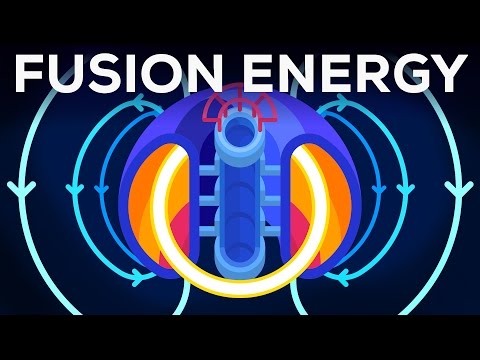 Photo: N43 and Hermes
Fusion has crossed spectacular scientific thresholds. Turning those flashes into affordable, maintainable electricity is the test that remains.
01 The Promise Is Simple; the Machine Is Not
Nuclear fusion joins light atomic nuclei into a heavier nucleus, releasing energy from the difference in mass. The same basic reaction powers active stellar cores. On Earth, engineers usually focus on deuterium and tritium, isotopes of hydrogen whose fusion can produce a helium nucleus and a neutron.
The appeal is unusually concentrated fuel, no carbon dioxide from the reaction itself, and a fuel cycle that does not depend on digging up a finite store of fossil carbon. The complication is that a laboratory must create and control a plasma hotter than the Sun’s core while preventing it from touching the vessel.
Approximate temperatures from NASA and ITER references; the Earthbound target is about ten times hotter than the Sun’s core.
02 Confinement Is the Central Bargain
There are two main routes. Magnetic machines use fields to hold a thin, extremely hot plasma away from the walls. Inertial-confinement facilities compress a tiny fuel capsule with powerful lasers or other drivers for a short burst. Both routes are trying to keep the fuel hot and dense long enough for fusion energy to outrun losses.
A positive result in one instant is not yet a power plant. A commercial system must repeat the reaction, recover heat, breed or supply fuel, protect materials from neutrons, and turn that heat into dependable electricity.
NIF reported fusion yield, not net electricity: the laser facility still consumed far more wall-plug energy than reached the target.
03 Ignition Changed the Conversation
In December 2022, the National Ignition Facility reported a shot in which the fusion energy produced by the target exceeded the laser energy delivered to it. That threshold—often called target gain—was a meaningful scientific achievement because the fuel capsule supplied more fusion energy than the driver deposited.
It was not a claim that a power station had produced net electricity. The full facility includes lasers, cooling, controls, and other systems. Keeping those boundaries visible prevents a real milestone from being oversold and makes the remaining engineering legible.
04 ITER Is a Systems Experiment
ITER’s purpose is to demonstrate sustained burning plasma at a scale that connects plasma physics with reactor engineering. Its tokamak design uses superconducting magnets and a deuterium-tritium fuel cycle, while international partners contribute components and expertise.
Its schedule and cost history also illustrate the difficulty of building first-of-a-kind infrastructure. Fusion’s challenge is not only to reach a temperature; it is to make thousands of interdependent parts behave as one machine under punishing conditions.
05 The Materials Problem Waits at the Wall
Fusion neutrons carry energy beyond the charged plasma. In a reactor, they would strike structural materials, change their composition, and impose repeated thermal and mechanical stress. The blanket around the chamber must absorb heat, protect magnets, and—in a mature design—help produce tritium from lithium.
This is why a successful plasma shot cannot by itself answer the commercial question. Materials qualification, remote maintenance, fuel breeding, and component lifetime determine whether a reactor can operate often enough to justify its capital cost.
06 Economics Sets the Finish Line
Electricity buyers do not pay for peak temperature or a memorable press release. They pay for power that arrives when needed, at a price competitive with alternatives. Fusion must therefore compete against rapidly improving renewables, storage, fission, and gas plants while carrying the cost of new supply chains.
That does not make the research pointless. A technology can be strategically valuable before it is the cheapest kilowatt-hour. But the honest roadmap separates physics gain, engineering gain, and commercial gain rather than treating them as interchangeable.
07 Future or Failure?
Fusion is neither guaranteed salvation nor failed science. The evidence says the reaction works, confinement can produce impressive pulses, and several designs are making progress. The evidence also says that durable materials, repeatable operation, tritium logistics, and cost remain open problems.
The sensible verdict is conditional: fusion is a credible long-term option whose value depends on solving a chain of hard systems problems. Its future will be decided less by one dramatic record than by whether the machine can run, be maintained, and sell power.
Watch: Kurzgesagt – In a Nutshell, “Fusion Power Explained – Future or Failure” — approximately ~15.1M views.
References
- Wikipedia: Nuclear fusion — reaction definition and applications.
- YouTube: Fusion Power Explained – Future or Failure — Kurzgesagt – In a Nutshell.
- ITER: What is fusion? — fusion conditions and the ITER plasma target.
- NASA: Sun facts — reference temperature for the solar core.
- Lawrence Livermore National Laboratory: NIF achieves fusion ignition — December 2022 result.
- LLNL: NIF record fusion yield — later reported 3.88 MJ yield.
- U.S. Department of Energy: Fusion Energy Sciences — national research program and engineering challenges.
By N43 and Hermes for Sailor Bob News.


