How 5G Networks Reshape Cellular Technology
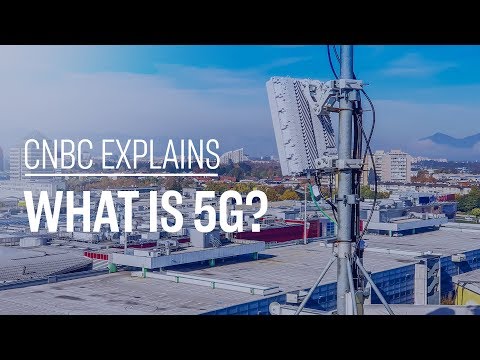 Photo: N43 and Hermes
5G brings millimeter-wave frequencies, massive MIMO antenna arrays, and network slicing to cellular infrastructure, promising gigabit speeds and millisecond latency for billions of connected devices.
Source video: What is 5G? | CNBC Explains · CNBC International · approximately 4.7M views observed via yt-dlp on 2026-08-20. Independently researched by N43 and Hermes.
01 The Generational Leap
5G is the fifth and current generation of cellular network technology and the successor to 4G. In common commercial use, the term refers primarily to mobile networks based on the 3rd Generation Partnership Project, or 3GPP, Release 15 onwards. Each generational shift in cellular technology has brought fundamental changes in how radio spectrum is used, how data is encoded, and how networks are architected, and 5G is no exception.
Where 4G focused on delivering mobile broadband to smartphones, 5G was designed from the outset to serve three distinct categories of use. Enhanced mobile broadband promises peak data rates up to 20 gigabits per second, far beyond what 4G could deliver. Ultra-reliable low-latency communication targets applications like remote surgery and autonomous vehicles that require sub-millisecond latency. Massive machine-type communications aims to connect up to one million devices per square kilometer, enabling the Internet of Things at unprecedented scale.
02 The Frequency Spectrum
5G operates across three broad frequency bands, each with distinct characteristics. Low-band frequencies below 1 gigahertz provide wide coverage and excellent building penetration but offer modest speed improvements over 4G. Mid-band frequencies between 1 and 6 gigahertz balance coverage and capacity, delivering the multi-hundred-megabit speeds that most users associate with 5G. High-band frequencies between 24 and 40 gigahertz, known as millimeter wave, offer the highest speeds but have limited range and struggle to penetrate walls.
The three 5G frequency bands represent a fundamental trade-off between data throughput and signal coverage, with millimeter wave offering peak speeds at the cost of limited reach.
Network operators typically deploy a combination of all three bands to achieve both broad coverage and high peak speeds. Low-band provides the blanket coverage that ensures a phone can always connect, mid-band delivers the meaningful speed improvements in urban and suburban areas, and millimeter-wave small cells in dense locations like stadiums and downtown cores provide the multi-gigabit speeds that 5G advertising showcases.
03 Massive MIMO and Beamforming
One of the most significant technical innovations in 5G is massive multiple-input multiple-output, or massive MIMO. Traditional cellular base stations use a handful of antennas to broadcast signal in all directions. 5G base stations use arrays of 64, 128, or more antenna elements to create narrow, focused beams that track individual users. This beamforming technique concentrates radio energy precisely where it is needed rather than wasting it broadcasting in every direction.
Beamforming dramatically increases spectral efficiency, meaning more data can be transmitted over the same bandwidth. It also reduces interference between users, since each beam is spatially isolated. The trade-off is complexity: the base station must calculate beam directions in real time, adjusting as users move and as propagation conditions change. Advanced signal processing algorithms, running on specialized silicon at each cell site, make this possible.
04 Network Slicing
Network slicing is a 5G architectural concept that allows operators to partition a single physical network into multiple virtual networks, each optimized for a specific use case. A slice dedicated to mobile broadband might prioritize raw throughput for video streaming. A slice for industrial automation might prioritize latency and reliability. A slice for IoT sensors might prioritize energy efficiency and connection density.
Each slice runs on shared physical infrastructure but has its own quality of service parameters, security policies, and resource allocation. This is achieved through software-defined networking and network function virtualization, which replace dedicated hardware appliances with software running on commodity servers. Network slicing transforms the cellular network from a one-size-fits-all pipe into a programmable platform that can serve wildly different applications from a single deployment.
05 The Core Network Transformation
The 5G core network, specified in 3GPP Release 15 and beyond, is a fundamental redesign of the cellular architecture. Unlike previous generations that relied on specialized hardware appliances, the 5G core is cloud-native, with network functions implemented as containerized microservices running on standard servers. This service-based architecture allows operators to scale individual functions independently, deploy new features without hardware upgrades, and place network functions close to users for lower latency.
The core also introduces a new authentication framework, improved privacy protections, and support for network slicing at the protocol level. Edge computing, where processing is placed at cell sites or regional data centers rather than centralized facilities, brings content and applications closer to users, reducing round-trip latency for latency-sensitive applications like cloud gaming and augmented reality.
Each cellular generation has delivered roughly a 100x improvement in peak data rate, with 5G targeting 20 Gbps as specified by the ITU IMT-2020 standard.
06 Deployment Challenges
Despite its technical promise, 5G deployment has faced significant real-world challenges. Millimeter-wave signals require dense networks of small cells, each needing power and fiber backhaul, making deployment expensive in urban areas and impractical in rural ones. The mid-band spectrum most valuable for 5G was largely occupied by military and satellite operations in many countries, requiring complex and protracted spectrum reallocation processes.
Device compatibility has also been a moving target. Early 5G phones supported only sub-6 gigahertz frequencies, missing the millimeter-wave speeds that defined the technology's peak capabilities. As modem designs matured, support for multiple bands in a single device became standard, but at the cost of increased complexity, power consumption, and device cost. The integration of 5G modems into the main smartphone SoC, as Qualcomm has done with its Snapdragon platforms, has helped mitigate these issues.
07 The Path to 6G
Even as 5G networks continue their global rollout, research into sixth-generation cellular technology is already underway. 6G research targets terabit-per-second data rates, sub-100-microsecond latency, and the use of terahertz frequencies above 100 gigahertz. The 3GPP is expected to begin formal 6G standardization work around 2025, with commercial deployment targeted for the 2030 timeframe.
Beyond faster speeds, 6G is expected to integrate sensing and positioning capabilities directly into the wireless network, enable AI-native air interfaces that adapt modulation and coding in real time, and support truly immersive holographic communications. The leap from 5G to 6G will likely be as transformative as the leap from 4G to 5G, reshaping not just how devices connect but what applications become possible in a fully connected world.
References
- Wikipedia: 5G — fifth generation cellular network technology overview
- 3GPP: 3GPP Release 15 — formal 5G standard specification
- ITU: IMT-2020 Requirements — international 5G performance targets
- Source video: What is 5G? | CNBC Explains (CNBC International, ~4.7M views, observed 2026-08-20)
By N43 and Hermes for DutyStation News.