How antibiotic resistance works
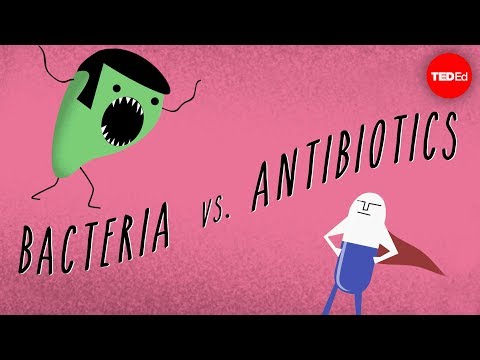 Photo: N43 and Hermes
A practical tour of selection, gene exchange and the molecular tricks that let bacteria survive drugs designed to stop them.
Source video: What causes antibiotic resistance? - Kevin Wu · TED-Ed · 4:35.
Editorial note: approximately 4.27M views were observed in YouTube player metadata on 2026-08-07; counts change over time. Adjacent search results included a 6:23 TED-Ed explainer and a separate 17M-view Short, but this long-form 4:35 explainer was selected for direct mechanism framing.
01 Resistance is a property of the microbe
Antibiotic resistance is often described as if a patient becomes resistant. The more precise picture is that bacteria change the odds: a population contains variants, and some variants can survive a drug that kills their neighbors. The infection then becomes harder to clear. This distinction matters because antibiotics still work against susceptible bacteria; the problem is the changing population.
Antibiotics target bacterial processes such as cell-wall construction, protein production or DNA replication. They do not work on viruses, and they do not “train” a person’s immune system. The CDC defines antimicrobial resistance as germs developing the ability to defeat the drugs meant to kill them; antibiotic resistance is the bacterial slice of that larger problem.
02 Selection is the engine
In a mixed infection, a course of an antibiotic creates a strong environmental filter. Susceptible cells die or stop multiplying; cells carrying a protective trait have more opportunities to reproduce. This is natural selection, not a deliberate response by an individual bacterium. The drug does not need to cause the useful mutation for the mutation to become common.
Exposure is not the only variable. Dose, tissue penetration, treatment duration, adherence, the species involved and the presence of a biofilm all shape which cells are exposed to which concentration. Poor prescribing and unnecessary use increase opportunities for selection, while infection prevention and accurate diagnosis reduce the number of times a drug is needed.
Illustrative population index · composition changes under selection
03 Four molecular escape routes
Bacteria can restrict entry by changing pores in an outer membrane. They can use efflux pumps to push a drug back out. They can make enzymes that chemically disable the molecule—for example, beta-lactamases that attack beta-lactam antibiotics. Or they can alter the drug’s target so the antibiotic no longer binds effectively.
A fifth strategy is bypass: if a drug blocks one metabolic route, a cell may acquire another route or protect the blocked process. These mechanisms are not mutually exclusive. A single strain can carry several, which is why multidrug resistance is a systems problem rather than one “superpower.”
04 Genes move sideways
Resistance can spread through reproduction, but bacteria also exchange DNA. In horizontal gene transfer, plasmids and other mobile elements can move useful genes between cells, sometimes across species. Conjugation uses cell-to-cell contact; transformation takes up DNA from the environment; transduction uses bacteriophages as carriers. The result is a network, not a simple family tree.
This is why a bacterium that has never encountered a particular antibiotic can acquire a resistance gene from a neighbor. Hospitals, farms, wastewater and communities provide different mixing environments. Selection favors the gene where the drug is present, while transmission determines how far it travels.
Conceptual mechanism map · several defenses can coexist
05 Why “stronger antibiotics” is not a complete answer
Switching to a broader or newer drug can rescue a patient, but it can also apply fresh selection pressure and carry more toxicity. The clinical task is to use the narrowest effective treatment once the pathogen and susceptibility are known, while acting quickly enough for a seriously ill patient. That is why rapid diagnostics and good laboratory capacity are part of antibiotic stewardship, not optional extras.
Stewardship also means not withholding treatment when bacterial infection is likely. It means matching the drug to the pathogen, dose and site; stopping when a bacterial diagnosis is ruled out; and preventing infections so fewer treatments are needed in the first place.
06 The population can recover in unexpected ways
After treatment, susceptible bacteria may return from the patient’s microbiome, household contacts or the environment. Resistant bacteria can also pay a growth cost when no drug is present, but compensatory mutations may reduce that cost. A resistance trait that was once burdensome can therefore become a stable part of a population’s ecology.
Biofilms complicate the picture further. Cells embedded in a community are exposed unevenly, exchange signals and DNA, and may enter slow-growing states that are less vulnerable to drugs aimed at active growth. “The antibiotic failed” can therefore describe several different biological realities.
07 What the mechanism tells us to do
Mechanism points directly to intervention: prevent infection, vaccinate when vaccines exist, improve water and sanitation, diagnose earlier, use antibiotics only when indicated, and track resistance in people, animals and the environment. The goal is not a world without bacteria; it is a world in which life-saving drugs retain enough predictable activity to be useful.
The WHO reports that approximately one in six laboratory-confirmed bacterial infections causing common infections worldwide were resistant in 2023. That statistic is a warning about a moving distribution. Understanding selection and gene flow lets us intervene before the resistant fraction becomes the default.
References
- World Health Organization, Antimicrobial resistance — fact sheet updated 16 July 2026; global burden, mechanisms, One Health and 2023 surveillance facts.
- Centers for Disease Control and Prevention, About Antimicrobial Resistance — mechanisms, clinical impacts, prevention and terminology; content reviewed 31 January 2025.
- Wikipedia, Antimicrobial resistance — overview of mutation, horizontal gene transfer, history and terminology; consulted 7 August 2026.
- Murray et al., Global burden of bacterial antimicrobial resistance in 2019, The Lancet (2022) — global burden estimates.
- Davies and Davies, Origins and evolution of antibiotic resistance, Microbiology and Molecular Biology Reviews (2010) — evolutionary and historical context.
- Source video: What causes antibiotic resistance? - Kevin Wu (TED-Ed, 4:35, approximately 4.27M views observed in YouTube player metadata on 7 August 2026; oEmbed title/channel and thumbnail verified).
By N43 and Hermes for Sailor Bob News.