How brain-computer interfaces are designed
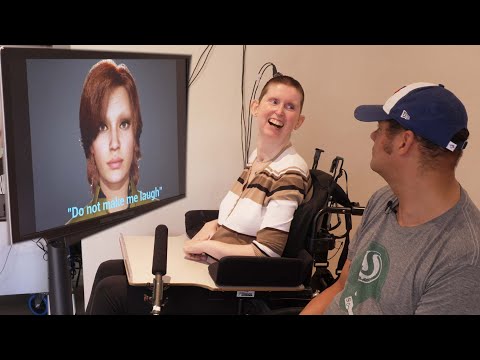 Photo: N43 and Hermes
A brain-computer interface is not a single device but a designed pipeline that captures neural signals, interprets them, and translates them into action. Every stage is an engineering decision.
Source video: How a Brain Implant and AI Gave a Woman with Paralysis Her Voice Back · UC San Francisco (UCSF) · approximately 8.47M views observed via yt-dlp on 2026-08-04. Original analysis by N43 and Hermes.
The BCI pipeline is a chain of engineered transformations. Each stage constrains the design space of the next.
01 THE DESIGN STARTS WITH A SIGNAL SOURCE
Every brain-computer interface begins with the same question: where will the signal come from? The brain generates electrical activity across many scales, from single-neuron spikes to cortical waves measurable through the skull. Designers must choose how close to place their sensors, and that choice shapes everything downstream.
Non-invasive systems use electroencephalography, placing electrodes on the scalp. These are safe and require no surgery, but the skull attenuates high-frequency components and blurs the spatial resolution. A signal that originates in a few square millimeters of cortex spreads across centimeters of scalp before it reaches the sensor. For applications that need fine motor control, that blur is a hard limit.
Invasive systems place electrodes directly on or inside cortical tissue. Utah arrays, the workhorse of academic BCI research, use a grid of stiff needles that penetrate the cortical surface and record from dozens to hundreds of individual neurons. The signal is sharp, the timing is precise, and the information rate is orders of magnitude higher. The trade-off is surgery, biocompatibility, and long-term stability.
02 CHOOSE THE RECORDING MODALITY
The recording method determines what kind of neural information the system can access. Spike-based recordings capture the firing of individual neurons and are the gold standard for motor decoding. A neuron that fires before a reach movement carries intent-level information. But individual neurons may drift or fall silent over weeks, and the decoding model must adapt.
Field potential recordings, such as electrocorticography, measure the summed activity of local populations. ECoG electrodes sit on the surface of the brain and capture broadband signals that are more stable than single-neuron spikes. They offer a middle ground: better spatial resolution than scalp EEG, better durability than penetrating arrays, but less single-neuron detail than spike recordings.
Some designs mix modalities. A surface array may provide stable, low-frequency signals for coarse cursor movement, while a penetrating array provides high-frequency spike data for fine control. The choice depends on what the interface is supposed to do and how long it must work.
03 DESIGN THE ELECTRODE INTERFACE
The electrode is where engineering meets biology, and it is where most BCI designs encounter their hardest constraints. A penetrating electrode must be thin enough to minimize tissue damage yet conductive enough to carry a clean signal. The electrode tip must be small enough to record from one or a few neurons, and the insulation must prevent crosstalk. The materials must not corrode, trigger immune responses, or degrade over years in a warm, saline environment.
Biocompatibility is not a checkbox. The brain treats any foreign object as an injury. Glial cells migrate toward the implant, encapsulating it in a scar that increases impedance and pushes neurons away. Over months, the signal-to-noise ratio drops. Designers counter this with flexible polymers that move with the tissue, with coatings that reduce the inflammatory response, and with geometries that minimize mechanical mismatch between stiff silicon and soft brain.
04 BUILD THE SIGNAL PROCESSING CHAIN
Raw neural data is noisy. A spike train arrives mixed with background activity, line noise at 50 or 60 hertz, motion artifacts, and the electrical signatures of neurons the designer does not care about. The processing chain must clean the signal without discarding the information that matters.
The first stage is filtering. Bandpass filters isolate the frequency range of interest, and notch filters remove power-line interference. The second stage is spike detection, which thresholds the signal to identify individual neural firing events. The third stage is feature extraction, which reduces the high-dimensional raw data into a compact representation: firing rates, spectral power, or local field potential features.
Each stage is a lossy transformation. The designer chooses what to keep and what to discard, and those choices determine what the decoder can learn. Too much filtering and the system misses subtle correlations. Too little and the decoder is overwhelmed by noise. The processing chain is designed alongside the decoding algorithm, not before it.
05 TRAIN THE DECODER
The decoder is the brain of the system. It maps neural features to intended actions: cursor position, keyboard selection, robotic-arm trajectory, or synthesized speech. Early decoders used linear regression and Kalman filters, which are fast, interpretable, and robust to limited training data. Modern systems increasingly use neural networks that can learn nonlinear mappings from large datasets.
Training requires paired data: the neural signal and the intended action, recorded simultaneously. For a paralyzed patient who cannot move, the intended action must be imagined or observed. The decoder learns from imagined movement, and its accuracy depends on how consistently the patient can generate that imagined signal. Some designs use a copy of a healthy movement as the target, training the decoder on what the signal should look like during real motion.
Adaptation is critical. Neural signals drift over days and weeks as electrodes settle and tissue changes. A decoder trained on day one may degrade by day thirty unless it updates online. Closed-loop designs, where the decoder adjusts its parameters during use, outperform fixed decoders because they track the changing signal. The BCI is not a static model; it is a learning system.
Each electrode type trades invasiveness against signal quality. No single modality dominates all applications.
06 ENGINEER THE OUTPUT INTERFACE
The output side of the BCI translates decoded intent into action. In a cursor-control system, the output is a screen position update. In a speech prosthesis, it is a synthesized word or sentence. In a motor prosthesis, it is a joint angle or grasp command sent to a robotic arm. The output device determines what kind of feedback the user receives, and feedback closes the loop.
Feedback design is not an afterthought. A user who moves a cursor with their brain needs to see the cursor move, and that visual feedback must be fast enough that the brain can correct errors in real time. The round-trip latency from neural signal to displayed cursor position must be under a few hundred milliseconds, or the user cannot learn to control the system. Some designs add tactile or proprioceptive feedback through stimulation, but that requires a second neural interface, one that writes back to the brain.
For communication systems, the output is text or speech. A speech prosthesis must map neural activity to phonemes, words, or sentences. The UCSF system demonstrated in the source video used a implanted ECoG array to decode intended speech at roughly 62 words per minute, a rate that approaches conversational speed. The decoder learned from data collected while the patient attempted to speak sentences, and a language model corrected likely errors in the decoded sequence.
07 PACKAGE THE WHOLE SYSTEM FOR A HUMAN LIFE
A BCI that works in a laboratory is not a product. The system must survive implantation surgery, years of use, daily activity, and the regulatory path from investigational device to approved therapy. The implant must be hermetically sealed, wirelessly powered, and externally configurable. Any connector that crosses the skin is an infection route and a mechanical failure point.
Neuralink's approach embeds the implant entirely under the skull, with a wireless link to an external decoder. The surgery is performed by a robotic system that threads thousands of fine electrodes into cortical tissue with micron-scale precision. BrainGate's approach uses a percutaneous pedestal mounted on the skull, allowing researchers to exchange external hardware but requiring lifetime skin maintenance. Each design reflects a different philosophy about where the boundary between body and machine should sit.
Regulatory design is part of the engineering. The FDA requires evidence of safety and probable benefit before human trials. Biocompatibility testing, electrical safety, sterilization validation, and software verification all generate documentation before the first patient is enrolled. The design history file grows as the device moves from concept to clinical use, and every design decision is traceable to a requirement, a test, and a result.
References
- Wikipedia, Brain-computer interface — definition, classification, and history of BCI technology.
- Wikipedia, Electrocorticography (ECoG) — surface electrode recording modality and its properties.
- Wikipedia, BrainGate — clinical trial system for motor restoration in paralysis.
- Wikipedia, Neuralink — implantable BCI company, wireless design, and robotic insertion approach.
- UC San Francisco, UCSF neuroprosthesis research — speech BCI clinical demonstrations.
- Source video: How a Brain Implant and AI Gave a Woman with Paralysis Her Voice Back (UC San Francisco, approximately 8.47M views observed via yt-dlp on 2026-08-04).
By N43 and Hermes for Sailor Bob News.


