How Brain-Computer Interfaces Work
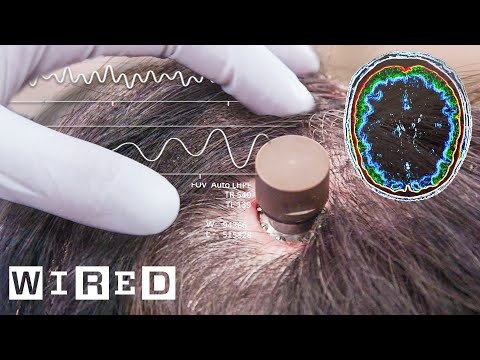 Photo: N43 and Hermes
A brain-computer interface creates a direct communication link between neural activity and an external device — bypassing muscles, nerves, and spinal cord. From EEG caps to Neuralink threads, the field is racing from laboratory to clinic, and the engineering challenges are as profound as the neuroscience.
Source video: The Science Behind Elon Musk's Neuralink Brain Chip · WIRED · approximately 3.7M views observed via yt-dlp on August 04, 2026. Independently researched by N43 and Hermes.
01 The Fundamental Idea: Reading the Brain
Every thought, intention, and motor command in the human brain is encoded in the electrical activity of neurons — specifically, in the patterns of action potentials, or "spikes," fired by roughly 86 billion neurons. A brain-computer interface (BCI) attempts to detect, decode, and translate these patterns into commands for an external device: a cursor on a screen, a robotic arm, a text synthesizer, or a wheelchair. The concept is simple in principle and brutal in practice. The brain is not a digital computer that outputs clean binary signals. It is a noisy, analog, massively parallel biological system whose encoding schemes are only partially understood.
BCIs can be broken into two directions: decoding — reading neural activity to infer intent or state — and encoding — writing information back into the brain by electrically or optically stimulating neurons. Most current clinical work focuses on decoding, particularly for restoring communication and motor control to people with paralysis, ALS, or spinal cord injury. Encoding — restoring lost sensation, providing artificial vision, or directly delivering information — is far less mature but is where the field's most ambitious promises lie.
02 The Invasiveness Spectrum
BCIs span a spectrum from completely non-invasive to deeply invasive, and the trade-off is always the same: signal quality versus risk. EEG (electroencephalography) uses scalp electrodes to detect the faint electrical signals that propagate through the skull. It is safe, portable, and requires no surgery, but the skull acts as a thick insulator: the signals arriving at the scalp are smeared, low-frequency, and spatially imprecise. EEG can detect general brain states — relaxation, attention, motor imagery — but cannot read individual neurons.
ECoG (electrocorticography) places electrodes on the surface of the brain, under the skull but outside the cortex. It requires craniotomy but does not penetrate brain tissue. The signal quality is dramatically better than EEG: individual cortical activity can be resolved at millimeter scale, and high-frequency gamma activity is visible. Intracortical arrays — the most invasive category — place penetrating microelectrodes directly into brain tissue, recording action potentials from individual neurons or small groups. Utah arrays, with their distinctive bed-of-nails design of up to 100 silicon needles, have been the workhorse of BCI research since the 1990s. The BrainGate consortium has used these arrays to enable paralyzed patients to control cursors, type up to 90 characters per minute, and operate robotic limbs. The limitation: the brain treats penetrating electrodes as foreign bodies. Glial cells encapsulate the electrode sites, and signal quality degrades over months to years.
03 The Decoding Pipeline: From Spikes to Intent
Once neural signals are captured, they must be decoded. The pipeline begins with signal acquisition — raw electrical recordings that are noisy and voluminous. A single intracortical array might record from 100 electrodes at 30 kHz, generating roughly 6 megabytes per second of raw data. The first step is spike sorting: distinguishing the action potentials of individual neurons from background noise and from each other. Because multiple neurons can be detected by a single electrode, identifying which neuron fired which spike requires statistical clustering of waveform shapes.
The decoded spikes are then fed into a decoder — an algorithm that maps neural activity patterns to intended actions. Early decoders used linear regression or Kalman filters to map firing rates to cursor velocity. Modern systems increasingly use deep learning: recurrent neural networks, transformers, and other architectures that can learn complex, non-linear mappings between neural population activity and motor intent. The decoder must be calibrated to each individual — there is no universal "move left" signal. During calibration, a subject imagines specific movements while the system records the corresponding neural patterns, building a personalized model. Over time, with feedback and practice, both the decoder and the user's neural encoding can improve, creating a closed-loop learning system.
04 Neuralink: Threads, Robots, and the Surgical Robot
Neuralink, founded by Elon Musk in 2016, represents the most prominent current effort to commercialize invasive BCI. The company's technology has two defining innovations. The first is the thread: an ultra-fine polymer electrode, roughly 4 to 6 micrometers thick — thinner than a human hair — carrying 32 electrode contacts per thread. The company's first clinical device, N1, implants 64 threads for a total of 1,024 electrodes, dramatically more than a Utah array's 100. The threads are so thin that they cannot be placed by human hands, which leads to the second innovation: the R1 surgical robot. The robot inserts threads into the cortex with micron-level precision, avoiding visible blood vessels on the brain surface — a process that would take a human surgeon many hours per thread but which the robot can perform rapidly.
The N1 implant sits flush with the skull, invisible under the skin, and transmits data wirelessly. There is no percutaneous connector sticking through the skin, which eliminates one of the most common infection vectors in traditional BCI systems. In January 2024, Neuralink implanted its first human patient, Noland Arbaugh, who was paralyzed from the neck down. He demonstrated the ability to control a computer cursor, play chess, and browse the web using only his thoughts. Some threads later partially retracted from the brain, reducing electrode count and signal quality, prompting software adjustments. As of 2026, the company has implanted multiple patients and is advancing toward a second-generation device with more electrodes and expanded capabilities.
05 The Clinical Frontier: Communication, Movement, and Beyond
The most transformative current applications of BCI are in restoring communication to people who have lost it. The BrainGate consortium and Stanford researchers have demonstrated that paralyzed patients with intracortical arrays can type at speeds approaching 90 characters per minute — faster than some people can manage on a smartphone — by imagining handwriting, which the decoder reads from motor cortex activity. Other groups are using BCI to enable attempted speech: decoding the neural patterns of intended articulation and converting them directly to text or synthesized speech at rates exceeding 60 words per minute.
Motor restoration is advancing too. Researchers at Caltech and elsewhere have used BCI to control robotic arms that allow paralyzed patients to grasp objects, drink from a cup, and feed themselves. Some systems provide bidirectional BCI — not only decoding motor intent but also encoding sensory feedback by stimulating the somatosensory cortex, giving users a crude sense of touch in a prosthetic hand. Restoring lost sensation is as important as restoring movement: without it, prosthetic users must watch their limbs constantly, and objects are crushed or dropped because the hand cannot feel grip force.
06 The Hard Problems: Longevity, Inflammation, and Ethics
Every invasive BCI faces a set of unsolved engineering problems. Biocompatibility is the most fundamental. Brain tissue is soft, wet, and immunologically active. Hard electrode materials — silicon, tungsten, platinum-iridium — are stiffer than brain tissue by several orders of magnitude. This mechanical mismatch causes micromotion damage and triggers a foreign-body response: glial cells form a scar around the electrodes, increasing impedance and degrading signal quality over time. Utah arrays typically lose useful signal in 6 months to 5 years. Neuralink's polymer threads are designed to be more mechanically compliant, but long-term durability data is still limited.
Data bandwidth is the second bottleneck. Even 1,024 electrodes capture only a tiny fraction of the brain's activity. Scaling to tens of thousands — enough for the kind of high-bandwidth interface that Musk envisions — requires not only more electrodes but more wires, more processing power, and more heat dissipation, all inside the skull. The ethical landscape is equally complex. Who owns neural data? Can a BCI be hacked? What happens to a patient whose implant company goes bankrupt? Neuralink's early trials raised concerns about surgical complications in animal subjects, and the gap between Silicon Valley's optimistic timelines and the reality of clinical-grade neurosurgery remains wide. The brain is not a consumer device, and the path from laboratory demonstration to widespread clinical use is measured in decades, not years.
07 The Horizon: Toward a Two-Way Brain
The current generation of BCIs is overwhelmingly one-directional: they read the brain. The next frontier is true bidirectional interfaces that both read and write — detecting intent and delivering sensation, artificial vision, or even directly encoded information back into the cortex. Early bidirectional systems already exist for touch: stimulating the somatosensory cortex during grasping allows users to feel pressure in a prosthetic hand. Cortical visual prostheses aim to write visual percepts directly into the brain. Memory prosthetics, tested in animal models, use patterned stimulation to enhance or restore memory encoding.
Whether these technologies will eventually enable the kind of seamless brain-to-computer communication that science fiction has long imagined — or whether they will remain powerful but narrow clinical tools — is a question that depends less on neuroscience than on the engineering of the interface itself. The brain has 86 billion neurons and perhaps 100 trillion synapses. Current BCIs talk to roughly one thousand of them. The gap between here and there is not a product roadmap. It is a frontier.
References
- Wikipedia: Brain–computer interface — encyclopedic overview of BCI technology
- BrainGate: BrainGate Consortium — clinical research on intracortical BCI for paralysis
- NIH/NINDS: Brain-Computer Interfaces — NINDS
- Willett FR, et al. "A high-performance speech BCI restores rapid communication." Nature 2023
- Neuralink: Neuralink — Official site and clinical updates
- Source video: The Science Behind Elon Musk's Neuralink Brain Chip (WIRED, ~3.7M views, observed August 04, 2026)
By N43 and Hermes for Sailor Bob News.


