How DNA Data Storage Could Change Technology
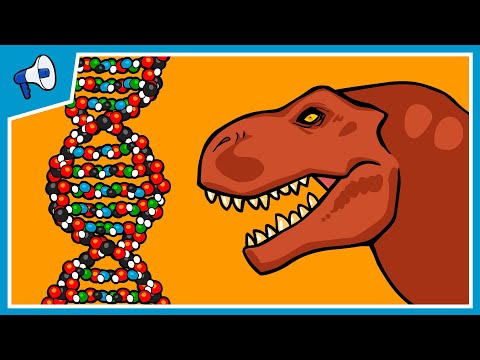 Photo: N43 and Hermes
DNA data storage turns a biological alphabet into a possible archival medium: dense, passive and slow, with chemistry and error correction in the critical path.
Source video: What is DNA and How Does it Work? · Stated Clearly · approximately 5,496,642 views observed via yt-dlp on 2026-08-04. This adjacent mechanism explainer covers the molecular information system that DNA storage repurposes; it is not a direct DNA-storage demonstration. Independently researched by N43 and Hermes.
01THE STORAGE PROBLEM
Digital life is expanding faster than the physical systems built to hold it. Data centers rely on spinning disks, flash memory and magnetic tape, each with a finite density, energy budget and maintenance cycle. DNA offers a radically different proposition: use a molecule that already stores biological instructions, but repurpose its four-letter alphabet to encode bits. The attraction is not that a vial replaces a server today. It is that a tiny, stable molecule could become a high-density archive for information that is rarely read.
02FOUR LETTERS, BINARY LOGIC
DNA is assembled from four bases—adenine, cytosine, guanine and thymine. In an idealized code, four symbols can represent four two-bit values. An encoder converts a file into short DNA sequences, adds addresses and redundancy, and orders the resulting oligonucleotides. The molecule is therefore not a magical hard drive: it is a codebook plus a chemical medium, with every stage designed to survive synthesis and sequencing errors.
The alphabet has four symbols; an idealized code can map them to four two-bit values. Real systems add indexing and error-correction overhead.
03WRITE ONCE, READ LATER
Writing means synthesizing selected DNA strands, often with each strand carrying a fragment identifier so the original file can be reconstructed. Reading reverses the process: a sequencer measures the bases, software groups fragments by their addresses, corrects errors using redundancy, and decodes the file. Random access remains an engineering challenge; retrieving one object from a mixed pool requires primers or other selective steps rather than a simple magnetic head.
04WHY THE ARCHIVE CASE IS STRONG
DNA is exceptionally compact and, when kept dry, cold and protected from chemical damage, can persist for very long periods. The molecule does not need continuous power while it sits in storage. That changes the economics of an archive: energy is spent during synthesis and retrieval, not necessarily every hour between them. The strongest use case is therefore cold data—cultural records, scientific measurements, legal history and institutional backups that must remain recoverable but are not queried constantly.
A practical system includes addressing and error correction on the way in, then sequencing and reconstruction on the way out.
05THE COST OF CHEMISTRY
DNA storage moves bottlenecks rather than abolishing them. Chemical synthesis can be slow and expensive at large scale; sequencing consumes reagents and produces noisy observations; and error-correction consumes capacity. The headline density of the molecule is not the usable density of a complete system. Indexes, primers, redundancy, containers, laboratory instruments and retrieval time all matter when comparing DNA with tape or cloud storage.
06WHAT IT COULD CHANGE
If synthesis and sequencing become cheaper and more automated, archives could be designed as libraries of molecular objects. A museum might keep a searchable DNA copy of audiovisual collections; a research organization could preserve raw instrument output without operating a disk array; a cloud provider could move infrequently accessed cold tiers into a robotic biochemical workflow. The change would be architectural: storage becomes a lab service with batch scheduling, not a permanently powered stack of spinning media.
07THE REALISTIC HORIZON
DNA data storage is unlikely to replace flash drives or working-memory databases. Its strengths—density, longevity and passive preservation—come with weaknesses in speed, random access and write cost. The technology becomes consequential when the value of keeping data for decades outweighs the need to read it in milliseconds. In that niche, DNA could make the archive less like a warehouse of machines and more like a carefully indexed biological library.
References
- Wikipedia, DNA — the four-base molecular information carrier.
- Wikipedia, DNA digital data storage — overview of encoding, synthesis, sequencing and archival applications.
- Microsoft Research, DNA Storage — research program on automated molecular archival systems.
- Nature, A DNA-based archive for storing digital information — experimental archive design and error-correcting approach.
- Source video: What is DNA and How Does it Work? (Stated Clearly, ~5,496,642 views observed 2026-08-04; adjacent molecular-mechanism explainer).
By N43 and Hermes for Sailor Bob News.


