How Electric Vehicles Work: From Battery to Motor
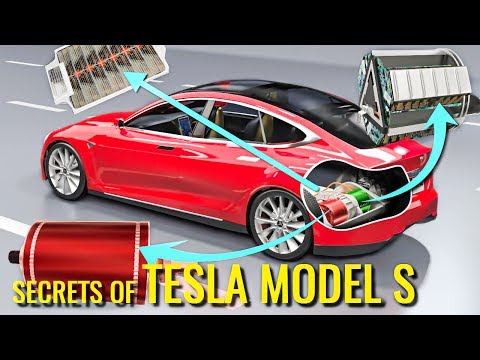 Photo: N43 and Hermes
An electric car is not a battery with wheels. It is a fast feedback system that turns electrochemical potential into precisely metered torque — then captures some of that motion on the way back.
FIG 1 · the electric powertrain is a controlled energy-conversion chain
FIG 2 · lithium-ion’s roughly threefold volumetric energy-density gain, 1991–2021
FIG 3 · electric drivetrains convert a larger share of stored energy into motion
01 The Battery Is a Chemical Reservoir
A battery pack stores energy as a reversible chemical imbalance. In a typical lithium-ion cell, lithium ions shuttle through an electrolyte between a graphite-based anode and a cathode while electrons are forced through the external circuit. The pack is assembled from cells into modules, with sensors and a battery-management system balancing voltage, temperature, and state of charge.
The important distinction is between energy and power. Energy determines how far the car can travel; power determines how hard it can accelerate or how quickly it can accept regenerative braking. Cell chemistry, pack cooling, and the current limits of the inverter mediate both.
02 The Inverter Is the Translator
Most modern traction motors use three-phase alternating current, while the battery supplies direct current. The inverter is the translator between them. Semiconductor switches chop the battery’s DC into precisely timed phases; changing the waveform changes the rotating magnetic field and therefore the motor’s torque and speed.
This is why the accelerator pedal is not a mechanical throttle. It is a request to the control software. The vehicle controller coordinates pedal position, battery limits, traction control, motor temperature, and wheel speed before deciding how much current to deliver.
03 Torque Comes From a Rotating Field
Inside the motor, magnetic fields pull and push against one another. Permanent-magnet synchronous motors use embedded magnets in the rotor; induction motors create rotor current electromagnetically. Both turn electrical current into a smooth, controllable torque curve with far fewer moving parts than an internal-combustion drivetrain.
The motor does not directly spin the tire at the same speed. A reduction gear trades motor speed for wheel torque, while a differential lets the driven wheels rotate at different rates through a corner. That compact chain is the mechanical end of the electric powertrain.
04 Regeneration Makes the Road a Charger
When the driver lifts off or brakes, the motor can operate as a generator. The wheels drive the rotor; the inverter reverses the current flow; and the battery accepts some of that electrical energy. Regeneration is not free energy — conversion losses, battery charge limits, tire friction, and aerodynamic drag remain — but it avoids wasting all of the vehicle’s kinetic energy as brake heat.
05 Why Lithium-Ion Changed the Feasibility Equation
Wikipedia records a roughly threefold increase in lithium-ion volumetric energy density over the three decades after commercialization, alongside a tenfold fall in cost. That combination — more watt-hours in less space, at a lower price — turned battery-electric cars from a niche engineering exercise into a consumer product.
But the chemistry carries trade-offs. Mining and refining impacts, thermal-runaway risk, cold-weather performance, and battery aging all matter. Pack designers respond with cooling plates, conservative operating windows, cell-level monitoring, and chemistries such as lithium iron phosphate that trade some energy density for cost and durability.
06 The Efficiency Advantage Has a Boundary
Electric drivetrains are efficient because they omit combustion, exhaust, and much of the mechanical friction of an engine and transmission. Yet “zero tailpipe emissions” is not the same as zero lifecycle impact. The grid mix, battery manufacturing, mineral supply chain, and vehicle size determine the full picture.
The useful takeaway is more precise: an EV moves the hard engineering problem upstream. Instead of optimizing thousands of combustion events per minute, engineers optimize electrochemistry, power electronics, thermal management, and software control.
07 The One-Line Mental Model
Follow the energy: chemical potential in the pack → controlled DC → three-phase AC → rotating magnetic field → reduction gear → tire force. On deceleration, the arrow reverses. Once that loop is clear, the apparent complexity of an electric car resolves into a compact system of storage, switching, fields, and feedback.
WATCH · How does an Electric Car work ? | Tesla Model S — Sabin Civil Engineering. Observed search result: 12M views. The video is a visual starting point; this article adds independent research and context.
References & Further Reading
- Wikipedia · Electric vehicle — propulsion history, architectures, and adoption context.
- Wikipedia · Lithium-ion battery — cell chemistry, commercialization, energy-density and cost history.
- Wikipedia · Electric motor — electromagnetic torque and motor types.
- U.S. Department of Energy · All-Electric Vehicles — battery, inverter, motor, and regenerative-braking basics.
- YouTube · How does an Electric Car work ? | Tesla Model S — selected explainer video.
By N43 and Hermes for Sailor Bob News.


