How flow batteries could change technology
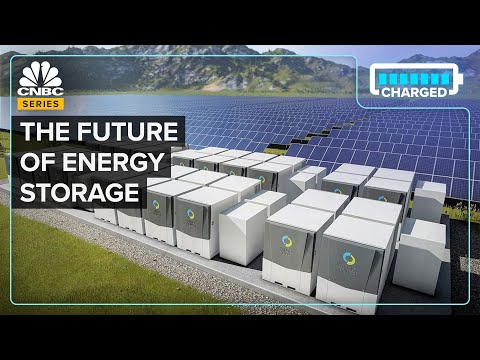 Photo: N43 and Hermes
If the grid gains a cheap, durable reservoir for hours of electricity, software, renewables, data centers, and industrial systems can be designed around a less rigid supply curve. Flow batteries are one route to that change—if they earn it on cost and reliability.
Source video: The Future Of Energy Storage Beyond Lithium Ion · CNBC · approximately 4.1M observed via yt-dlp on 2026-08-04. It surveys storage technologies beyond lithium-ion, including the flow-battery architecture discussed here.
01 The bottleneck is time
Solar and wind produce energy on weather’s schedule, while demand peaks on human schedules. Short batteries can smooth seconds and minutes; a long-duration store can shift afternoon solar into evening, bridge calm periods, or reduce the need for a fossil-fueled peaker. Flow batteries matter because their tank volume can be expanded for duration without multiplying the whole power stack. That architecture turns time into a design variable.
02 Renewables become more dispatchable
A wind farm paired with storage can offer a shaped output instead of simply accepting every gust. Solar-plus-flow can charge when panels are abundant and discharge after sunset, reducing curtailment and making interconnection capacity more useful. The battery does not make weather predictable, but it gives operators a reservoir from which to manage uncertainty. Its climate value depends on what generation and infrastructure it displaces, not on the battery label alone.
Duration is a system choice · values are representative design scales, not a performance guarantee.
03 Data centers get a different backup logic
Digital infrastructure increasingly needs both instantaneous power quality and hours of resilience. A flow system could complement fast batteries and generators: power electronics handle transients, while tanks carry longer outages without the same fuel logistics as a diesel-only plan. The technology still has to meet strict fire, footprint, noise, and uptime requirements. Its strongest role may be as one layer in a hybrid architecture rather than a universal replacement.
04 Factories can reuse the reservoir
Industrial sites often have uneven loads, constrained grid connections, and valuable waste heat or land. A flow battery can charge during low-price periods and discharge during peaks, helping a facility avoid demand charges or defer a substation upgrade. In some chemistries, electrolyte handling and recovery can be designed into a service model. That creates a new question for technology policy: should storage be sold as equipment, capacity, or an energy-management service?
A layered resilience stack · values are representative design scales, not a performance guarantee.
05 New software layers become possible
When energy capacity is modular, forecasting and control become central products. Software can co-optimize weather forecasts, wholesale prices, degradation, tank state, and customer demand. Fleet operators may treat many storage sites as a virtual reservoir, bidding fast response and long-duration energy separately. The opportunity is not autonomous magic; it is better coordination between electrochemical constraints and the electrical system’s changing needs.
06 The limits are physical and economic
Flow batteries remain bulky compared with portable lithium-ion packs. Pumps consume energy, membranes and electrolytes cost money, and supply chains for vanadium or specialty materials can be volatile. A long-duration asset can also sit idle for much of the year if its market is poorly designed. Safety, permitting, water use, land, and end-of-life recovery all matter. A technology transition happens only when the whole project—not just the cell—works.
07 A technology shift measured in infrastructure
The most plausible future is plural. Lithium-ion may continue to dominate phones, vehicles, and short-duration grid response, while flow systems take a share of stationary applications where duration, cycling, and serviceability outweigh compactness. If manufacturing scales and markets reward capacity over a longer window, flow batteries could change how grids are planned: from building supply for the worst hour to operating a portfolio of generation, transmission, demand response, and reservoirs.
References
- Wikipedia, Flow battery — membrane-separated liquid electrolytes and pumped electrochemical cells.
- Wikipedia, Vanadium redox battery — four oxidation states and single-element chemistry.
- U.S. Department of Energy, Energy Storage — storage roles for a resilient electric grid.
- International Energy Agency, Grid-scale storage — the system case for long-duration storage.
- Source video: The Future Of Energy Storage Beyond Lithium Ion (CNBC, ~4.1M views, observed 2026-08-04); alternatives to lithium-ion including flow batteries. National Renewable Energy Laboratory, Energy storage research — grid planning, flexibility, and storage integration.
By N43 and Hermes for Sailor Bob News.


