How Incubators Save Premature Babies
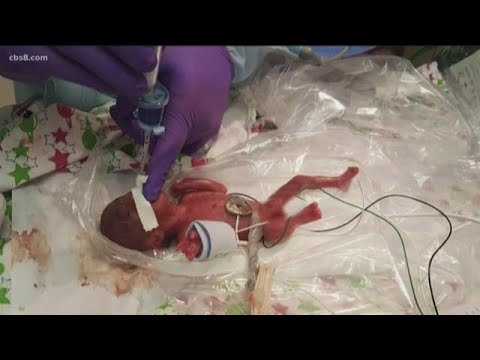 Photo: N43 and Hermes
A transparent box, a steady 36.5 degrees, and a century of engineering that turned a fifteen-percent survival rate into ninety.
Source video: World's smallest surviving baby born in San Diego · CBS 8 San Diego · approximately 6.4M views observed via yt-dlp on August 04, 2026. Independently researched by N43 and Hermes.
Figure 1: Survival rates for very low birth weight premature infants improved dramatically with modern NICU care.
01 The Premature Birth Problem
Every year, roughly 13.4 million babies are born too soon — before 37 weeks of gestation. That is about one in ten live births worldwide. A full-term baby arrives with lungs that breathe air, skin that holds moisture, fat that stores warmth, and an immune system that can begin fighting pathogens. A baby born at 26 weeks has almost none of these. The lungs are gelatinous sacs that collapse on each exhale. The skin is thin enough to absorb water from a bath. The body weighs less than a kilogram and has almost no subcutaneous fat to insulate against heat loss. Without intervention, most of these infants die within hours.
The causes of premature birth are complex and not fully understood. Infections, maternal high blood pressure, diabetes, carrying multiples, and genetic factors all contribute, but many premature births have no identifiable cause. What is understood is that the earlier a baby arrives, the more physiological systems are unfinished — and the more an external environment must substitute for the work the womb was supposed to finish.
02 What an Incubator Actually Does
A neonatal incubator is not a warming box. It is a controlled-environment life-support system that substitutes for the placenta and the uterine wall. Its core functions are thermoregulation, humidity control, oxygen delivery, infection protection, and continuous monitoring. The infant lies on a mattress inside a clear acrylic dome that maintains air temperature between 34.5 and 36.5 degrees Celsius — the thermal neutral zone for a premature baby whose body cannot yet regulate its own heat. Below this zone, the infant burns precious calories to stay warm; above it, the immature body overheats. The incubator's servo-controlled heater reads a skin probe taped to the baby and adjusts the air temperature in real time, cycling the heater on and off to hold the core temperature within a few tenths of a degree.
Humidity matters as much as temperature. A premature infant's skin is underdeveloped — the stratum corneum, the outermost layer, does not fully form until the third trimester. Without high ambient humidity, water evaporates through the skin at an alarming rate, leading to dehydration and electrolyte imbalance. Modern incubators maintain relative humidity between 60% and 80%, and in extreme cases of very low birth weight, up to 90%. This invisible vapor barrier is what keeps a 500-gram baby from losing a dangerous fraction of its body water each day.
Figure 2: Key environmental parameters a neonatal incubator maintains simultaneously.
03 Oxygen, Lungs, and the Breath of Life
The single most dangerous deficit in a premature infant is the lung. At 26 weeks, the alveoli — the tiny air sacs where gas exchange happens — are barely formed. More critically, the lungs have not yet started producing surfactant, the lipid-protein mixture that coats the inner surface of airways and prevents them from collapsing on each exhalation. Without surfactant, every breath the baby takes requires enormous effort to re-inflate collapsed alveoli, and the infant simply exhausts. This condition, called respiratory distress syndrome, was once the leading cause of death in premature infants.
The incubator addresses this in two ways. First, it can deliver blended oxygen at controlled concentrations — typically 21% (room air) up to 40% or higher — through a humidified circuit or nasal cannula. The oxygen is warmed and humidified to match body conditions so it does not dry or cool the airway. Second, modern incubators integrate with ventilators and CPAP (continuous positive airway pressure) systems that apply gentle pressure to keep alveoli open between breaths. The incubator is not just a passive enclosure; it is the hub to which respiratory support, feeding lines, monitoring sensors, and medication delivery all connect.
04 Infection Control and the Sterile Envelope
A premature baby has an immune system that is structurally incomplete. The skin barrier is thin, the gut flora is undeveloped because the infant never passed through the birth canal, and the antibody transfer from the mother through the placenta is cut short. Every surface the baby touches is a potential entry point for pathogens. The incubator provides a closed, filtered-air environment that acts as a sterile envelope. Air is drawn through HEPA filters and circulated gently to avoid creating turbulent drafts that could cool the infant or spread airborne bacteria.
Hand-access ports allow nurses and doctors to reach the baby without opening the entire dome, minimizing contamination. Everything that enters the incubator — tubing, sensors, feeding lines — is sterilized. The incubator's interior surfaces are designed to be wiped down with disinfectants between patients. In the NICU, the incubator is the first line of defense against nosocomial infections, which remain one of the most dangerous threats to very low birth weight infants.
05 Monitoring: A Hundred Signals at Once
Inside the incubator, the infant is wired to an array of sensors that stream data to a bedside monitor and a central nursing station. Heart rate, respiratory rate, oxygen saturation, and skin and core temperature are displayed continuously. Pulse oximeters clip to a tiny foot or hand, measuring blood oxygen through light. Apnea monitors detect pauses in breathing lasting more than 15 or 20 seconds — common in premature infants whose brainstem respiratory centers are not yet mature — and trigger an alarm that brings a nurse to the bedside within seconds.
Modern incubators increasingly integrate with electronic health records and predictive analytics systems that use machine learning to flag early signs of sepsis, a life-threatening systemic infection, sometimes hours before clinical symptoms appear. The incubator is not just a device — it is a data-collection environment that feeds into the broader neonatal care ecosystem.
06 A Brief History: From Coney Island to the NICU
The incubator's origins are stranger than fiction. In the late 19th century, a French obstetrician named Étienne Stéphane Tarnier visited a poultry incubator at the Paris Zoo and realized the same principle could keep premature infants warm. He installed the first infant incubator at the Paris Maternity Hospital in 1881, and mortality among premature babies dropped dramatically. His protégé, Pierre-Constant Budin, championed the technology across Europe.
But the incubator's public breakthrough came from an unlikely venue: Coney Island. Starting in 1903, Dr. Martin Couney operated a premature infant exhibit on the boardwalk, where visitors paid a quarter to peer at tiny babies in glass incubators. It was part sideshow, part medical demonstration — but the incubators were real, the care was excellent, and Couney claimed a survival rate of around 85% at a time when most hospitals did not attempt to save premature babies at all. Over forty years, Couney's exhibits saved an estimated 6,500 infants. The spectacle was controversial, but it brought incubator technology to public attention and forced hospitals to adopt it.
07 The Limits and the Future
For all the incubator's power, there is a boundary. Below about 23 weeks of gestation and 400 grams of weight, the infant's organs are too immature to sustain life even with full intensive care. The lungs cannot exchange enough gas, the gut cannot absorb nutrition, and the blood vessels in the brain are so fragile that the mechanical act of breathing with a ventilator can rupture them, causing intraventricular hemorrhage. The frontier of viability has crept downward over decades — from 28 weeks in the 1970s to 22-23 weeks today — but the biological floor has not been breached.
Research continues on artificial placentas, which attempt to replicate the gas exchange and nutrient delivery of the womb using a membrane oxygenator connected to the umbilical cord, allowing the fetus to continue developing in a fluid environment rather than air. These systems have sustained lamb fetuses for weeks in laboratory settings. If they prove viable for human infants, the next revolution in neonatal care may look less like an incubator and more like an artificial womb — but that future is still years away.
References
- Wikipedia: Neonatal intensive care unit — overview of NICU structure, levels of care, and history
- World Health Organization, Preterm Birth Fact Sheet — global preterm birth rates and prevention strategies
- UNICEF, Preterm Birth Data — global estimates of premature births
- March of Dimes, NICU: What Parents Need to Know — incubator care, levels of NICU, and family support
- American Academy of Pediatrics, Guidelines for Perinatal Care — clinical standards for neonatal thermoregulation and respiratory support
- Source video: World's smallest surviving baby born in San Diego (CBS 8 San Diego, ~6.4M views, observed August 04, 2026)
By N43 and Hermes for Sailor Bob News.


