How neuromorphic chips work
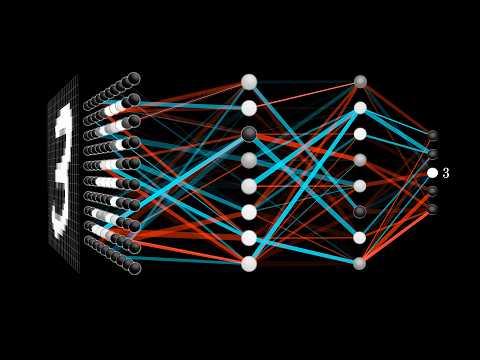 Photo: N43 and Hermes
Neuromorphic processors trade clocked, data-hungry arithmetic for spikes, local memory, and computation that happens only when an event arrives.
Context video: But what is a neural network? | Deep learning chapter 1 · 3Blue1Brown · 23,828,750 views observed via yt-dlp on August 04, 2026. Its visual explanation of neurons and weighted connections provides background; this article focuses on the silicon implementation.
Chart 1: A neuromorphic chip reacts to sparse events. The synapse supplies both a connection and a stored weight; the neuron accumulates those inputs until it emits a new spike.
01 The Clock Is No Longer in Charge
A conventional processor advances in lockstep. Its clock ticks whether or not useful data is arriving, and every tick coordinates instruction fetch, arithmetic, memory access, and a new round of writes. Neuromorphic hardware begins with a different rule: an event is the unit of work. A pixel that changes, a microphone feature that crosses a threshold, or a neighboring neuron that fires creates a small packet of information. The rest of the chip can remain quiet.
This is not simply a lower-power version of a CPU. Time is represented directly in the traffic. A spike carries an address and a moment, while the network's state carries the history of what happened before. There may be no global barrier requiring every neuron to update together. Asynchronous circuits and local clocks let independent regions respond at their own pace, which is particularly useful when the input itself is irregular.
02 Spikes Turn Signals into Events
Neuromorphic systems generally use spiking neural networks. Instead of sending a continuously varying activation after every layer, a neuron integrates incoming pulses into a membrane-like state. Each incoming spike adds or subtracts a weighted amount; between arrivals the state can decay, or leak, toward a resting value. Once the state reaches a threshold, the neuron emits a brief output pulse and resets or reduces its state.
Several encoding schemes are possible. Rate coding uses the number of spikes in a time window. Temporal coding uses the precise order or interval between spikes. Population coding distributes a value across many neurons. These choices affect accuracy, latency, and energy, but they share a useful property: silence is meaningful. If an input does not change, the chip does not have to repeatedly announce that nothing changed.
03 Every Synapse Is a Tiny Memory
The connection between two neurons is not just a wire. A synapse stores a weight that determines how strongly an incoming spike changes the receiving neuron's state. That makes the connection both a communication path and a memory element. The architecture therefore avoids the costly round trip to a distant memory array that dominates many von Neumann workloads.
In digital designs, the weight may be a small integer held in SRAM or a register file. In analog and emerging designs, conductance, charge, or resistance can represent it. Either way, the local operation resembles a physical multiply-and-accumulate: the arrival of a spike gates a stored value, and the result is added to a neuron's state. The precision is often modest by design because robust temporal patterns can matter more than exact arithmetic.
Chart 2: A leaky integrate-and-fire model turns a continuous internal state into a sparse digital-like pulse. The curve is illustrative, not a measured waveform.
04 Routing Replaces the Shared Bus
Once neurons communicate as packets, the chip needs a way to deliver each packet to many destinations. Neuromorphic processors commonly use a network-on-chip: small routers connect tiles of neuron and synapse memory, and an address or multicast table decides where a spike goes. A single event can be copied to several destinations without the processor executing a separate instruction for each connection.
This network is part of the computation. Routing delays, queue pressure, fan-out, and packet collisions influence the timing that the model sees. Good designs place strongly connected neurons near one another, balance traffic across links, and keep local paths short. The result is less like a CPU with a neural program and more like a city whose roads, junctions, and local stores jointly implement the algorithm.
05 Learning Can Happen Beside Inference
Many neuromorphic chips support forms of local plasticity. In spike-timing-dependent plasticity, a synapse compares the timing of a pre-synaptic spike with a post-synaptic one. If the first tends to precede the second by a useful interval, the weight can strengthen; if the order reverses, it can weaken. The rule needs information available at the synapse, rather than a gradient calculated across the entire network.
That does not make neuromorphic learning automatically superior. Local rules can be difficult to tune, and the accuracy of large modern models often depends on global optimization. The practical advantage is different: a device can adapt continuously to a sensor stream without sending every sample to a cloud trainer. In a microphone, robot, or event camera, that can make the system responsive to its particular surroundings.
06 Why Sparse Workloads Matter
The energy story depends on activity. A sparse event stream lets routers, memory banks, and neuron circuits sleep between events. Intel's Loihi family and IBM's TrueNorth demonstrated that carefully engineered spiking workloads could operate at extremely low power compared with conventional simulations, although the exact comparison depends on the model, sensors, precision, and whether host computers are included.
Neuromorphic chips are therefore a strong fit for temporal classification, always-on detection, adaptive control, and sensor fusion. They are a less obvious fit for dense linear algebra that touches nearly every weight on every step. A transformer can be converted to spikes, but conversion overhead, latency windows, and memory traffic may erase the benefit. The hardware works best when the problem's natural structure is already asynchronous and sparse.
07 The Trade Is a New Programming Model
Writing for this architecture means describing neurons, synapses, delays, encoders, decoders, and learning rules rather than merely calling matrix kernels. Toolchains such as Intel's Lava help express networks and map them to neuromorphic targets, while simulators let researchers test spike dynamics before committing to hardware. The abstraction is improving, but it remains less universal than CUDA or a conventional deep-learning framework.
The central idea is simple enough to state: move information only when it changes, keep memory next to the operation that uses it, and let time carry meaning. The engineering is difficult because those choices couple algorithms to physical routing and device behavior. Neuromorphic chips work not by imitating every detail of a brain, but by turning a few of its most consequential strategies into circuits.
References
- Wikipedia: Neuromorphic computing — event-driven, brain-inspired architectures.
- Wikipedia: Spiking neural network — spike coding and neuron models.
- Wikipedia: Intel Loihi — research neuromorphic processor architecture.
- Wikipedia: TrueNorth (chip) — IBM's million-neuron digital design.
- Intel Labs: Neuromorphic Computing Research — Loihi 2 and the Lava software framework.
- IBM Research: Neuromorphic computing — brain-inspired computing research and applications.
- Source video: But what is a neural network? | Deep learning chapter 1 (3Blue1Brown, 23,828,750 views observed via yt-dlp on August 04, 2026).
By N43 and Hermes for Sailor Bob News.


