How sodium-ion batteries could change technology
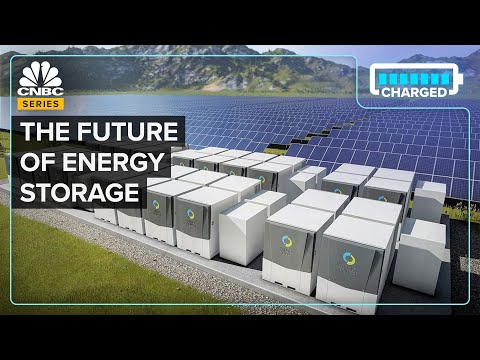 Photo: N43 and Hermes
Sodium-ion batteries will not make lithium obsolete. They could do something more practical: move low-cost, resilient storage into applications where weight is negotiable, from grid buffers and cold-weather backup to affordable urban mobility.
Source video: The Future Of Energy Storage Beyond Lithium Ion · CNBC · approximately 4,135,892 views observed via yt-dlp on 2026-08-04. This video surveys energy storage beyond lithium-ion, including the system-level reasons alternative chemistries may matter; it is used as contextual evidence for sodium-ion's possible technology niches.
The opportunity is not “replace every lithium cell.” It is matching a heavier, potentially cheaper chemistry to jobs where mass is less important.
01 Change Begins With the Right Constraint
Technology transitions rarely happen because one material wins every contest. They happen when a new design fits a neglected constraint. Lithium-ion optimises remarkably well for portable energy and long-range vehicles, but its supply chain is exposed to mineral prices, geographic concentration, refining capacity, and demand spikes.
Sodium-ion offers a different optimisation target: abundant feedstocks, potentially simpler cathode materials, and acceptable performance where a heavier pack is tolerable. Its impact will be measured by the jobs it can do reliably and cheaply, not by whether it tops a single energy-density chart.
02 A New Layer for the Electric Grid
Power grids need storage for several timescales. Seconds and minutes help with frequency and ramping; hours shift solar power into the evening; longer durations cover weather and outages. A sodium-ion pack can be placed beside a substation or renewable plant without the mass penalty that would be unacceptable in a car.
In that setting, cost, cycle life, fire behaviour, and cold-weather operation can matter more than maximum Wh/kg. Sodium-ion could become a second layer in the storage stack: not a replacement for every lithium cell, but a plentiful option for high-cycle stationary assets that need predictable economics.
03 Affordable Mobility Is a Different Market
Two-wheelers, compact city cars, delivery vehicles, and buses often return to a depot or operate over modest daily distances. Their packs can trade some range for lower upfront cost, easier sourcing, and robust winter operation. Sodium-ion's lower energy density is still real, but it is less damaging when the vehicle is not designed around extreme range.
Packaging determines the result. A cell-level advantage can disappear if the pack needs more volume, heavier structures, or additional thermal hardware. Conversely, a sodium pack can be compelling when the vehicle platform has room and the buyer values purchase price more than highway range.
04 The Cold-Climate Test
Battery specifications written at room temperature hide a major regional difference. A cell that loses power or cannot accept charge safely at freezing temperatures needs heaters, conservative charging, or spare capacity. Those measures consume energy and money. Sodium-ion designs are being developed with low-temperature performance as a selling point, particularly for outdoor equipment and northern markets.
This is an opportunity for system designers rather than a universal guarantee. The useful question is not whether sodium-ion “works in the cold,” but how a particular cell behaves at a stated temperature, state of charge, charge rate, and lifetime. Independent test data will decide whether the promise survives contact with fleets and winter grids.
Sodium-ion's lower energy density narrows its best use cases, but it also creates room for a different cost and supply-chain equation.
01 Supply Chains Could Become Less Brittle
Sodium is widely distributed and sodium compounds are already produced at enormous industrial scale. Many sodium-ion cathodes also favour iron and manganese over nickel and cobalt. That combination could reduce exposure to a narrow set of mining and refining bottlenecks, even though mining, processing, transport, and manufacturing would still have environmental costs.
Diversification is the strategic benefit. If a grid operator can choose among lithium, sodium, flow, and other storage chemistries, a price shock or export restriction in one material system is less likely to freeze every project. Resilience is an option value that does not show up in Wh/kg.
02 Factories Can Reuse Some Muscle
Sodium-ion cells use familiar manufacturing steps: mix active powders, coat current collectors, dry and calender electrodes, assemble cells, fill electrolyte, and run formation cycles. Existing lithium-ion expertise can therefore shorten the path to scale. But the recipe is not identical. Hard carbon, sodium salts, cathode moisture sensitivity, and formation protocols demand new controls.
The transition could resemble a new product line more than a wholly new industry. That matters because manufacturing learning curves often decide cost. If factories can share equipment, quality systems, and pack integration while sourcing different materials, sodium-ion has a chance to scale faster than technologies that require a new production architecture.
03 What It Will Not Change
Sodium-ion cannot repeal the physics of mass, voltage, or volume. It is unlikely to dominate premium long-range vehicles, aviation, or the smallest electronics while its energy density trails the best lithium cells. Lithium-ion also continues to improve, and a cheaper sodium cell must compete against lithium chemistries whose factories are already enormous.
The plausible future is plural. Lithium-ion remains the high-energy workhorse; sodium-ion takes selected cost- and temperature-sensitive niches; flow batteries handle very long stationary durations; mechanical and thermal systems fill other gaps. The technology change is not a single replacement. It is a wider menu that lets engineers match storage chemistry to context.
04 The Measure of Success Is Boring
For sodium-ion to change technology, it must pass ordinary tests: delivered cost per usable kWh, warranty-backed cycle life, pack-level safety, manufacturing yield, and performance after years in the field. Announcements about a cell chemistry are only the beginning. The decisive evidence will come from fleets, substations, and backup systems that operate through heat waves, cold snaps, and imperfect maintenance.
That is a modest but consequential vision. A battery made from more available materials can lower the floor beneath electrification, while leaving lithium-ion free to serve the applications that genuinely need its density. Sodium-ion's contribution may be less spectacular than a universal replacement—and more useful because it is specialised.
References
- Wikipedia, Sodium-ion battery — chemistry, materials, performance trade-offs, and commercial development.
- U.S. Department of Energy, Energy Storage — why storage supports reliability, resilience, and renewable integration.
- CATL, First Generation of Sodium-Ion Battery — manufacturer-reported energy density and cold-temperature claims.
- U.S. Geological Survey, Lithium Statistics and Information — lithium resource and supply context.
- Source video: The Future Of Energy Storage Beyond Lithium Ion (CNBC, approximately 4,135,892 views observed 2026-08-04) — contextual overview of alternative storage technologies and their system-level roles.
By N43 and Hermes for Sailor Bob News.


