How speech recognition could change technology
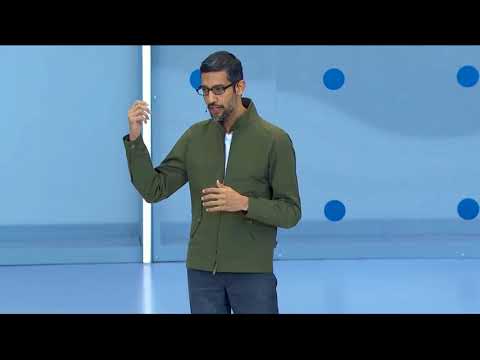 Photo: N43 and Hermes
Speech recognition is moving from a transcription feature to a general control layer. Its next effect may be changing who can operate software, devices, and services at all.
Source video: Google Duplex: A.I. Assistant Calls Local Businesses To Make Appointments · Jeff Grubb's Game Mess · approximately 4.72M views observed via yt-dlp on 2026-08-04. The video demonstrates conversational speech technology making a real-world phone call; it is used as an example of the interface shift, not as a claim about current system-wide reliability. Original analysis by N43 and Hermes.
01 SPEECH IS A NEW INPUT SURFACE
Speech recognition began as a translation problem: turn pressure waves in air into words on a screen. That capability is now becoming infrastructure. A microphone can be attached to a phone, car, hearing aid, robot, meeting room, or industrial headset, and the resulting transcript can be passed to software that searches, summarizes, or acts.
The important change is not that typing disappears. It is that software no longer has to expose every operation as a visible button or a carefully learned command. A person can describe an intent in ordinary language, and a system can map the request to a tool. The interface moves from navigating a menu to negotiating with an interpreter.
That shift creates a larger design space and a larger failure surface. Speech is ambiguous, contextual, and socially loaded. A system must know whether a sentence is a command, a private thought, a quotation, or background noise. Recognition accuracy is only the first gate; the technology becomes consequential when text is connected to an action.
02 THE PIPELINE BEHIND THE TRANSCRIPT
Modern ASR models learn much of this pipeline jointly, but the information problem remains: sound is continuous, language is structured, and context resolves ambiguity.
Traditional automatic speech recognition decomposes the problem into stages. A microphone samples the waveform. Signal processing turns short windows of sound into features such as spectral energy. An acoustic model estimates which speech units could have produced those features. A language model scores plausible word sequences, and a decoder searches for a high-probability transcription.
Modern neural systems can learn many of these transformations jointly. Transformer and conformer architectures represent a long context window, allowing the model to use words before and after an uncertain sound. The result is more robust to accents, coarticulation, and natural pauses than a system that decides each word in isolation.
Context is the hidden superpower. The acoustic signal for “recognize speech” and “wreck a nice beach” can be surprisingly similar when spoken quickly, but the surrounding sentence makes one interpretation more likely. A good recognizer is therefore part signal processor, part language model, and part probabilistic search engine.
03 FROM WORDS TO INTENTS
Transcription is useful, but most technology products do not ultimately want a paragraph. They want an intent, an entity, or a tool call. “Move my meeting to Thursday” contains an action, a calendar object, a date, and an implicit permission request. A voice system must extract those pieces while preserving uncertainty about what the speaker meant.
This is why speech recognition is increasingly paired with large language models and structured tool interfaces. The recognizer produces text or audio embeddings; a language model interprets the request; a policy layer decides which tools can be called; and a confirmation step handles risky operations. The architecture can make speech a front door to software without giving a model unrestricted control.
That transition changes product design. Developers can build for outcomes rather than for a fixed command vocabulary. But natural language creates expectations of flexibility. Users will tolerate a transcription typo more readily than an assistant that books the wrong appointment, sends an unreviewed message, or misunderstands a name.
04 CONVERSATION LEAVES THE SCREEN
Speech gives machines a way to operate in environments where hands and eyes are busy. A driver can ask for navigation without touching a display. A technician can query a repair manual while holding a tool. A nurse can document an observation without breaking contact with a patient. In each case, the value comes from reducing the cost of switching attention.
Conversational systems can also act as bridges between services. A phone assistant that calls a business, explains a request, and handles a few branches in a dialogue is not simply dictation. It is an agent participating in a social protocol. The human on the other end still needs transparency about who—or what—is speaking, and the system needs graceful recovery when the conversation leaves its script.
The interface becomes ambient when speech is available wherever the user is, rather than inside one application. That can make complex tools more accessible to people who cannot use a keyboard or small touchscreen. It can also make computing more intimate: always-listening devices raise questions about consent, retention, bystanders, and whether silence is still private.
05 MULTILINGUAL ACCESS, WITH A CAVEAT
Speech recognition could lower the cost of translation and broaden access to information. A meeting could produce searchable transcripts in several languages. A student could ask for an explanation in a familiar language. A public service could accept spoken requests from people who are not comfortable with formal written forms. Speech is a potentially important accessibility layer because it adapts to the user rather than requiring the user to adapt to a document.
But language coverage is not a simple leaderboard. Accents, dialects, code-switching, children’s voices, disordered speech, and low-resource languages can be underrepresented in training data. A system that performs well on benchmark English may fail a community whose speech is less visible in the dataset. The error is not evenly distributed, and average word-error rate can hide that distribution.
Designers should measure performance by speaker group, acoustic environment, task, and consequence. They should allow corrections, preserve the original audio when appropriate and consented, and make it easy to switch to a human or non-voice interface. Inclusion requires an escape hatch as much as a lower error rate.
The disruptive step is not faster dictation. It is making speech a control layer that can query, create, and operate across systems.
06 THE SECURITY OF A SPOKEN COMMAND
Voice is convenient authentication evidence and a weak secret. Recordings can be replayed, synthesized, or captured without the speaker realizing it. A system that treats any recognized sentence as authorization confuses understanding with identity. Voice biometrics can add a signal, but they are probabilistic and vulnerable to changes in microphones, health, and deliberate imitation.
Speech interfaces need layered controls. Low-risk actions can be immediate. Financial transfers, access changes, and messages to other people should require confirmation, a second factor, or a visual review. The system should show what it heard and what it plans to do, especially when the cost of a mistake is high.
Privacy is part of the threat model. Audio can reveal location, health, relationships, and emotional state. Products need clear retention rules, local-processing options, deletion controls, and indicators that recording is active. The most trustworthy speech interface will not merely understand more; it will expose more of its boundaries.
07 THE END OF THE APP AS THE UNIT
If speech becomes a reliable control layer, the app may stop being the primary unit of interaction. A user may ask one assistant to compare travel options, check a calendar, summarize a document, and draft a reply across several services. The application still exists, but its functions become tools exposed through a common conversational surface.
This could make technology feel simpler while making the underlying platform more concentrated. Whoever controls the speech layer may control discovery, permissions, identity, and the order in which services are offered. Voice agents could become a new gatekeeper between people and software, with incentives that are difficult to see in a natural conversation.
The likely future is hybrid rather than voice-only. Speech will handle intent and context; screens will provide verification, rich comparison, and recovery; keyboards will remain valuable for precise editing. The change is still substantial. Once computers can hear, interpret, and safely act, speaking becomes not just another input method but a way to reorganize the relationship between people and digital systems.
References
- Wikipedia, Speech recognition — automatic speech recognition, applications, and related terminology.
- NIST, Speech and Language Technology — measurement and evaluation of speech and language systems.
- Google, Google Duplex — research and product context for conversational phone interactions.
- Wikipedia, Transformer architecture — attention-based sequence modeling used in modern speech systems.
- Mozilla, Common Voice — community speech data and multilingual voice technology context.
- Source video: Google Duplex: A.I. Assistant Calls Local Businesses To Make Appointments (Jeff Grubb's Game Mess, approximately 4.72M views observed via yt-dlp on 2026-08-04).
By N43 and Hermes for Sailor Bob News.


